

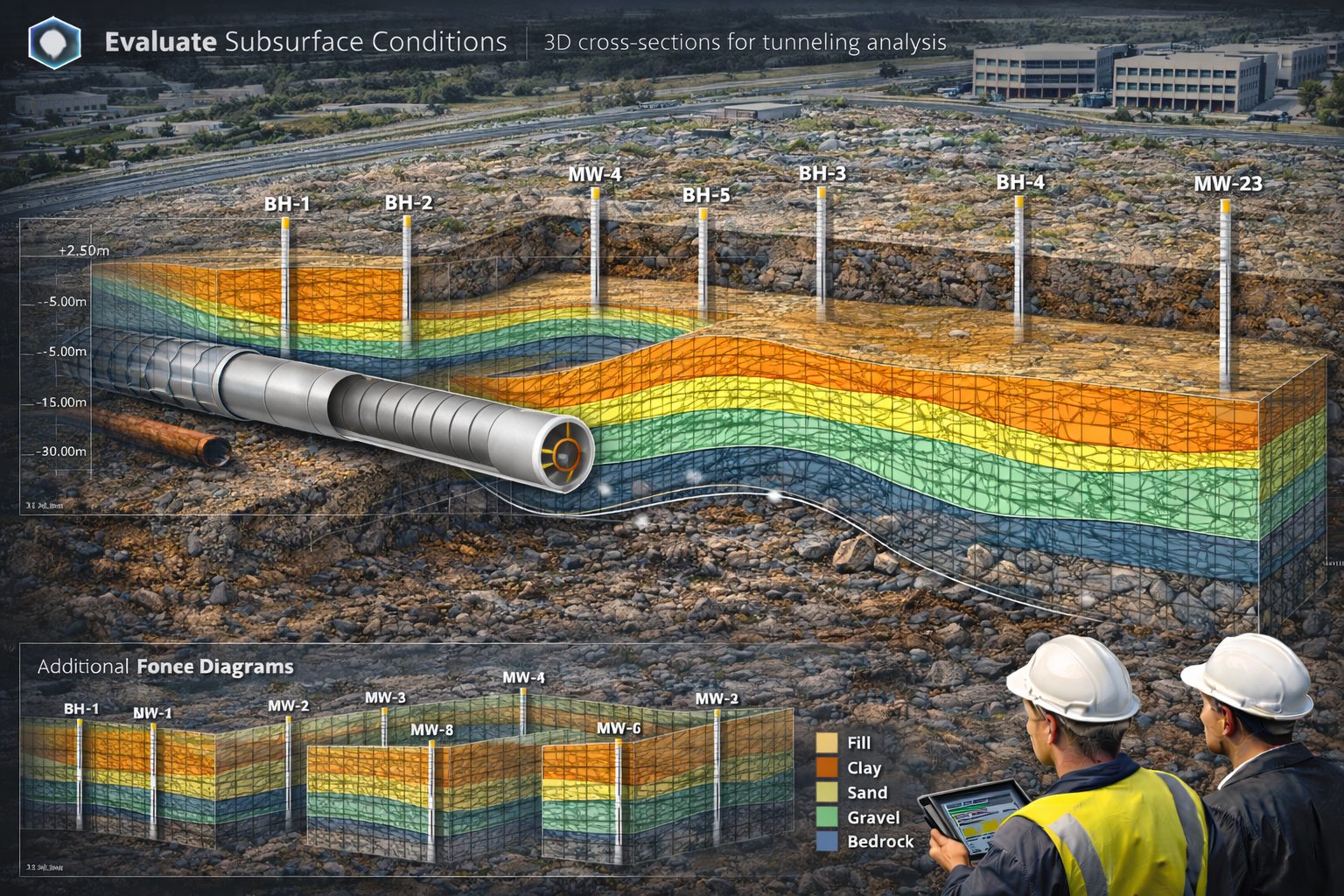
Understanding the complexities of subterranean conditions is crucial for any construction engineer, architect, or project manager. This blog post aims to delve into the world of 3D cross-sections and their transformative impact on tunneling and foundation design. We will explore how these innovative tools help minimize risks associated with underground work, ultimately saving time and costs while enhancing safety and efficiency. Join us as we navigate the intricacies of modern engineering solutions that can elevate your projects to new heights.
The Importance of Understanding Subterranean Environments
The groundwork of any successful construction project starts below the surface. A thorough understanding of the subterranean environment is essential not only to avoid complications but also to ensure the integrity of the structure above. From soil composition to the presence of underground water or utilities, these factors play a crucial role in determining the feasibility and safety of a project.
The Challenges of Traditional Design Approaches
Traditionally, underground projects were planned using 2D representations, which often led to misinterpretations of the actual three-dimensional landscape. Engineers relied heavily on drilling logs, geophysical studies, and previous experience, which could lack specificity and fail to capture the full complexity of the underground world. This approach often results in higher risks and costs due to inaccuracies in excavation and a greater likelihood of encountering unanticipated obstacles.
Enter 3D Cross-Section Diagrams
3D cross-sections revolutionized the way engineers and designers approach underground projects. These diagrams provide a detailed visualization of the site, allowing for a more comprehensive understanding of the subsurface conditions. Unlike traditional methods, 3D representations can illustrate various layers of soil and bedrock, water tables, and any existing infrastructure.
How 3D Cross-Sections Work
Basically, a 3D cross-section is a visual cut-through model that depicts the internal features of the ground. By combining critical data from soil tests, geological surveys, and hydrological studies, 3D cross-sections allow engineers to visualize spatial relationships between different materials and structures. Holding all relevant information in one place enables construction teams to make well-informed decisions before they even break ground.
Benefits of Boosting Accuracy in Project Planning and Design
- Reduced Risks: With accurate data visualizations, there is a decreased likelihood of unexpected underground conditions. Engineers can plan for contingencies accordingly.
- Improved Coordination: 3D models facilitate better communication among stakeholders, reducing the chances of misaligned expectations and misinformation.
- Enhanced Safety: The ability to visualize hazards enables teams to strategize their execution plans effectively, minimizing risks for workers on site.
- Cost Savings: By identifying potential obstacles and challenges upfront, projects can often be completed faster and with fewer financial overruns.
Case Studies: Real-World Applications of 3D Cross-Sections
To illustrate the benefits of 3D cross-section models, let’s examine a couple of successful case studies where tunneling and foundation projects significantly improved results using these tools.
Case Study 1: Urban Development Project
In a recent urban development project, planners faced unexpected groundwater intrusion. Utilizing 3D cross-section diagrams revealed the presence of a high-water table that 2D data had not indicated. Thanks to the detailed insights provided by the diagrams, the engineers were able to design an efficient dewatering strategy, saving the project from delays and significant expense.
Case Study 2: Highway Expansion
Another example is a highway expansion where a variety of underground utilities ran beneath the road. By implementing 3D cross-sections, the construction team identified precisely where the utilities were located and adjusted their excavation plans accordingly. The result was a smooth project completion without any major incidents or liabilities.
Tools to Create 3D Cross-Section Diagrams
Several software packages are currently available on the market that specialize in creating intricate 3D cross-section diagrams. These include:
- WinFence: A powerful tool offering engineered cross-section visualizations and fence diagrams.
- Geoslope: Known for its advanced geotechnical analysis capabilities.
- AutoCAD Civil 3D: Useful for civil design with 3D modeling features.
Each tool varies in its offerings, but all focus on delivering detailed and precise underground representations to facilitate efficient project management.
Implementing 3D Cross-Sections in Your Workflow
- Gather Comprehensive Data: Start by assembling all relevant geological and hydrological information from the site. Having a solid base of data is key.
- Choose the Right Software: Select a software tool that fits your needs and budget. Ensure it provides the necessary capabilities for creating detailed 3D diagrams.
- Train Your Team: Make sure your engineering and design teams are well-trained in the use of the software to maximize its potential.
- Integrate into Project Planning: Begin implementing 3D cross-section diagrams during the initial phases of project planning to appreciate their full benefits.
- Regularly Update Your Models: As more data becomes available, regularly update your models to reflect the latest mixed geomaterial findings.
The Future of Tunneling and Foundation Design
As construction technology evolves, the use of 3D cross-section diagrams will likely become the norm rather than the exception. Innovations in artificial intelligence and machine learning are already coming into play, optimizing the way data is analyzed and presented.
Engineers are continuously pushing boundaries, making strides toward a future where projects are not only safer but also more sustainable. With the integration of 3D cross-sections, the ability to visualize complex subsurface conditions will pave the way for groundbreaking discoveries in engineering and construction.
Wrapping Things Up: What’s Next?
The significance of 3D cross-section diagrams cannot be understated. By providing detailed insights into the underground complexities of construction sites, these tools stand at the forefront of risk management in tunneling and foundation design. A nuanced understanding of subterranean conditions fosters safer practices and ultimately leads to more successful construction endeavors.
If you’re ready to take your projects to the next level and minimize risks associated with tunneling and foundation work, learn more about WinFence and how it can help you leverage the power of 3D cross-sections for your next project. Visit [Your Link Here] for more information. The time to innovate is now, so start implementing these tools to lead your projects toward success!
Learn more about our Solutions
- GaeaSynergy Platform for Geoscientific Analysis
- WinLoG Borehole and Well Log Data Management
- WinFence Cross-section and Fence Diagram Visualization
Related Articles
- Geological Modeling Software and Tools: Digital Platforms for Subsurface Interpretation
- Common Mistakes When Creating Geological Cross-Sections from Borehole Data
- How Borehole Spacing Affects Geological Cross-Section Accuracy
- Preparing Borehole Databases for Cross-Section Software
- How Lithological Correlation Works Between Boreholes
- Understanding Fence Diagrams in Geological Modeling
- Common Data Errors in Borehole Databases and How to Fix Them
- Using Geological Cross-Sections in Geotechnical Engineering
- Borehole Coordinate Systems and Mapping for Geological Modeling
- Depth vs Elevation in Borehole Databases for Geological Modeling
- Interpreting Geological Variability Between Boreholes
- Building Geological Cross-Sections from Borehole Data: A Step-by-Step Workflow
- How Geological Software Interpolates Subsurface Layers Between Boreholes
- Borehole Data Visualization Techniques for Geological Modeling
- Managing Large Borehole Data Sets in Engineering Projects
- Understanding Pinch-Outs and Missing Geological Layers in Subsurface Interpretation
- Digital Workflows for Geotechnical Data: Managing Borehole Information from Field to Model
- Best Practices for Borehole Logging and Interpretation in Geological and Geotechnical Investigations
- Subsurface Modeling for Engineering Projects: Interpreting Geological Conditions Beneath Infrastructure
- Borehole Databases and Geological Data Management: A Complete Guide for Engineers and Geologists
- Fence Diagrams and 3D Geological Visualization: Understanding Subsurface Structure from Borehole Data
- The Geologist’s Role In CCUS: Using Cross-Section Software To Map Carbon Sequestration Integrity
- Integrating WinLoG Data into WinFence: A Complete Guide
- Visualizing the Subsurface: A Guide to WinFence
- WinFence vs. QuickFence vs. RockWorks: The Ultimate Geological Cross-section Software Comparison
- Seconds, Not Hours: Generating Regional Cross-Sections at Scale with Automated Top-Picking
- Visualizing the Subsurface: A Guide to WinFence Cross-Section Software