

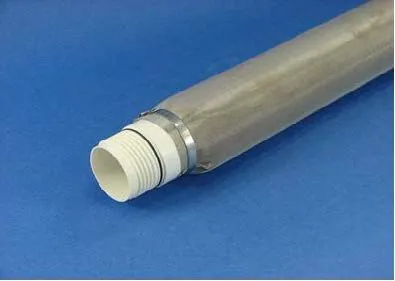
In environmental monitoring, the integrity of your data depends on the “inertness” of your well materials. Screen and riser pipes serve as the structural skeleton of a monitoring well, and their chemical compatibility with local groundwater is paramount. Selecting the right materials ensures that your samples are representative of the actual subsurface conditions rather than a byproduct of the well’s construction.
1. Riser Pipe & Screen Materials: PVC vs. Stainless Steel
The choice between thermoplastic and metallic materials typically depends on depth and the presence of specific contaminants.
- PVC (Polyvinyl Chloride): The industry standard for most sites due to its low cost and resistance to typical groundwater corrosion.
- Pros: Lightweight and widely available in Schedule 40 or 80 wall thicknesses.
- Cons: PVC can be degraded (softened or melted) by certain solvents like pure-phase xylenes or ketones.
- Stainless Steel (304 or 316): Preferred for high-stakes municipal wells or sites with extreme organic contamination.
- Pros: High tensile and collapse strength, making it ideal for deep installations where PVC might buckle.
- Cons: Significantly more expensive and can be prone to corrosion in highly acidic (low pH) environments.
- Fluoropolymers (e.g., PTFE/Teflon): Highly inert but rarely used as primary riser material due to high cost and low structural strength.
2. Slot Size and Screen Selection
The screen is a filter that allows water in while keeping sediment out.
- Matching Slot to Filter Pack: The slot size must be chosen based on the grain-size distribution of the filter pack sand. A common rule is that the screen should retain at least 90% of the filter pack.
- Common Dimensions: Most monitoring wells use 0.010-inch (#10 slot) or 0.020-inch (#20 slot) machine-slotted screens.
- Lithology Impact: Finer geologic formations (silt or clay) require smaller slot widths to prevent turbidity during sampling.
3. Critical Connection Details
How you join your pipes matters as much as the pipe itself.
- Threaded Flush Joints: Always use threaded joints with O-rings or Teflon tape to ensure a watertight seal.
- Avoid Solvent Glues: Never use PVC glue or primers. These “welding” chemicals can leach volatile organic compounds (VOCs) into your well, permanently compromising your water quality data.
Summary Table: Material Comparison
| Feature | PVC (Sch. 40/80) | Stainless Steel (304/316) |
|---|---|---|
| Corrosion Resistance | Excellent (most environments) | High (except low pH) |
| Chemical Inertness | Good (susceptible to solvents) | Superior (highly inert) |
| Strength | Moderate | Very High |
| Cost | Low | High |