

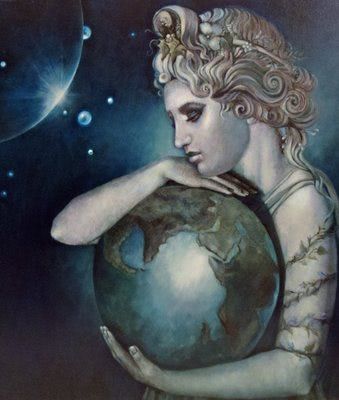
Did you know that Gaea, often known as Gaia in ancient Greek mythology, is the embodiment of Earth itself? This powerful figure not only symbolizes the fertile land but also embodies the nurturing forces of nature. Understanding the significance of Gaea can provide deep insights into our relationship with the environment and how we can positively influence our world. In this blog post, we will explore the origins of Gaea, her role in mythology, and what her enduring legacy teaches us about sustainability and our connection with the natural world.
The Origins of Gaea in Greek Mythology
Gaea, sometimes spelled as Gaia, is one of the oldest deities in Greek mythology. Her history stretches back to the very dawn of creation, emerging from Chaos, the unformed void. As the quintessential figure of Earth, Gaea serves as the mother of all life. The ancient Greeks revered her not just as a goddess, but as a reflection of the land itself, embodying its numerous attributes.
Gaea: The Mother of All
Known as “Mother Earth,” Gaea is central to many myths. She gave birth to numerous deities and creatures, including the Titans who controlled various aspects of the world. Gaea’s nurturing essence is reflected in her role as a creator, showcasing her connection to fertility and the cyclical nature of life.
The Titans and Gaea’s Legacy
Her offspring, the Titans, played significant roles in mythological narratives. Notably, Cronus, one of her sons, initiated a revolt against the older generation of gods, an event known as the Titanomachy. This reflection on Gaea’s complex lineage illustrates the themes of creation and destruction that weave through mythology.
Gaea’s Influence on Nature and Human Culture
The impact of Gaea transcends mythology, influencing cultures and philosophies through the ages. From ancient farming practices to contemporary environmental movements, the figure of Gaea serves as a foundation for understanding humanity’s relationship with the earth.
The Gaea Hypothesis: Bridging Myth and Science
Interestingly, Gaea’s concept has found resonance in modern scientific discussions through the Gaea Hypothesis, proposed by scientist James Lovelock. This hypothesis suggests that Earth operates as a single, self-regulating system where life and natural processes are interconnected. This perspective invites us to view the planet as an organism, nurturing a sense of shared responsibility for its well-being.
Environmental Implications: Learning from Gaea
In light of pressing environmental issues today, Gaea represents a call to action, reminding us of our obligations to the Earth. Her legacy inspires sustainable practices that honor our natural world.
Sustainable Practices Inspired by Gaea
- Permaculture: Emphasizing agricultural practices that emulate natural ecosystems, permaculture promotes biodiversity and sustainability. This approach fosters harmony with nature, encouraging humans to coexist rather than dominate the earth.
- Conservation Efforts: Committing to habitat protection and the preservation of endangered species reflect our duty to safeguard the Earth, honoring the spirit of Gaea. These initiatives serve as a reminder of our role as stewards of the planet.
- Minimalism: Embracing a lifestyle of minimalism allows us to reduce our ecological footprint. Placing value on fewer, high-quality possessions aligns with the belief that our lives should reflect balance and respect for nature.
Personal Reflection: Gaea in Our Everyday Lives
How can we adopt Gaea’s essence into our daily routines? By cultivating mindfulness and fostering deeper connections with nature, we embody Gaea’s principles. Whether through gardening, reducing waste, or simply spending time outdoors, these practices help us embrace her nurturing spirit.
Cultivating a Community of Change
To amplify the effects of our sustainable actions, building a community inspired by Gaea is crucial. Forming local groups that focus on conservation, sustainable farming, or educational outreach can strengthen our commitment to environmental stewardship. Sharing our challenges and achievements can create a supportive network for change.
The Power of Storytelling in Environmental Advocacy
Storytelling is another vital tool for promoting environmental consciousness. By sharing personal narratives of our journeys toward sustainability, we make these concepts more relatable and engaging. Such stories can encapsulate Gaea’s beauty and remind others of the importance of preserving our planet.
Reflections on Gaea’s Lessons
As we navigate modernity, taking time to reflect on Gaea’s teachings is essential. Her character encourages us to cherish and protect the Earth, particularly in the face of ongoing ecological challenges. Embodying her spirit allows us to forge a sustainable future for all living beings.