

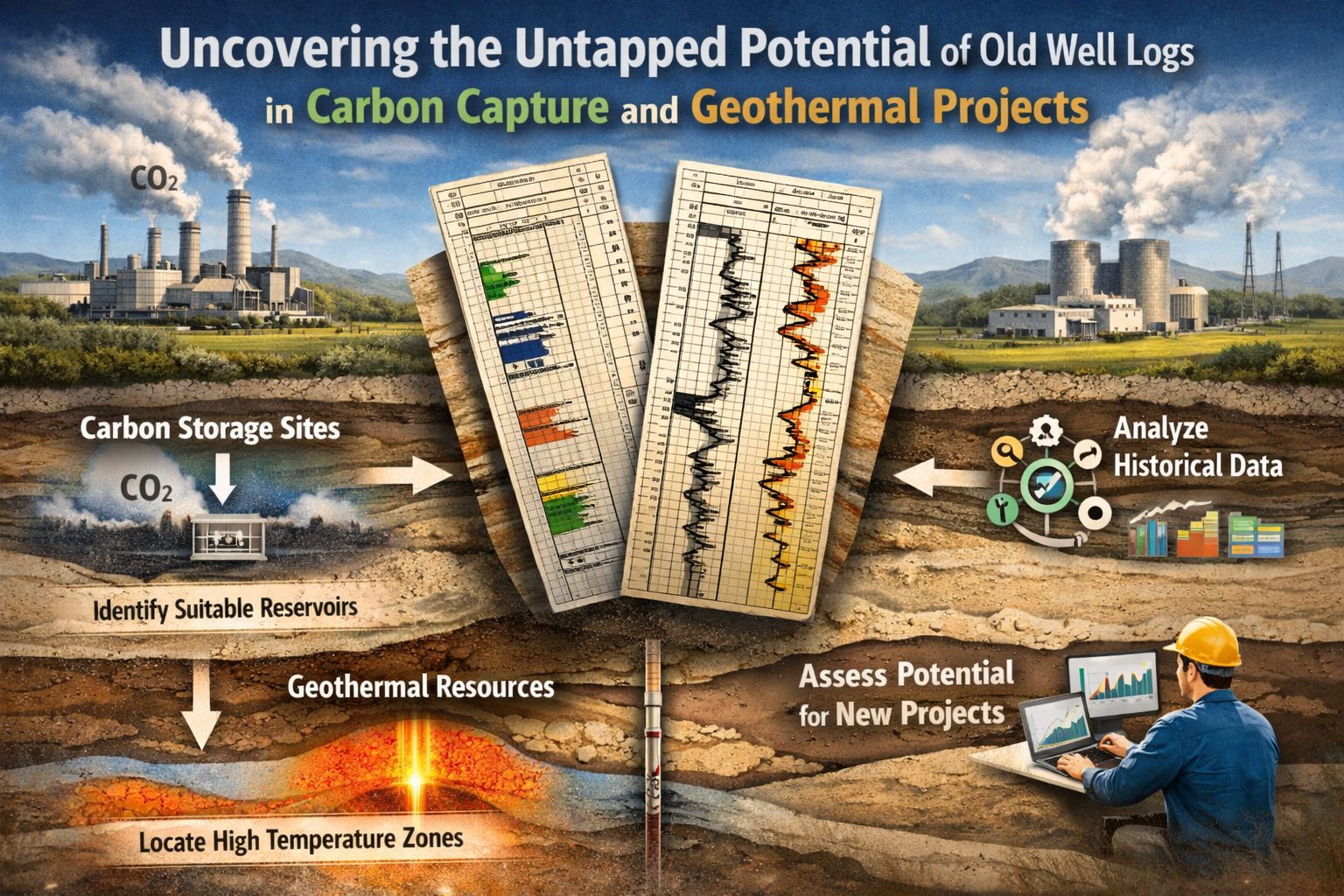
Did you know that the fossil fuel industry has left behind a treasure trove of well logs that could be pivotal in tackling climate change? Understanding how old well logs can play a crucial role in new carbon capture (CCS) and geothermal projects is not just fascinating—it’s important for our future. This blog post will delve into the significance of these documents and explore how their existing data can be harnessed to improve sustainability efforts in energy production.
The Foundation: What are Well Logs and Their Importance?
Well logs are detailed records of the geological formations encountered during the drilling of wells. They provide invaluable data about the types of rocks, fluid content, and other subsurface properties. For decades, these logs have been used to evaluate oil and gas reservoirs, but their potential goes far beyond traditional uses. As we pivot towards renewable energy sources, well logs can assist in evaluating sites for carbon capture and geothermal energy, two critical components in combating global warming.
Historical Perspective: The Evolution of Well Logs
Dating back to the 1920s, the first well logs were simple records primarily used by geologists to understand geological formations. As technology advanced, well logs became more sophisticated, incorporating various measurement techniques such as electrical resistivity, sonic velocity, and gamma-ray measurements. These technologies allow us to analyze and understand subsurface conditions in a much more detailed manner.
The Shift Toward Sustainability
With the urgency for climate action growing, industries are exploring ways to reduce greenhouse gas emissions, and one of the most promising solutions is carbon capture and storage (CCS). CCS technology captures carbon dioxide emissions at their source, preventing them from entering the atmosphere. Old well logs can provide critical information to identify optimal storage sites for CO2.
Carbon Capture and Storage: How Well Logs Fit In
To effectively implement CCS, understanding the geological formations is paramount. This is where well logs become invaluable. By utilizing existing well log data, engineers and geologists can:
- Identify Suitable Reservoirs: Old well logs can reveal potential sites that are capable of holding captured CO2 for long periods without leakage.
- Minimize Exploration Costs: Using previously collected data reduces the time and money spent on exploratory drilling.
- Enhance Site Monitoring: Understanding historical geological conditions can improve monitoring strategies for the integrity of storage sites.
Geothermal Projects: Unleashing Energy from the Earth
Geothermal energy, another critical renewable resource, harnesses heat from the Earth’s interior to generate power. Well logs play a significant role in determining the viability of geothermal sites. By examining the data from old wells, engineers can assess:
- Temperature Gradients: Identifying areas with favorable temperature conditions for energy extraction.
- Aquifer Characteristics: Understanding the fluid movement and permeability of underground reservoirs to optimize energy extraction processes.
- Environmental Impact Assessments: Evaluating historical data can help predict the environmental effects of geothermal energy projects.
The Added Benefit: Historical Data Helps in Future Innovations
The intersection of historical well logs with cutting-edge technologies offers a wealth of potential. As industries increasingly integrate artificial intelligence and machine learning, old well logs can be analyzed to uncover trends and patterns that current databases might overlook. Furthermore, the analytical techniques developed for one application (like oil and gas extraction) can often be applied to renewable energy fields, creating a synergy that drives innovation.
Bridging the Gap: Collaboration Between Industries
The transition from fossil fuels to renewable energy requires collaboration between various sectors. The oil and gas sector, which has extensive archives of well log data, can share insights and resources with companies specializing in carbon capture and geothermal projects. By working together, industries can develop more effective and efficient strategies for leveraging old well logs to address future energy needs.
Case Studies: Successful Utilization of Old Well Logs
While the potential of old well logs in CCS and geothermal is vast, real-world applications can provide insight into how these practices can succeed. Here are a couple of notable case studies:
Case Study 1: The Gorgon Project in Australia
This landmark CCS project involved retrofitting a natural gas facility to capture CO2 emissions. One of the keys to its success was utilizing existing geological data, including historical well logs, which guided the selection of suitable storage reservoirs. As a result, the project has successfully captured millions of tons of CO2.
Case Study 2: The Hellisheidi Geothermal Plant in Iceland
Hellisheidi, one of the largest geothermal plants globally, relied heavily on old well logs both during planning and operational phases, not only to monitor reservoir characteristics but also to predict how they change over time. This integration of historical data has led to continuous improvements in energy production efficiency.
Best Practices for Well Log Digitization
For companies looking to make the most of old well logs in future projects, digitization is key. Here are some best practices to keep in mind:
- Prioritize Data Quality: Ensure the original formats are preserved and the information is digitized accurately.
- Implement Robust Metadata Strategies: Adding context and details to digital files enhances their usability.
- Make Data Accessible: Organizing the data for easy access and developing platforms for collaboration will foster innovation across industries.
Challenges Ahead: What to Watch For
While the potential applications of old well logs in CCS and geothermal projects are promising, several challenges remain:
- Data Integrity Issues: Some older records may be incomplete or inconsistent, and verifying their accuracy can be a challenging task.
- Technological Constraints: Incorporating historical data into advanced technology frameworks may require specialized knowledge and tools.
- Regulatory Hurdles: Coordinating with regulatory bodies about the use and interpretation of historical data can complicate projects.
Future Prospects and the Role of LAS
As we look ahead, the role of organizations like LAS becomes even more crucial. By offering well log digitization services, LAS transforms old records into usable, actionable data that can be leveraged for modern applications in CCS and geothermal projects. Streamlining this process not only supports industries aiming for sustainability but also catalyzes innovative solutions vital for tackling climate change.
Where Do We Go From Here?
The path toward a sustainable energy future is riddled with challenges, but the opportunity to utilize old well logs in CCS and geothermal projects marks a significant step forward. By leveraging historical data, we can uncover new insights that drive innovation and build a more sustainable world.
Now is the time to act. The integration of renewable energy sources is crucial, and old well logs provide incredible insights. Embrace the opportunity to learn more about digitization services that can transform this data into actionable insights.
In summary, understanding the role of old well logs in new carbon capture and geothermal projects is essential. By unlocking this potential, we can drive the change we need to fight climate change and transition to a more sustainable energy landscape.
Learn more about our Data Solutions
- Geophysical and well log digitization
- Seismic section digitization
- Map digitization
- Core photo splicing
- Scout ticket digitization
Related Articles
- Data Digitization and Management Solutions for Geoscience and Engineering
- Quality Control and Validation in Geophysical Well Log Digitization
- Scanning and Structuring Historical Borehole Logs for Digital Analysis
- Extracting Gamma Ray, Resistivity, and Sonic Data from Vintage Well Logs
- From Weeks To Seconds: How Digitized Well Logs Accelerate Reservoir Rock Mapping
- How to View, Compare, and Summarize LAS Files for Free with GAEA Technologies
- Mastering the Code: A Guide to Common Geophysical Curve Abbreviations
- Unlocking Hidden Reserves: Using 3D Visualization of Digital Logs to Find Bypassed Pay Zones
- Why Physical Well Logs Are a Ticking Time Bomb: Preventing Data Loss from Paper Deterioration
- 5 Steps To Convert Your Archive Into An AI-Ready Geospatial Pipeline
- Uncovering the Untapped Potential of Old Well Logs in Carbon Capture and Geothermal Projects
- LAS vs. LIS vs. DLIS: A Geoscientist’s Guide to Digital Well Log Output Formats
- LAS, SEGY, and Beyond: Ensuring Interoperability For Your Newly Digitized Assets
- The Lifecycle of a Well Log: From Mud Logging to Digital Asset
- Asset Preservation: Protecting Your Subsurface Intellectual Property from Physical Deterioration
- The Origin of the LAS Format for Well Logs