

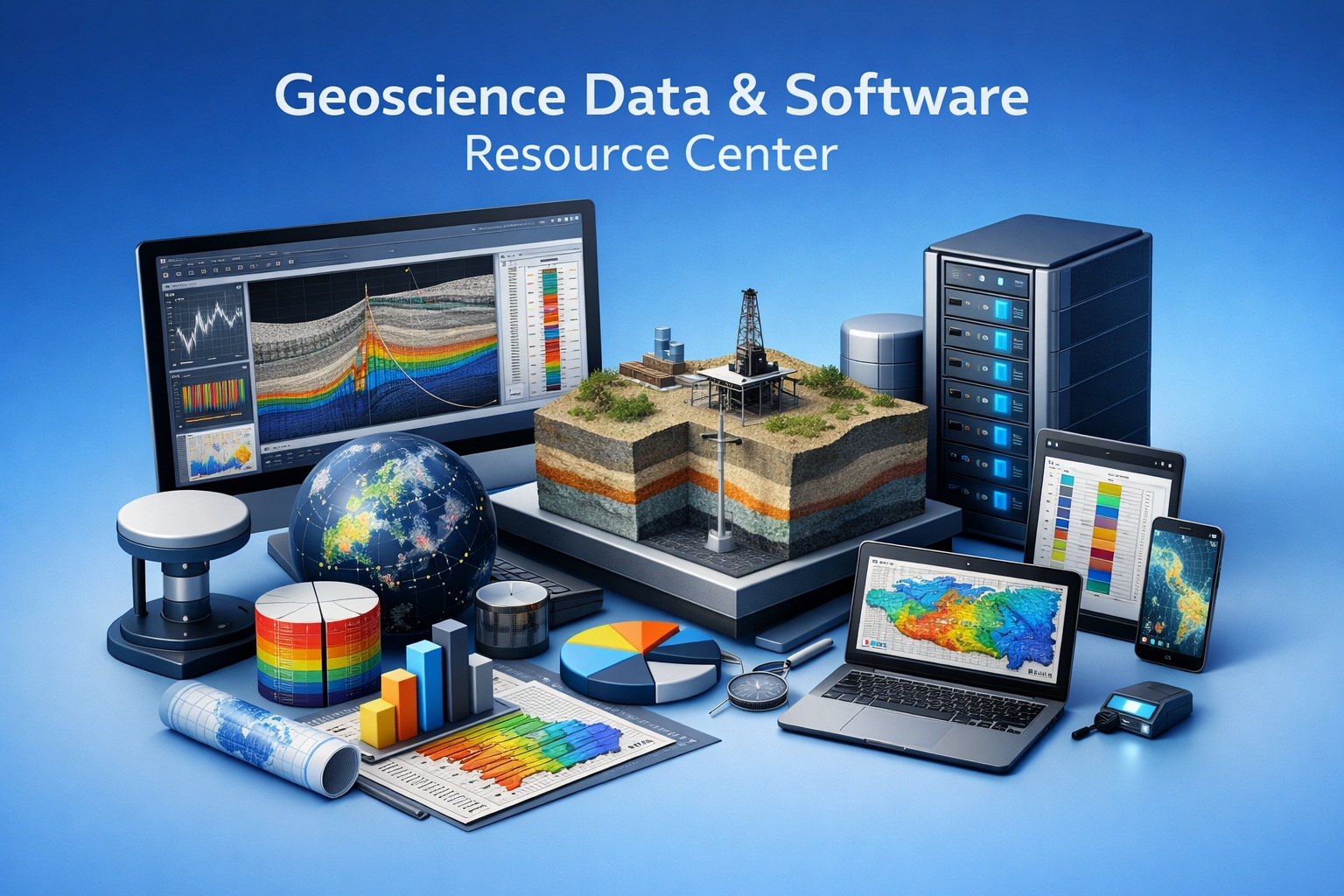
Welcome to your centralized hub for geotechnical and environmental knowledge. Explore expert guides, workflows, and best practices.
Start with the topic that matches your workflow challenge.
Borehole Data Solutions

Efficiently capture, store, and manage borehole logs, stratigraphy, and field observations in a centralized database.
Geotechnical Data Management

Explore best practices for managing geotechnical data across the full project lifecycle—from field collection to analysis and reporting.
Environmental Data Management

Learn how to integrate laboratory results, field data, and regulatory requirements into a single, streamlined system.
Sub-surface Visualization

Transform complex subsurface data into clear, visual models that improve interpretation, communication, and decision-making.
GaeaSynergy Platform

Dive into the capabilities of the GaeaSynergy Platform, including centralized databases, integration tools, and reporting automation.
Environmental Site Assessment Automation

Discover how automation reduces manual effort in environmental site assessments, improves consistency, and accelerates reporting timelines.
Contaminant Transport Modeling

Understand how contaminant plumes move through soil and groundwater, and how modeling tools support risk assessment and remediation planning.
Geoscience Data Digitization

Geoscience data digitization is the foundation of modern subsurface intelligence. Across oil & gas, mining, environmental, and infrastructure projects, vast amounts of critical data remain locked in legacy formats.
Frequently Asked Questions

Find answers to common questions about licensing, deployment, workflows, integrations, and more.
Training and Tutorials

Access step-by-step tutorials, onboarding materials, and best practices to help your team get the most out of your software tools.
Security and Governance

Learn how to manage user access, maintain data integrity, and ensure compliance with regulatory and organizational standards.
Borehole QA/QC
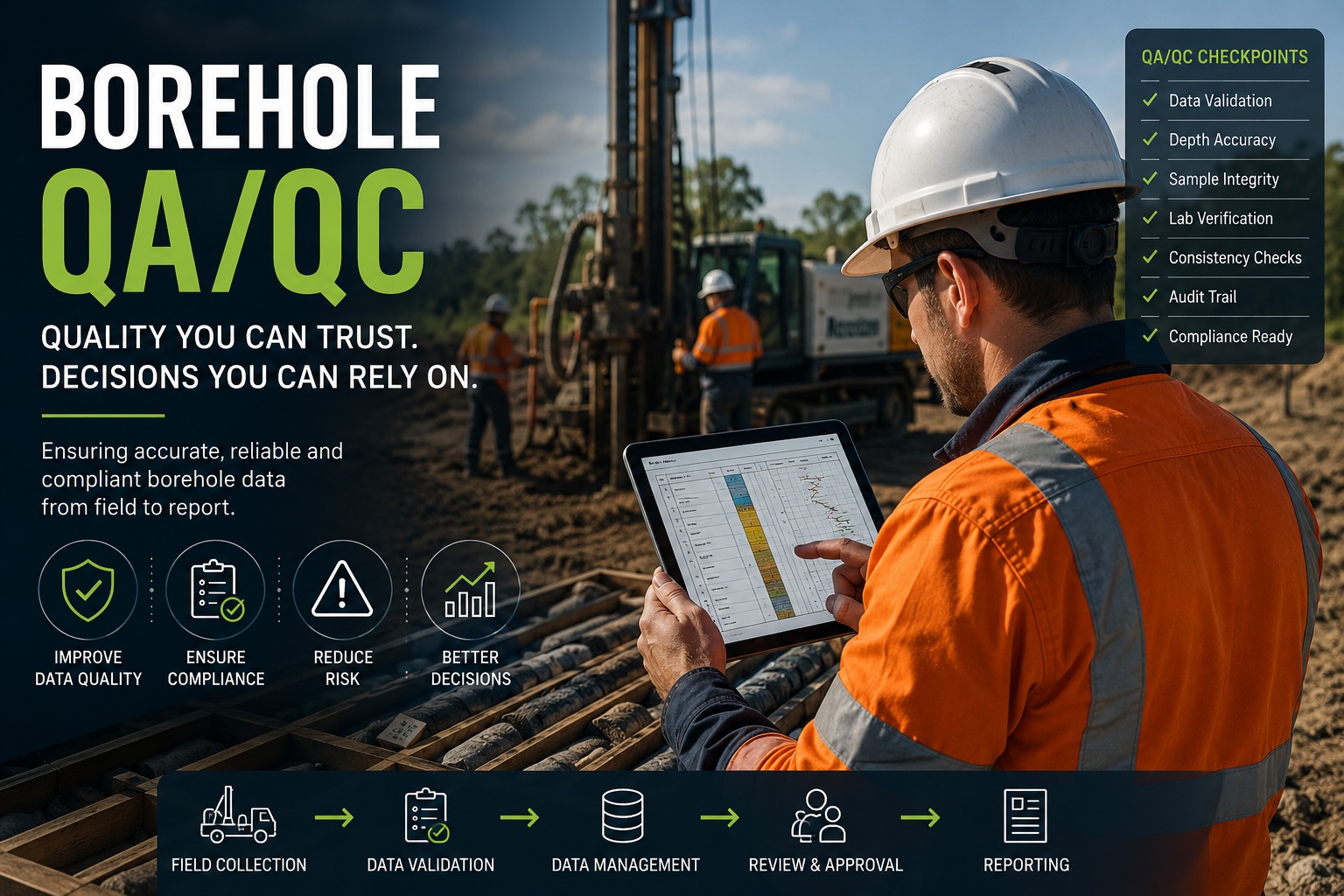
Build accurate, consistent, traceable, and technically defensible borehole data with practical guidance on validation, review, governance, standards, and discipline-specific QA/QC.
Latest Posts
- How to Verify a Data Migration: Record Counts, Units, Coordinates and ExceptionsA successful import message confirms that a process finished; it does not establish that the resulting information is complete, correctly related or suitable for engineering use. Verification provides the evidence needed to answer those questions. For geotechnical data, that evidence must address both individual values and the context that gives them meaning. A borehole record… Read more: How to Verify a Data Migration: Record Counts, Units, Coordinates and Exceptions
- Borehole Data Governance for Transportation Projects: Building Reliable Infrastructure with Trusted Geotechnical DataTransportation infrastructure projects generate enormous volumes of subsurface information. Every highway expansion, bridge replacement, railway corridor, tunnel, airport, or transit project relies on borehole data collected over months—or even decades—to support engineering design, construction, maintenance, and future rehabilitation. This information includes borehole locations, geological logs, soil classifications, groundwater measurements, Standard Penetration Test (SPT) results, laboratory… Read more: Borehole Data Governance for Transportation Projects: Building Reliable Infrastructure with Trusted Geotechnical Data
- Geotechnical QA/QC for Infrastructure ProjectsBest Practices for Delivering Reliable Subsurface Data for Roads, Bridges, Dams, Tunnels, Railways, and Major Civil Engineering Projects Every major infrastructure project begins below the surface. Before the first foundation is poured, bridge pier constructed, tunnel excavated, or highway embankment built, engineers must understand the ground conditions on which the entire project will depend. That… Read more: Geotechnical QA/QC for Infrastructure Projects
- What Does Geotechnical Data Migration Cost? Scope, Timing and DeliverablesGeotechnical data migration cost is difficult to estimate from a project count alone. Ten consistent databases may require less investigation than one heavily customized archive with unclear field meanings and missing dependencies. A useful budget therefore starts with the work needed to preserve meaning, verify results and support the intended destination workflow. This guide explains… Read more: What Does Geotechnical Data Migration Cost? Scope, Timing and Deliverables
- SPT and N-Value QA/QC ProceduresBest Practices for Ensuring Accurate Standard Penetration Test Data in Geotechnical Investigations The Standard Penetration Test (SPT) remains one of the most widely performed in-situ tests in geotechnical engineering. For more than a century, engineers have relied on SPT N-values to estimate soil density, relative strength, bearing capacity, liquefaction potential, settlement characteristics, and numerous other… Read more: SPT and N-Value QA/QC Procedures
News Releases
-
GAEA Software Development Roadmap: Building the Next Generation of Geoscience Data Workflows
Geoscience and engineering organizations are managing more information than ever before. Borehole and well logs, laboratory results, environmental data, legacy databases, scanned field records, maps, cross-sections, photographs, regulatory information and project documents all need to remain usable long after the original investigation has been completed. At the same time, many organizations are facing another challenge:…
-
Introducing WinLoG Validation & QA/QC—Included in WinLoG 10 at No Additional Cost
GAEA Technologies is pleased to announce the release of WinLoG Validation & QA/QC, included in WinLoG version 10 at no additional cost, bringing automated data-quality checks to borehole and well logging workflows. Reliable logs depend on reliable underlying data. Missing sample identifiers, inconsistent measurements, and conflicting observations can be difficult to spot during routine review.…
-
MIGRATEv10: A Powerful New Standard in 2D Contaminant Transport Modeling
GAEA Technologies is proud to announce the release of MIGRATEv10, the latest evolution in contaminant transport modeling software designed to deliver enhanced accuracy, flexibility, and insight for environmental professionals. MIGRATEv10 introduces advanced two-dimensional (2D) modeling capabilities, enabling users to simulate both vertical and horizontal contaminant migration within complex subsurface environments. This provides a more realistic…
-
GaeaSynergy Launches Three Powerful New Dashboards to Transform Data Visibility and Project Intelligence
GaeaSynergy, a leading platform for geoscience data management and visualization, is proud to announce the release of three new integrated dashboards: the Main Dashboard, Project Dashboard, and Network License Dashboard. These new tools are designed to deliver real-time insights, streamline workflows, and enhance decision-making across geotechnical, environmental, and geological projects. Together, these dashboards represent a…
-
Stop Guessing, Start Calculating: Free Drilling Utilities from GAEA
February 2026: Accuracy in the field is the foundation of every reliable site investigation, but manual calculations and paper charts can be a major bottleneck. We’ve recently featured a suite of free Drilling and Sampling Utilities from GAEA Technologies that every field professional should have in their digital toolkit. These tools are designed to take the guesswork…
Our Story
-
GAEA Software Development Roadmap: Building the Next Generation of Geoscience Data Workflows
Geoscience and engineering organizations are managing more information than ever before. Borehole and well logs, laboratory results, environmental data, legacy databases, scanned field records, maps, cross-sections, photographs, regulatory information and project documents all need to remain usable long after the original investigation has been completed. At the same time, many organizations are facing another challenge:…
-
Why We Built GaeaSynergy: Solving the Fragmented Data Problem
Introduction In the world of geotechnical engineering, environmental consulting, and geological investigation, data is everything. Every borehole log, lab result, cross-section, and field observation contributes to a deeper understanding of the subsurface. Yet for decades, one persistent challenge has limited the full potential of this data: Fragmentation. Data scattered across spreadsheets, disconnected software tools, legacy…
-
Inside GaeaSynergy: How We Designed a Platform for Engineers, Not Just Data
Introduction In the world of geotechnical engineering, environmental consulting, and geological analysis, software has traditionally been built around data structures, not people. Tables, schemas, and databases often take center stage, while the real users—engineers and geoscientists—are left adapting their workflows to fit rigid systems. At GAEA Technologies, we saw this disconnect firsthand. Engineers weren’t struggling…
-
Why Most Engineering Software Fails (And How to Avoid It)
Introduction Engineering software is meant to solve problems—streamline workflows, improve accuracy, and enable better decision-making. Yet, despite rapid advancements in technology, a surprising number of engineering software platforms fail to deliver on these promises. They are purchased with high expectations, implemented with significant effort, and then—quietly—underused, worked around, or abandoned altogether. Why does this happen?…
-
The Future of Geoscience Data: From Storage to Intelligence
Introduction For decades, geoscience data has been treated primarily as something to store, organize, and retrieve. Borehole logs were archived, laboratory results filed, and maps generated as static outputs. While these practices supported project documentation, they rarely unlocked the full potential of the data itself. Today, that paradigm is changing. The geoscience industry is entering…
-
The Story Behind GAEA Technologies: 30 Years of Geoscience Innovation
Introduction For over three decades, GAEA Technologies Ltd. has quietly shaped the evolution of geoscience and engineering workflows across the globe. From its early beginnings in the mid-1990s to its present-day role as a provider of integrated geotechnical, environmental, and geological software solutions, the company’s journey reflects a broader transformation within the geoscience industry itself.…
Not sure where to start? Explore the GaeaSynergy Platform or contact us for guidance.