

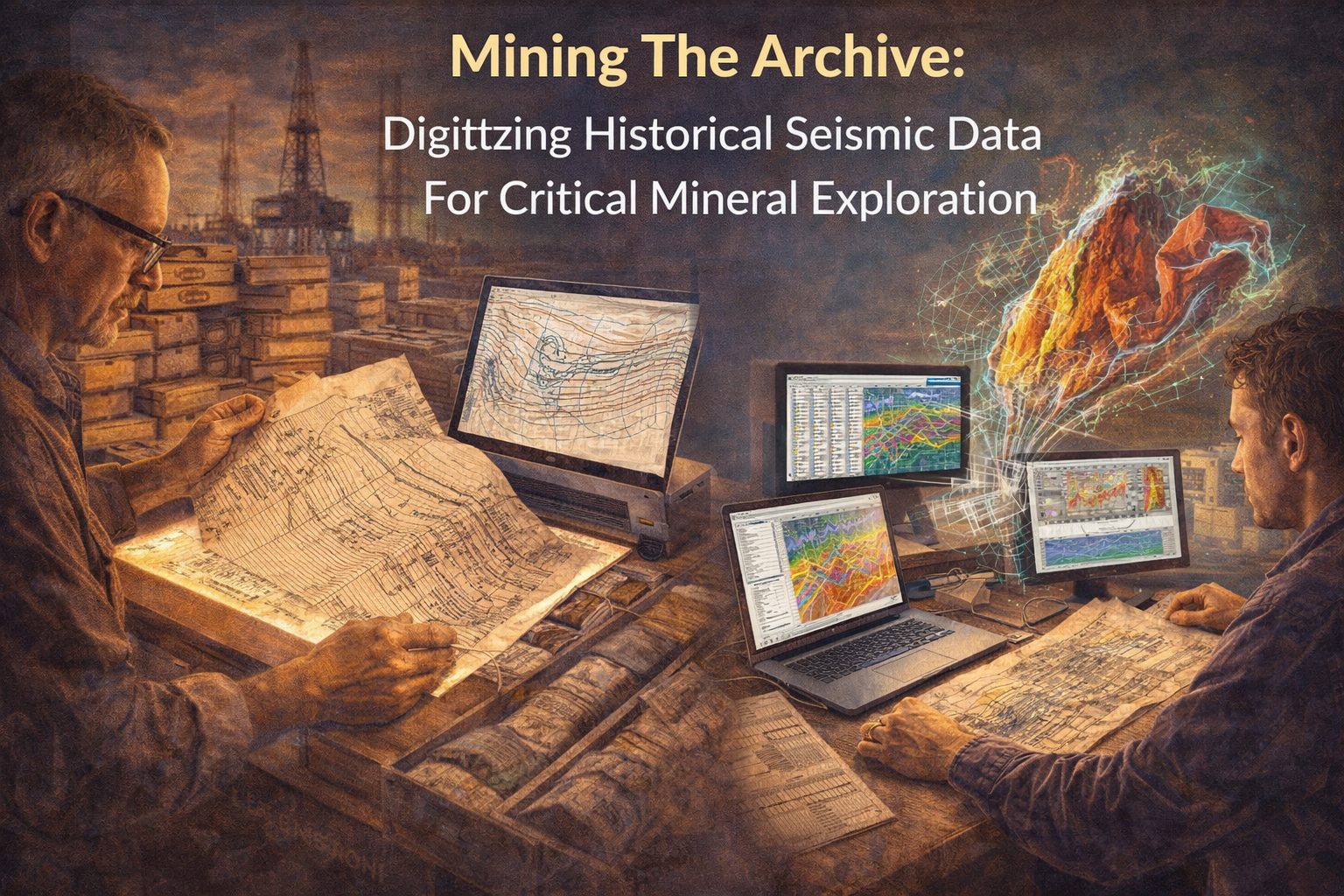
Did you know that up to 90% of historical seismic data is sitting idle, waiting to be accessed for modern exploration? In a world where resource demands are increasing, particularly for critical minerals, the need to digitize and harness this archived information has never been more pressing. In this comprehensive guide, we’ll explore the importance of digitizing historical seismic data, the methods involved, and how these processes can directly impact critical mineral exploration.
Understanding Historical Seismic Data
Seismic data forms the backbone of exploration geology, providing valuable insights into the Earth’s subsurface. Historical seismic sections may include oil and gas exploration data, mineral surveys, or geological mapping efforts that have been conducted over the decades, often on paper and in analog formats. However, with the rising interests in sustainable energy and the push for critical minerals like lithium, nickel, and cobalt, there’s an urgent need to revive and digitize this data.
Why Digitization Matters
The digitization of historical seismic data holds a plethora of benefits, especially for critical mineral exploration. Below are a few reasons why this is relevant today:
- Accessibility: Digitized data can be stored in databases, making it easier for geologists and researchers to access vital information that can aid in exploration endeavors.
- Data Preservation: Physical documents can degrade over time. Digitization ensures that data is preserved for future generations, safeguarding valuable scientific insight.
- Advanced Analytical Tools: With modern software, geologists can leverage data analysis tools to derive insights that were previously hidden, enabling better predictive modeling of mineral locations.
- Collaboration Opportunities: Digitally stored information is easier to share across organizations, fostering collaboration and partnership in exploration efforts.
The Process of Digitization
Digitizing seismic data is a multi-step process that involves careful planning and execution. Here’s a breakdown:
- Data Assessment: Inventory the existing seismic data, mapping where digitization efforts need to be focused. This could involve prioritizing high-value datasets related to critical minerals.
- Selection of Equipment and Software: Depending on the condition of the data (analog or digital format), appropriate scanning equipment and data conversion software must be selected.
- Data Conversion: This is the actual process of converting paper records into digital formats. High-resolution scanners are typically used for this process, alongside specialized software that reconstructs and preserves data fidelity.
- Quality Control: After the digitization is completed, quality checks must be performed to ensure that the digital data is accurate and complete.
- Metadata Creation: Alongside the digitized seismic sections, metadata should also be generated; this is crucial for future searches and analytics.
- Storage Solutions: The digital data needs a secure and cost-effective storage solution, which could range from cloud-based systems to on-premises servers.
Overcoming Challenges in Digitization
While digitizing seismic data is a beneficial endeavor, it does come with challenges that must be addressed:
- Costs: The initial investment in equipment and software can be substantial, though benefits often outweigh these costs in the long run.
- Technical Expertise: Proper digitization requires skilled personnel who understand both seismic data and the technology available for digitization.
- Data Integrity: Ensuring that the data remains intact during the conversion process is critical; two-dimensional cuts must truly reflect the three-dimensional geological features of the subsurface.
Utilizing Digitized Data for Critical Mineral Exploration
Once seismic data is digitized, mining companies can leverage this resource through various methodologies:
- Geological Modeling: Advanced modeling techniques can visualize the relationships and structures present within the Earth, aiding in more thorough investigations.
- Integration with Other Data Sources: Digitized seismic data can be integrated with other geological data, including geochemical and geophysical surveys, providing a comprehensive picture that enhances mineral exploration efforts.
- Machine Learning and AI: The advent of AI technologies allows for deeper analysis of seismic data, identifying patterns and predicting mineral locations faster and more accurately than traditional methods.
- Resource Allocation: By utilizing insights from historical data, companies can optimize their exploration efforts and allocate resources more effectively, saving time and money.
Real-World Applications
Several mining companies and research institutions have pioneered in digitizing their seismic data over the years, yielding remarkable results in mineral exploration. Companies that have adopted these practices have found significant reserves that were previously unexplored or overlooked. Organizations have reported increased yields and more efficient exploration practices, revolutionizing their operations and enhancing their sustainability efforts.
The Future of Digitized Seismic Data
As the world moves towards a more sustainable future and the demand for critical minerals skyrockets, the digitization of historical seismic data will undoubtedly play a vital role in exploration practices. With advancements in technology continuing to unfold, adoption rates will likely increase, allowing more companies to tap into the potential of their archival data while implementing more environmentally responsible practices.
Learn More About Our Seismic Section Digitization Services
As you can see, the future is bright for historical seismic data and its contributions to critical mineral exploration. If your organization is interested in learning more about how to digitize your seismic data, visit our services page for more information.
Learn more about our Data Solutions
- Geophysical and well log digitization
- Seismic section digitization
- Map digitization
- Core photo splicing
- Scout ticket digitization