

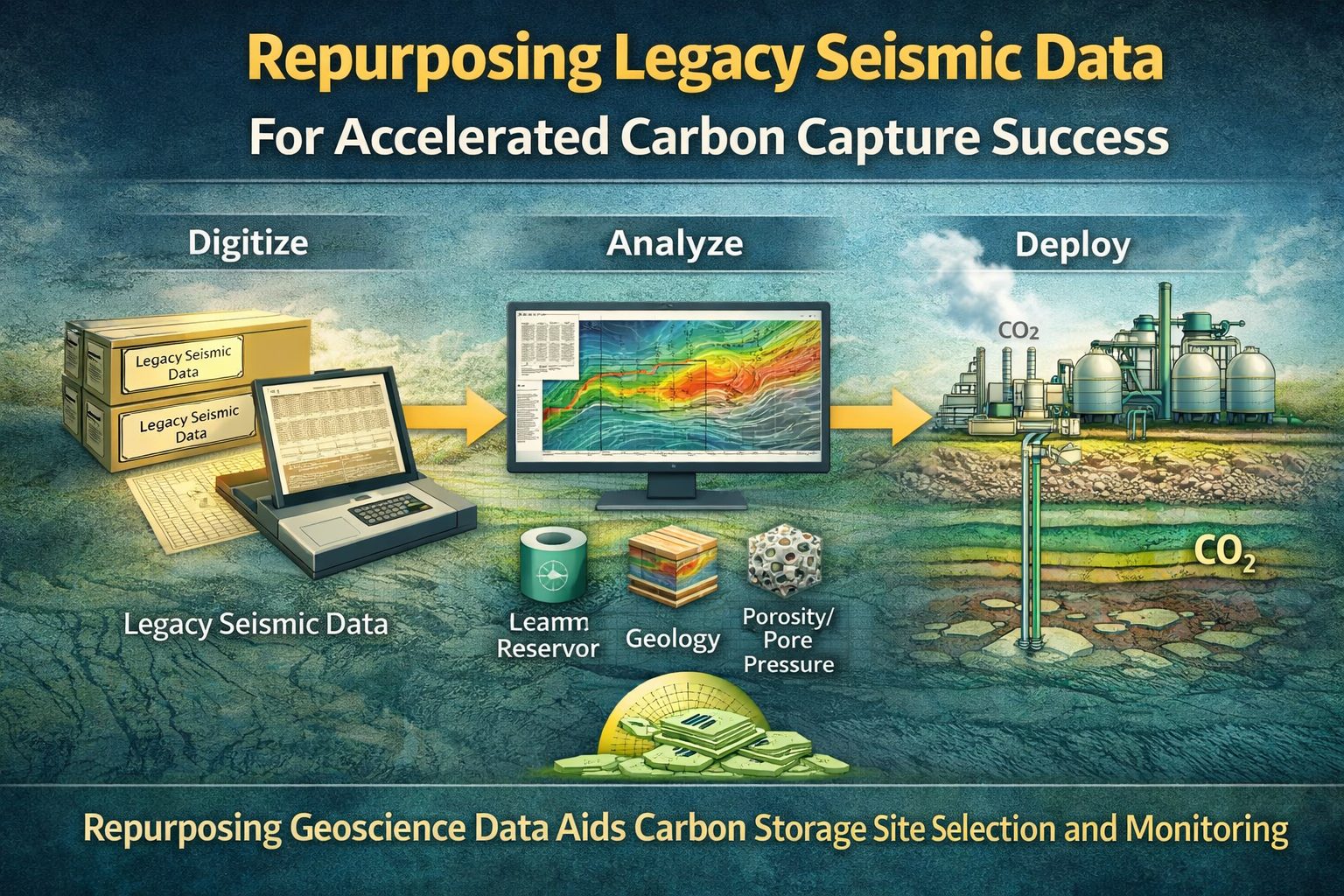
Did you know that carbon capture and storage (CCS) could play a critical role in mitigating climate change? As the push for cleaner energy intensifies globally, the need for efficient site selection becomes paramount. Understanding how to repurpose legacy seismic data can make all the difference. Carbon capture and storage (CCS) is no longer a theoretical pursuit; it’s a practical solution poised to revolutionize the fight against climate change. However, success largely depends on accurate site selection—an area where many organizations struggle. The advent of digital technologies in the oil and gas industry now presents an opportunity to repurpose legacy seismic data, streamlining this crucial process. In this post, we will explore how digitizing seismic sections can enhance site selection and ultimately make carbon capture projects more viable.
What is Carbon Capture and Storage (CCS)?
CCS is a technology aimed at capturing carbon dioxide (CO2) emissions at their source, transporting them to a secure location, and storing them underground in geological formations. This process not only reduces atmospheric CO2, but also helps to meet emission reduction targets set under international agreements such as the Paris Accord.
The Importance of Site Selection for CCS
Selecting suitable sites for CCS is critical for the technology’s success. The chosen sites must be geologically appropriate for long-term CO2 storage, ensuring that the gas does not leak back into the atmosphere. Traditionally, this requires an extensive survey of geological formations, historical seismic data, and even physical drilling, which can be both time-consuming and costly.
The Advantage of Legacy Seismic Data
Legacy seismic data refers to the vast amounts of seismic information collected over decades during oil and gas explorations. Much of this data remained untapped due to outdated technology or the inability to interpret it in modern frameworks. However, these seismic datasets are valuable assets for CCS projects as they can provide insights into subsurface conditions, critical for making informed decisions on storage sites.
How Digitization Changes the Game
By digitizing legacy seismic data, organizations can harness advanced analytical tools to process and interpret this information efficiently. Instead of relying on outdated methods, a structured digital framework allows for:
- Enhanced Data Analysis: Digital formats enable sophisticated algorithms and tools to analyze large datasets, producing results much faster than traditional methods.
- Accessibility: Digitized data can be shared across teams and departments, fostering a collaborative approach to site selection.
- Cost Efficiency: Utilizing existing seismic data minimizes the need for new surveying and drilling, significantly reducing costs.
The Process of Digitizing Seismic Sections
- Data Collection: Gather all available legacy seismic data, organizing it based on parameters such as geographic location and method of collection.
- Data Cleaning: Remove any outdated or irrelevant information, ensuring the dataset is as reliable as possible.
- Transformation: Convert the data into a digital format, organizing it in a way that is conducive to analysis.
- Data Integration: Merge the newly digitized seismic data with other geological data to create a comprehensive picture of the subsurface.
The Role of Analytics in Site Selection
Once seismic data is digitized, organizations can apply various analytical methods:
- Geospatial Analysis: Assessing spatial relationships and distributions of geological features relevant to CCS.
- Risk Assessment and Modeling: Utilizing digitized data to model potential scenarios and identify risks associated with different storage options.
- Machine Learning: Advanced algorithms can detect patterns or anomalies within the seismic data, revealing potential sites for carbon storage that might not be immediately evident.
Challenges and Solutions
Despite the advantages, there are challenges in the digitization process:
- Data Quality: The quality of legacy data varies, affecting outcomes. Investing in high-quality digitization tools and techniques can mitigate this.
- Training: Teams may require training to utilize new digital tools effectively. Organizations should prioritize education and ongoing training sessions.
Sustainability and Future Perspectives
The intersection of legacy seismic data repurposing and CCS highlights a broader perspective on sustainability in the energy sector. As we transition to greener technologies, finding innovative ways to leverage existing resources will be key to ensuring that investments yield meaningful results.
Learn More
If you’re interested in accelerating your CCS projects through the effective use of digitized seismic data, click below to learn more about our Seismic Section Digitization Services and how we can support your carbon capture initiatives.
- Geophysical and well log digitization
- Seismic section digitization
- Map digitization
- Core photo splicing
- Scout ticket digitization
Wrapping Up
By repurposing legacy seismic data, organizations can enhance site selection processes for CCS, ultimately leading to more successful and sustainable carbon capture efforts. As the world strives to address climate change, leveraging advanced technology and existing resources will be crucial.
In the face of a rapidly changing climate, the emphasis on efficient and effective solutions will guide our approach to sustainability. As we move forward, embracing innovative technologies will ensure we’re not only preparing for the present but are also fully equipped for the future of energy.
Related Articles
- Data Digitization and Management Solutions for Geoscience and Engineering
- Digitizing Vintage Seismic Sections for Modern Subsurface Interpretation
- Converting Analog Seismic Profiles into Digital Seismic Data
- Mining The Archive: Digitizing Historical Seismic Data For Critical Mineral Exploration
- 5 Steps To Convert Your Archive Into An AI-Ready Geospatial Pipeline
- Understanding SEG-Y Data Format
- Paper Vs. Profit: Calculating The ROI Of Seismic Section Digitization In 2026
- The Geothermal Goldmine: Finding Sustainable Heat Sources in Decades-Old Seismic Archives
- LAS, SEGY, and Beyond: Ensuring Interoperability For Your Newly Digitized Assets