

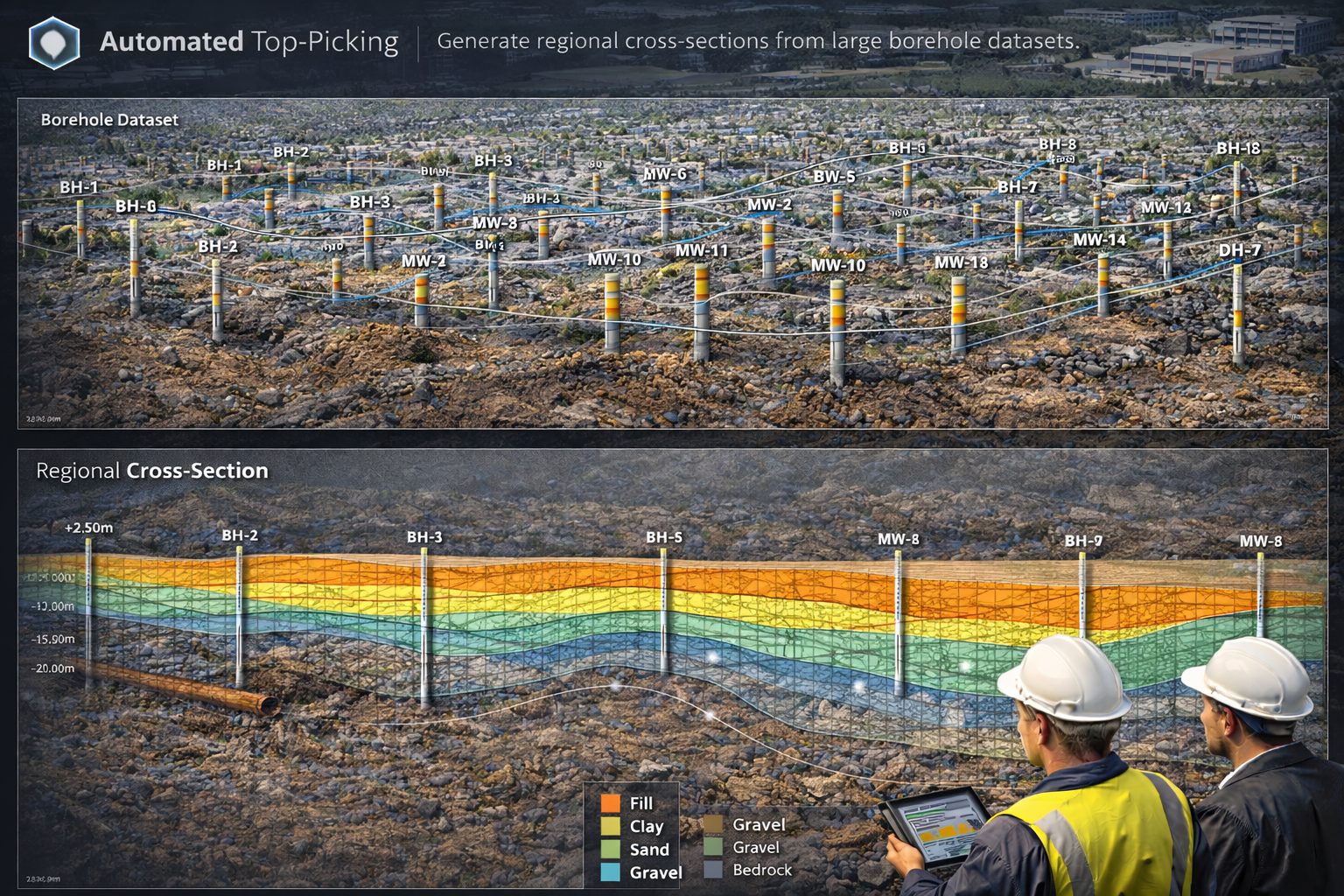
Did you know that architects and engineers often spend hours manually creating cross-section diagrams for their projects? In today’s fast-paced world, efficiency is paramount, and the construction industry is no exception. The ability to generate regional cross-sections seamlessly can significantly influence project timelines and productivity. In this guide, we’ll explore how the innovative use of automated top-picking can revolutionize the process of creating detailed fence diagrams and cross-section visuals—saving you not just time but also resources.
Understanding Cross-Section Diagrams
Cross-section diagrams are critical in fields such as architecture, civil engineering, and landscaping. They offer a visual representation that reveals the interior details of a structure or geographical feature, providing insights into various elements such as construction, topography, and environmental interactions.
- Purpose of Cross-Section Diagrams
Cross-section diagrams serve multiple purposes:
- Visualization: They allow stakeholders to see what a finished project will look like in its environment.
- Planning and Design: They help architects and engineers in planning and validation stages by illustrating components in a spatial context.
- Problem Detection: They can identify potential issues in structural design or geological conditions early in the project cycle.
- Key Elements of Cross-Section Diagrams
Essential components include:
- Scale and Proportion: Ensuring accuracy is vital for any construction project.
- Annotations and Markings: Labels that clarify elements and measurements enhance the usability of the diagram.
- Details: Often, intricate details regarding ground levels and site features are included for a comprehensive understanding.
Traditional Methods of Creating Cross-Section Diagrams
Before digital advancements, creating cross-section diagrams was a time-consuming process. Here are the primary methods used:
- Manual Drawing: Engineers would hand-draw sections based on their surveys and calculations. While precise, this method was labor-intensive and prone to human error.
- Modeling Software: Some professionals utilized basic CAD (Computer-Aided Design) systems to create cross-sections. However, these tools often lacked specialized functionalities necessary for effective diagram generation.
The Rise of Automated Top-Picking
As technology has advanced, so too have the methods used in the creation of cross-section diagrams. Automated top-picking software has emerged as a viable solution to traditional challenges:
- Speed and Efficiency
Automated systems can generate cross-section diagrams in a fraction of the time it would take manually. This acceleration allows engineers to focus on other pressing tasks, thus boosting overall project productivity. - Reduced Errors
Automation minimizes human error, leading to more accurate and reliable diagrams. It effectively reduces costly revisions during later stages of project development. - Seamless Integration
Most automated top-picking tools can be integrated with existing design and engineering software, allowing for a smoother workflow and real-time data utilization.
Implementing Automated Top-Picking in Your Workflow
Transitioning to automated top-picking may feel daunting, but the benefits far outweigh the initial adjustment. Here’s a suggested roadmap:
- Research Available Tools
Familiarize yourself with the various automated top-picking tools available. Look for reviews and case studies to identify solutions that best suit your needs.
- Key Software Options: Research and compare popular software solutions like WinFence.
- Training and Onboarding
Invest in training for your team. Having a knowledgeable staff can ease any apprehensions about embracing new technology.
- Diverse Training Methods: Utilize online resources, seminars, and workshops for training.
- Begin With Simple Projects
Start by implementing automated top-picking methods in smaller projects. This allows for adjustment and adaptation without overwhelming staff. Focus on gathering feedback to refine your approach. - Evaluate and Adapt
Continuously evaluate your processes to maximize efficiency. Encourage your team to share insights that may help in streamlining emerging workflows further.
Advantages of Automated Top-Picking for Your Business
The benefits of adopting an automated top-picking approach extend beyond mere efficiency:
- Cost Savings: By reducing the man-hours spent on diagrams, businesses can allocate resources to other areas, leading to substantial savings.
- Scalability: Automated solutions can handle increased workloads, making it easier for businesses to scale their projects without a corresponding increase in labor costs.
- Enhanced Collaboration: Streamlined workflows enhance collaboration between architecture, engineering, and construction (AEC) teams by providing unified diagrams accessible to everyone involved in the project.
Real-World Applications of Automated Top-Picking
Consider how various industries leverage automated top-picking:
- Residential and Commercial Construction
Gaining accurate representations can help not only in the design phase but also in regulatory approvals. - Land Surveying
Quick generation aids in swift land-use analysis while complying with local zoning laws. - Urban Planning
Facilitated visualizations enable better communication with stakeholders and the community.
Conclusion: Embracing the Future of Engineering
The shift towards automated top-picking and seamless diagram generation marks an important evolution in engineering and construction practices. By adopting these technologies, businesses can greatly enhance project efficiency and effectiveness. The future of construction lies in the ability to produce high-quality designs in mere seconds, not hours.
Now that you’ve learned about the significant advantages of automating your cross-section generation, it’s time to act. As the industry moves forward, consider how adopting these new technologies can position your company at the forefront of innovation.
Remember, in a world where timely and accurate information is key—embrace the future and invest in automation today to remain competitive!
Learn more about our Solutions
- GaeaSynergy Platform for Geoscientific Analysis
- WinLoG Borehole and Well Log Data Management
- WinFence Cross-section and Fence Diagram Visualization