

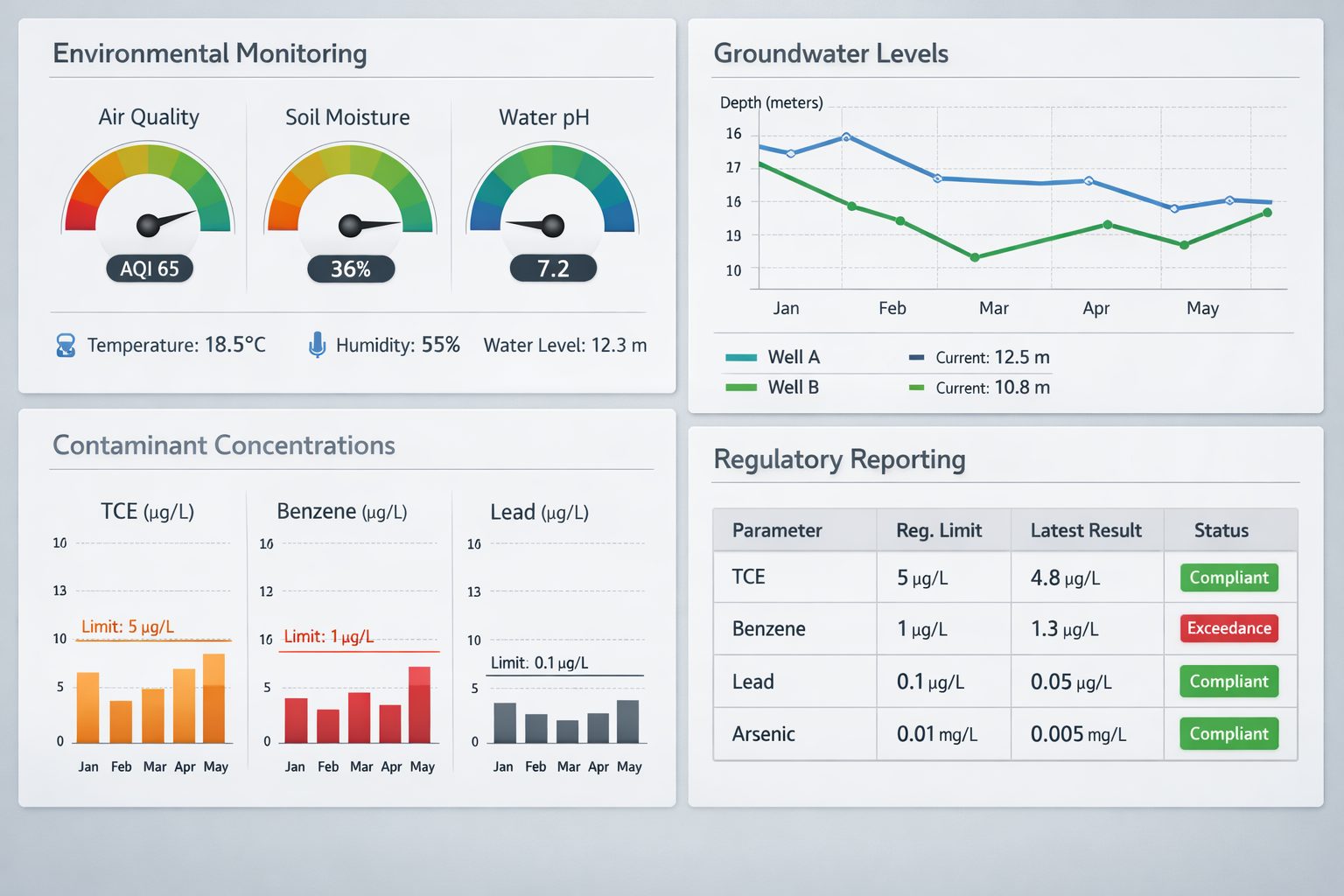
For a comprehensive overview of environmental monitoring databases, environmental data systems, and best practices for managing environmental investigations, see our guide:1
The Complete Guide to Environmental Data Management.
Introduction
Environmental investigations and monitoring programs generate large volumes of scientific data including groundwater monitoring records, soil sampling results, laboratory analytical reports, and field measurements. Managing this information effectively requires structured environmental data management systems capable of organizing monitoring wells, sampling events, and analytical results within centralized databases.
Without proper data management practices, environmental datasets often become fragmented across spreadsheets, laboratory reports, and field notebooks. This fragmentation makes it difficult to analyze environmental conditions, evaluate remediation performance, or prepare regulatory reports.
Modern environmental data platforms integrate environmental databases, GIS mapping systems, laboratory data import tools, and automated reporting systems that help environmental professionals analyze environmental conditions and monitoring trends.
Environmental investigations and monitoring programs generate large volumes of scientific data including groundwater monitoring records, soil sampling results, laboratory analytical reports, and field measurements. Managing this information effectively requires structured environmental data management systems capable of organizing monitoring wells, sampling events, and analytical results within centralized databases.
Without proper data management practices, environmental datasets often become fragmented across spreadsheets, laboratory reports, and field notebooks. This fragmentation makes it difficult to analyze environmental conditions, evaluate remediation performance, or prepare regulatory reports.
Modern environmental data platforms integrate environmental databases, GIS mapping systems, laboratory data import tools, and automated reporting systems that help environmental professionals analyze environmental conditions and monitoring trends.
Environmental investigations and monitoring programs generate large volumes of scientific data including groundwater monitoring records, soil sampling results, laboratory analytical reports, and field measurements. Managing this information effectively requires structured environmental data management systems capable of organizing monitoring wells, sampling events, and analytical results within centralized databases.
Without proper data management practices, environmental datasets often become fragmented across spreadsheets, laboratory reports, and field notebooks. This fragmentation makes it difficult to analyze environmental conditions, evaluate remediation performance, or prepare regulatory reports.
Modern environmental data platforms integrate environmental databases, GIS mapping systems, laboratory data import tools, and automated reporting systems that help environmental professionals analyze environmental conditions and monitoring trends.
Environmental investigations and monitoring programs generate large volumes of scientific data including groundwater monitoring records, soil sampling results, laboratory analytical reports, and field measurements. Managing this information effectively requires structured environmental data management systems capable of organizing monitoring wells, sampling events, and analytical results within centralized databases.
Without proper data management practices, environmental datasets often become fragmented across spreadsheets, laboratory reports, and field notebooks. This fragmentation makes it difficult to analyze environmental conditions, evaluate remediation performance, or prepare regulatory reports.
Modern environmental data platforms integrate environmental databases, GIS mapping systems, laboratory data import tools, and automated reporting systems that help environmental professionals analyze environmental conditions and monitoring trends.
Environmental investigations and monitoring programs generate large volumes of scientific data including groundwater monitoring records, soil sampling results, laboratory analytical reports, and field measurements. Managing this information effectively requires structured environmental data management systems capable of organizing monitoring wells, sampling events, and analytical results within centralized databases.
Without proper data management practices, environmental datasets often become fragmented across spreadsheets, laboratory reports, and field notebooks. This fragmentation makes it difficult to analyze environmental conditions, evaluate remediation performance, or prepare regulatory reports.
Modern environmental data platforms integrate environmental databases, GIS mapping systems, laboratory data import tools, and automated reporting systems that help environmental professionals analyze environmental conditions and monitoring trends.
Environmental Data Management Fundamentals
Environmental investigations and monitoring programs generate large volumes of scientific data including groundwater monitoring records, soil sampling results, laboratory analytical reports, and field measurements. Managing this information effectively requires structured environmental data management systems capable of organizing monitoring wells, sampling events, and analytical results within centralized databases.
Without proper data management practices, environmental datasets often become fragmented across spreadsheets, laboratory reports, and field notebooks. This fragmentation makes it difficult to analyze environmental conditions, evaluate remediation performance, or prepare regulatory reports.
Modern environmental data platforms integrate environmental databases, GIS mapping systems, laboratory data import tools, and automated reporting systems that help environmental professionals analyze environmental conditions and monitoring trends.
Environmental investigations and monitoring programs generate large volumes of scientific data including groundwater monitoring records, soil sampling results, laboratory analytical reports, and field measurements. Managing this information effectively requires structured environmental data management systems capable of organizing monitoring wells, sampling events, and analytical results within centralized databases.
Without proper data management practices, environmental datasets often become fragmented across spreadsheets, laboratory reports, and field notebooks. This fragmentation makes it difficult to analyze environmental conditions, evaluate remediation performance, or prepare regulatory reports.
Modern environmental data platforms integrate environmental databases, GIS mapping systems, laboratory data import tools, and automated reporting systems that help environmental professionals analyze environmental conditions and monitoring trends.
Environmental investigations and monitoring programs generate large volumes of scientific data including groundwater monitoring records, soil sampling results, laboratory analytical reports, and field measurements. Managing this information effectively requires structured environmental data management systems capable of organizing monitoring wells, sampling events, and analytical results within centralized databases.
Without proper data management practices, environmental datasets often become fragmented across spreadsheets, laboratory reports, and field notebooks. This fragmentation makes it difficult to analyze environmental conditions, evaluate remediation performance, or prepare regulatory reports.
Modern environmental data platforms integrate environmental databases, GIS mapping systems, laboratory data import tools, and automated reporting systems that help environmental professionals analyze environmental conditions and monitoring trends.
Environmental investigations and monitoring programs generate large volumes of scientific data including groundwater monitoring records, soil sampling results, laboratory analytical reports, and field measurements. Managing this information effectively requires structured environmental data management systems capable of organizing monitoring wells, sampling events, and analytical results within centralized databases.
Without proper data management practices, environmental datasets often become fragmented across spreadsheets, laboratory reports, and field notebooks. This fragmentation makes it difficult to analyze environmental conditions, evaluate remediation performance, or prepare regulatory reports.
Modern environmental data platforms integrate environmental databases, GIS mapping systems, laboratory data import tools, and automated reporting systems that help environmental professionals analyze environmental conditions and monitoring trends.
Environmental investigations and monitoring programs generate large volumes of scientific data including groundwater monitoring records, soil sampling results, laboratory analytical reports, and field measurements. Managing this information effectively requires structured environmental data management systems capable of organizing monitoring wells, sampling events, and analytical results within centralized databases.
Without proper data management practices, environmental datasets often become fragmented across spreadsheets, laboratory reports, and field notebooks. This fragmentation makes it difficult to analyze environmental conditions, evaluate remediation performance, or prepare regulatory reports.
Modern environmental data platforms integrate environmental databases, GIS mapping systems, laboratory data import tools, and automated reporting systems that help environmental professionals analyze environmental conditions and monitoring trends.
Environmental Monitoring Data
Environmental investigations and monitoring programs generate large volumes of scientific data including groundwater monitoring records, soil sampling results, laboratory analytical reports, and field measurements. Managing this information effectively requires structured environmental data management systems capable of organizing monitoring wells, sampling events, and analytical results within centralized databases.
Without proper data management practices, environmental datasets often become fragmented across spreadsheets, laboratory reports, and field notebooks. This fragmentation makes it difficult to analyze environmental conditions, evaluate remediation performance, or prepare regulatory reports.
Modern environmental data platforms integrate environmental databases, GIS mapping systems, laboratory data import tools, and automated reporting systems that help environmental professionals analyze environmental conditions and monitoring trends.
Environmental investigations and monitoring programs generate large volumes of scientific data including groundwater monitoring records, soil sampling results, laboratory analytical reports, and field measurements. Managing this information effectively requires structured environmental data management systems capable of organizing monitoring wells, sampling events, and analytical results within centralized databases.
Without proper data management practices, environmental datasets often become fragmented across spreadsheets, laboratory reports, and field notebooks. This fragmentation makes it difficult to analyze environmental conditions, evaluate remediation performance, or prepare regulatory reports.
Modern environmental data platforms integrate environmental databases, GIS mapping systems, laboratory data import tools, and automated reporting systems that help environmental professionals analyze environmental conditions and monitoring trends.
Environmental investigations and monitoring programs generate large volumes of scientific data including groundwater monitoring records, soil sampling results, laboratory analytical reports, and field measurements. Managing this information effectively requires structured environmental data management systems capable of organizing monitoring wells, sampling events, and analytical results within centralized databases.
Without proper data management practices, environmental datasets often become fragmented across spreadsheets, laboratory reports, and field notebooks. This fragmentation makes it difficult to analyze environmental conditions, evaluate remediation performance, or prepare regulatory reports.
Modern environmental data platforms integrate environmental databases, GIS mapping systems, laboratory data import tools, and automated reporting systems that help environmental professionals analyze environmental conditions and monitoring trends.
Environmental investigations and monitoring programs generate large volumes of scientific data including groundwater monitoring records, soil sampling results, laboratory analytical reports, and field measurements. Managing this information effectively requires structured environmental data management systems capable of organizing monitoring wells, sampling events, and analytical results within centralized databases.
Without proper data management practices, environmental datasets often become fragmented across spreadsheets, laboratory reports, and field notebooks. This fragmentation makes it difficult to analyze environmental conditions, evaluate remediation performance, or prepare regulatory reports.
Modern environmental data platforms integrate environmental databases, GIS mapping systems, laboratory data import tools, and automated reporting systems that help environmental professionals analyze environmental conditions and monitoring trends.
Environmental investigations and monitoring programs generate large volumes of scientific data including groundwater monitoring records, soil sampling results, laboratory analytical reports, and field measurements. Managing this information effectively requires structured environmental data management systems capable of organizing monitoring wells, sampling events, and analytical results within centralized databases.
Without proper data management practices, environmental datasets often become fragmented across spreadsheets, laboratory reports, and field notebooks. This fragmentation makes it difficult to analyze environmental conditions, evaluate remediation performance, or prepare regulatory reports.
Modern environmental data platforms integrate environmental databases, GIS mapping systems, laboratory data import tools, and automated reporting systems that help environmental professionals analyze environmental conditions and monitoring trends.
Environmental Database Architecture
Environmental investigations and monitoring programs generate large volumes of scientific data including groundwater monitoring records, soil sampling results, laboratory analytical reports, and field measurements. Managing this information effectively requires structured environmental data management systems capable of organizing monitoring wells, sampling events, and analytical results within centralized databases.
Without proper data management practices, environmental datasets often become fragmented across spreadsheets, laboratory reports, and field notebooks. This fragmentation makes it difficult to analyze environmental conditions, evaluate remediation performance, or prepare regulatory reports.
Modern environmental data platforms integrate environmental databases, GIS mapping systems, laboratory data import tools, and automated reporting systems that help environmental professionals analyze environmental conditions and monitoring trends.
Environmental investigations and monitoring programs generate large volumes of scientific data including groundwater monitoring records, soil sampling results, laboratory analytical reports, and field measurements. Managing this information effectively requires structured environmental data management systems capable of organizing monitoring wells, sampling events, and analytical results within centralized databases.
Without proper data management practices, environmental datasets often become fragmented across spreadsheets, laboratory reports, and field notebooks. This fragmentation makes it difficult to analyze environmental conditions, evaluate remediation performance, or prepare regulatory reports.
Modern environmental data platforms integrate environmental databases, GIS mapping systems, laboratory data import tools, and automated reporting systems that help environmental professionals analyze environmental conditions and monitoring trends.
Environmental investigations and monitoring programs generate large volumes of scientific data including groundwater monitoring records, soil sampling results, laboratory analytical reports, and field measurements. Managing this information effectively requires structured environmental data management systems capable of organizing monitoring wells, sampling events, and analytical results within centralized databases.
Without proper data management practices, environmental datasets often become fragmented across spreadsheets, laboratory reports, and field notebooks. This fragmentation makes it difficult to analyze environmental conditions, evaluate remediation performance, or prepare regulatory reports.
Modern environmental data platforms integrate environmental databases, GIS mapping systems, laboratory data import tools, and automated reporting systems that help environmental professionals analyze environmental conditions and monitoring trends.
Environmental investigations and monitoring programs generate large volumes of scientific data including groundwater monitoring records, soil sampling results, laboratory analytical reports, and field measurements. Managing this information effectively requires structured environmental data management systems capable of organizing monitoring wells, sampling events, and analytical results within centralized databases.
Without proper data management practices, environmental datasets often become fragmented across spreadsheets, laboratory reports, and field notebooks. This fragmentation makes it difficult to analyze environmental conditions, evaluate remediation performance, or prepare regulatory reports.
Modern environmental data platforms integrate environmental databases, GIS mapping systems, laboratory data import tools, and automated reporting systems that help environmental professionals analyze environmental conditions and monitoring trends.
Environmental investigations and monitoring programs generate large volumes of scientific data including groundwater monitoring records, soil sampling results, laboratory analytical reports, and field measurements. Managing this information effectively requires structured environmental data management systems capable of organizing monitoring wells, sampling events, and analytical results within centralized databases.
Without proper data management practices, environmental datasets often become fragmented across spreadsheets, laboratory reports, and field notebooks. This fragmentation makes it difficult to analyze environmental conditions, evaluate remediation performance, or prepare regulatory reports.
Modern environmental data platforms integrate environmental databases, GIS mapping systems, laboratory data import tools, and automated reporting systems that help environmental professionals analyze environmental conditions and monitoring trends.
Laboratory Data Integration
Environmental investigations and monitoring programs generate large volumes of scientific data including groundwater monitoring records, soil sampling results, laboratory analytical reports, and field measurements. Managing this information effectively requires structured environmental data management systems capable of organizing monitoring wells, sampling events, and analytical results within centralized databases.
Without proper data management practices, environmental datasets often become fragmented across spreadsheets, laboratory reports, and field notebooks. This fragmentation makes it difficult to analyze environmental conditions, evaluate remediation performance, or prepare regulatory reports.
Modern environmental data platforms integrate environmental databases, GIS mapping systems, laboratory data import tools, and automated reporting systems that help environmental professionals analyze environmental conditions and monitoring trends.
Environmental investigations and monitoring programs generate large volumes of scientific data including groundwater monitoring records, soil sampling results, laboratory analytical reports, and field measurements. Managing this information effectively requires structured environmental data management systems capable of organizing monitoring wells, sampling events, and analytical results within centralized databases.
Without proper data management practices, environmental datasets often become fragmented across spreadsheets, laboratory reports, and field notebooks. This fragmentation makes it difficult to analyze environmental conditions, evaluate remediation performance, or prepare regulatory reports.
Modern environmental data platforms integrate environmental databases, GIS mapping systems, laboratory data import tools, and automated reporting systems that help environmental professionals analyze environmental conditions and monitoring trends.
Environmental investigations and monitoring programs generate large volumes of scientific data including groundwater monitoring records, soil sampling results, laboratory analytical reports, and field measurements. Managing this information effectively requires structured environmental data management systems capable of organizing monitoring wells, sampling events, and analytical results within centralized databases.
Without proper data management practices, environmental datasets often become fragmented across spreadsheets, laboratory reports, and field notebooks. This fragmentation makes it difficult to analyze environmental conditions, evaluate remediation performance, or prepare regulatory reports.
Modern environmental data platforms integrate environmental databases, GIS mapping systems, laboratory data import tools, and automated reporting systems that help environmental professionals analyze environmental conditions and monitoring trends.
Environmental investigations and monitoring programs generate large volumes of scientific data including groundwater monitoring records, soil sampling results, laboratory analytical reports, and field measurements. Managing this information effectively requires structured environmental data management systems capable of organizing monitoring wells, sampling events, and analytical results within centralized databases.
Without proper data management practices, environmental datasets often become fragmented across spreadsheets, laboratory reports, and field notebooks. This fragmentation makes it difficult to analyze environmental conditions, evaluate remediation performance, or prepare regulatory reports.
Modern environmental data platforms integrate environmental databases, GIS mapping systems, laboratory data import tools, and automated reporting systems that help environmental professionals analyze environmental conditions and monitoring trends.
Environmental investigations and monitoring programs generate large volumes of scientific data including groundwater monitoring records, soil sampling results, laboratory analytical reports, and field measurements. Managing this information effectively requires structured environmental data management systems capable of organizing monitoring wells, sampling events, and analytical results within centralized databases.
Without proper data management practices, environmental datasets often become fragmented across spreadsheets, laboratory reports, and field notebooks. This fragmentation makes it difficult to analyze environmental conditions, evaluate remediation performance, or prepare regulatory reports.
Modern environmental data platforms integrate environmental databases, GIS mapping systems, laboratory data import tools, and automated reporting systems that help environmental professionals analyze environmental conditions and monitoring trends.
GIS and Spatial Environmental Data
Environmental investigations and monitoring programs generate large volumes of scientific data including groundwater monitoring records, soil sampling results, laboratory analytical reports, and field measurements. Managing this information effectively requires structured environmental data management systems capable of organizing monitoring wells, sampling events, and analytical results within centralized databases.
Without proper data management practices, environmental datasets often become fragmented across spreadsheets, laboratory reports, and field notebooks. This fragmentation makes it difficult to analyze environmental conditions, evaluate remediation performance, or prepare regulatory reports.
Modern environmental data platforms integrate environmental databases, GIS mapping systems, laboratory data import tools, and automated reporting systems that help environmental professionals analyze environmental conditions and monitoring trends.
Environmental investigations and monitoring programs generate large volumes of scientific data including groundwater monitoring records, soil sampling results, laboratory analytical reports, and field measurements. Managing this information effectively requires structured environmental data management systems capable of organizing monitoring wells, sampling events, and analytical results within centralized databases.
Without proper data management practices, environmental datasets often become fragmented across spreadsheets, laboratory reports, and field notebooks. This fragmentation makes it difficult to analyze environmental conditions, evaluate remediation performance, or prepare regulatory reports.
Modern environmental data platforms integrate environmental databases, GIS mapping systems, laboratory data import tools, and automated reporting systems that help environmental professionals analyze environmental conditions and monitoring trends.
Environmental investigations and monitoring programs generate large volumes of scientific data including groundwater monitoring records, soil sampling results, laboratory analytical reports, and field measurements. Managing this information effectively requires structured environmental data management systems capable of organizing monitoring wells, sampling events, and analytical results within centralized databases.
Without proper data management practices, environmental datasets often become fragmented across spreadsheets, laboratory reports, and field notebooks. This fragmentation makes it difficult to analyze environmental conditions, evaluate remediation performance, or prepare regulatory reports.
Modern environmental data platforms integrate environmental databases, GIS mapping systems, laboratory data import tools, and automated reporting systems that help environmental professionals analyze environmental conditions and monitoring trends.
Environmental investigations and monitoring programs generate large volumes of scientific data including groundwater monitoring records, soil sampling results, laboratory analytical reports, and field measurements. Managing this information effectively requires structured environmental data management systems capable of organizing monitoring wells, sampling events, and analytical results within centralized databases.
Without proper data management practices, environmental datasets often become fragmented across spreadsheets, laboratory reports, and field notebooks. This fragmentation makes it difficult to analyze environmental conditions, evaluate remediation performance, or prepare regulatory reports.
Modern environmental data platforms integrate environmental databases, GIS mapping systems, laboratory data import tools, and automated reporting systems that help environmental professionals analyze environmental conditions and monitoring trends.
Environmental investigations and monitoring programs generate large volumes of scientific data including groundwater monitoring records, soil sampling results, laboratory analytical reports, and field measurements. Managing this information effectively requires structured environmental data management systems capable of organizing monitoring wells, sampling events, and analytical results within centralized databases.
Without proper data management practices, environmental datasets often become fragmented across spreadsheets, laboratory reports, and field notebooks. This fragmentation makes it difficult to analyze environmental conditions, evaluate remediation performance, or prepare regulatory reports.
Modern environmental data platforms integrate environmental databases, GIS mapping systems, laboratory data import tools, and automated reporting systems that help environmental professionals analyze environmental conditions and monitoring trends.
Environmental Reporting and Compliance
Environmental investigations and monitoring programs generate large volumes of scientific data including groundwater monitoring records, soil sampling results, laboratory analytical reports, and field measurements. Managing this information effectively requires structured environmental data management systems capable of organizing monitoring wells, sampling events, and analytical results within centralized databases.
Without proper data management practices, environmental datasets often become fragmented across spreadsheets, laboratory reports, and field notebooks. This fragmentation makes it difficult to analyze environmental conditions, evaluate remediation performance, or prepare regulatory reports.
Modern environmental data platforms integrate environmental databases, GIS mapping systems, laboratory data import tools, and automated reporting systems that help environmental professionals analyze environmental conditions and monitoring trends.
Environmental investigations and monitoring programs generate large volumes of scientific data including groundwater monitoring records, soil sampling results, laboratory analytical reports, and field measurements. Managing this information effectively requires structured environmental data management systems capable of organizing monitoring wells, sampling events, and analytical results within centralized databases.
Without proper data management practices, environmental datasets often become fragmented across spreadsheets, laboratory reports, and field notebooks. This fragmentation makes it difficult to analyze environmental conditions, evaluate remediation performance, or prepare regulatory reports.
Modern environmental data platforms integrate environmental databases, GIS mapping systems, laboratory data import tools, and automated reporting systems that help environmental professionals analyze environmental conditions and monitoring trends.
Environmental investigations and monitoring programs generate large volumes of scientific data including groundwater monitoring records, soil sampling results, laboratory analytical reports, and field measurements. Managing this information effectively requires structured environmental data management systems capable of organizing monitoring wells, sampling events, and analytical results within centralized databases.
Without proper data management practices, environmental datasets often become fragmented across spreadsheets, laboratory reports, and field notebooks. This fragmentation makes it difficult to analyze environmental conditions, evaluate remediation performance, or prepare regulatory reports.
Modern environmental data platforms integrate environmental databases, GIS mapping systems, laboratory data import tools, and automated reporting systems that help environmental professionals analyze environmental conditions and monitoring trends.
Environmental investigations and monitoring programs generate large volumes of scientific data including groundwater monitoring records, soil sampling results, laboratory analytical reports, and field measurements. Managing this information effectively requires structured environmental data management systems capable of organizing monitoring wells, sampling events, and analytical results within centralized databases.
Without proper data management practices, environmental datasets often become fragmented across spreadsheets, laboratory reports, and field notebooks. This fragmentation makes it difficult to analyze environmental conditions, evaluate remediation performance, or prepare regulatory reports.
Modern environmental data platforms integrate environmental databases, GIS mapping systems, laboratory data import tools, and automated reporting systems that help environmental professionals analyze environmental conditions and monitoring trends.
Environmental investigations and monitoring programs generate large volumes of scientific data including groundwater monitoring records, soil sampling results, laboratory analytical reports, and field measurements. Managing this information effectively requires structured environmental data management systems capable of organizing monitoring wells, sampling events, and analytical results within centralized databases.
Without proper data management practices, environmental datasets often become fragmented across spreadsheets, laboratory reports, and field notebooks. This fragmentation makes it difficult to analyze environmental conditions, evaluate remediation performance, or prepare regulatory reports.
Modern environmental data platforms integrate environmental databases, GIS mapping systems, laboratory data import tools, and automated reporting systems that help environmental professionals analyze environmental conditions and monitoring trends.
Technology Trends in Environmental Data Systems
Environmental investigations and monitoring programs generate large volumes of scientific data including groundwater monitoring records, soil sampling results, laboratory analytical reports, and field measurements. Managing this information effectively requires structured environmental data management systems capable of organizing monitoring wells, sampling events, and analytical results within centralized databases.
Without proper data management practices, environmental datasets often become fragmented across spreadsheets, laboratory reports, and field notebooks. This fragmentation makes it difficult to analyze environmental conditions, evaluate remediation performance, or prepare regulatory reports.
Modern environmental data platforms integrate environmental databases, GIS mapping systems, laboratory data import tools, and automated reporting systems that help environmental professionals analyze environmental conditions and monitoring trends.
Environmental investigations and monitoring programs generate large volumes of scientific data including groundwater monitoring records, soil sampling results, laboratory analytical reports, and field measurements. Managing this information effectively requires structured environmental data management systems capable of organizing monitoring wells, sampling events, and analytical results within centralized databases.
Without proper data management practices, environmental datasets often become fragmented across spreadsheets, laboratory reports, and field notebooks. This fragmentation makes it difficult to analyze environmental conditions, evaluate remediation performance, or prepare regulatory reports.
Modern environmental data platforms integrate environmental databases, GIS mapping systems, laboratory data import tools, and automated reporting systems that help environmental professionals analyze environmental conditions and monitoring trends.
Environmental investigations and monitoring programs generate large volumes of scientific data including groundwater monitoring records, soil sampling results, laboratory analytical reports, and field measurements. Managing this information effectively requires structured environmental data management systems capable of organizing monitoring wells, sampling events, and analytical results within centralized databases.
Without proper data management practices, environmental datasets often become fragmented across spreadsheets, laboratory reports, and field notebooks. This fragmentation makes it difficult to analyze environmental conditions, evaluate remediation performance, or prepare regulatory reports.
Modern environmental data platforms integrate environmental databases, GIS mapping systems, laboratory data import tools, and automated reporting systems that help environmental professionals analyze environmental conditions and monitoring trends.
Environmental investigations and monitoring programs generate large volumes of scientific data including groundwater monitoring records, soil sampling results, laboratory analytical reports, and field measurements. Managing this information effectively requires structured environmental data management systems capable of organizing monitoring wells, sampling events, and analytical results within centralized databases.
Without proper data management practices, environmental datasets often become fragmented across spreadsheets, laboratory reports, and field notebooks. This fragmentation makes it difficult to analyze environmental conditions, evaluate remediation performance, or prepare regulatory reports.
Modern environmental data platforms integrate environmental databases, GIS mapping systems, laboratory data import tools, and automated reporting systems that help environmental professionals analyze environmental conditions and monitoring trends.
Environmental investigations and monitoring programs generate large volumes of scientific data including groundwater monitoring records, soil sampling results, laboratory analytical reports, and field measurements. Managing this information effectively requires structured environmental data management systems capable of organizing monitoring wells, sampling events, and analytical results within centralized databases.
Without proper data management practices, environmental datasets often become fragmented across spreadsheets, laboratory reports, and field notebooks. This fragmentation makes it difficult to analyze environmental conditions, evaluate remediation performance, or prepare regulatory reports.
Modern environmental data platforms integrate environmental databases, GIS mapping systems, laboratory data import tools, and automated reporting systems that help environmental professionals analyze environmental conditions and monitoring trends.
Best Practices for Environmental Data Management
Environmental investigations and monitoring programs generate large volumes of scientific data including groundwater monitoring records, soil sampling results, laboratory analytical reports, and field measurements. Managing this information effectively requires structured environmental data management systems capable of organizing monitoring wells, sampling events, and analytical results within centralized databases.
Without proper data management practices, environmental datasets often become fragmented across spreadsheets, laboratory reports, and field notebooks. This fragmentation makes it difficult to analyze environmental conditions, evaluate remediation performance, or prepare regulatory reports.
Modern environmental data platforms integrate environmental databases, GIS mapping systems, laboratory data import tools, and automated reporting systems that help environmental professionals analyze environmental conditions and monitoring trends.
Environmental investigations and monitoring programs generate large volumes of scientific data including groundwater monitoring records, soil sampling results, laboratory analytical reports, and field measurements. Managing this information effectively requires structured environmental data management systems capable of organizing monitoring wells, sampling events, and analytical results within centralized databases.
Without proper data management practices, environmental datasets often become fragmented across spreadsheets, laboratory reports, and field notebooks. This fragmentation makes it difficult to analyze environmental conditions, evaluate remediation performance, or prepare regulatory reports.
Modern environmental data platforms integrate environmental databases, GIS mapping systems, laboratory data import tools, and automated reporting systems that help environmental professionals analyze environmental conditions and monitoring trends.
Environmental investigations and monitoring programs generate large volumes of scientific data including groundwater monitoring records, soil sampling results, laboratory analytical reports, and field measurements. Managing this information effectively requires structured environmental data management systems capable of organizing monitoring wells, sampling events, and analytical results within centralized databases.
Without proper data management practices, environmental datasets often become fragmented across spreadsheets, laboratory reports, and field notebooks. This fragmentation makes it difficult to analyze environmental conditions, evaluate remediation performance, or prepare regulatory reports.
Modern environmental data platforms integrate environmental databases, GIS mapping systems, laboratory data import tools, and automated reporting systems that help environmental professionals analyze environmental conditions and monitoring trends.
Environmental investigations and monitoring programs generate large volumes of scientific data including groundwater monitoring records, soil sampling results, laboratory analytical reports, and field measurements. Managing this information effectively requires structured environmental data management systems capable of organizing monitoring wells, sampling events, and analytical results within centralized databases.
Without proper data management practices, environmental datasets often become fragmented across spreadsheets, laboratory reports, and field notebooks. This fragmentation makes it difficult to analyze environmental conditions, evaluate remediation performance, or prepare regulatory reports.
Modern environmental data platforms integrate environmental databases, GIS mapping systems, laboratory data import tools, and automated reporting systems that help environmental professionals analyze environmental conditions and monitoring trends.
Environmental investigations and monitoring programs generate large volumes of scientific data including groundwater monitoring records, soil sampling results, laboratory analytical reports, and field measurements. Managing this information effectively requires structured environmental data management systems capable of organizing monitoring wells, sampling events, and analytical results within centralized databases.
Without proper data management practices, environmental datasets often become fragmented across spreadsheets, laboratory reports, and field notebooks. This fragmentation makes it difficult to analyze environmental conditions, evaluate remediation performance, or prepare regulatory reports.
Modern environmental data platforms integrate environmental databases, GIS mapping systems, laboratory data import tools, and automated reporting systems that help environmental professionals analyze environmental conditions and monitoring trends.
Conclusion
Environmental investigations and monitoring programs generate large volumes of scientific data including groundwater monitoring records, soil sampling results, laboratory analytical reports, and field measurements. Managing this information effectively requires structured environmental data management systems capable of organizing monitoring wells, sampling events, and analytical results within centralized databases.
Without proper data management practices, environmental datasets often become fragmented across spreadsheets, laboratory reports, and field notebooks. This fragmentation makes it difficult to analyze environmental conditions, evaluate remediation performance, or prepare regulatory reports.
Modern environmental data platforms integrate environmental databases, GIS mapping systems, laboratory data import tools, and automated reporting systems that help environmental professionals analyze environmental conditions and monitoring trends.
Environmental investigations and monitoring programs generate large volumes of scientific data including groundwater monitoring records, soil sampling results, laboratory analytical reports, and field measurements. Managing this information effectively requires structured environmental data management systems capable of organizing monitoring wells, sampling events, and analytical results within centralized databases.
Without proper data management practices, environmental datasets often become fragmented across spreadsheets, laboratory reports, and field notebooks. This fragmentation makes it difficult to analyze environmental conditions, evaluate remediation performance, or prepare regulatory reports.
Modern environmental data platforms integrate environmental databases, GIS mapping systems, laboratory data import tools, and automated reporting systems that help environmental professionals analyze environmental conditions and monitoring trends.
Environmental investigations and monitoring programs generate large volumes of scientific data including groundwater monitoring records, soil sampling results, laboratory analytical reports, and field measurements. Managing this information effectively requires structured environmental data management systems capable of organizing monitoring wells, sampling events, and analytical results within centralized databases.
Without proper data management practices, environmental datasets often become fragmented across spreadsheets, laboratory reports, and field notebooks. This fragmentation makes it difficult to analyze environmental conditions, evaluate remediation performance, or prepare regulatory reports.
Modern environmental data platforms integrate environmental databases, GIS mapping systems, laboratory data import tools, and automated reporting systems that help environmental professionals analyze environmental conditions and monitoring trends.
Environmental investigations and monitoring programs generate large volumes of scientific data including groundwater monitoring records, soil sampling results, laboratory analytical reports, and field measurements. Managing this information effectively requires structured environmental data management systems capable of organizing monitoring wells, sampling events, and analytical results within centralized databases.
Without proper data management practices, environmental datasets often become fragmented across spreadsheets, laboratory reports, and field notebooks. This fragmentation makes it difficult to analyze environmental conditions, evaluate remediation performance, or prepare regulatory reports.
Modern environmental data platforms integrate environmental databases, GIS mapping systems, laboratory data import tools, and automated reporting systems that help environmental professionals analyze environmental conditions and monitoring trends.
Environmental investigations and monitoring programs generate large volumes of scientific data including groundwater monitoring records, soil sampling results, laboratory analytical reports, and field measurements. Managing this information effectively requires structured environmental data management systems capable of organizing monitoring wells, sampling events, and analytical results within centralized databases.
Without proper data management practices, environmental datasets often become fragmented across spreadsheets, laboratory reports, and field notebooks. This fragmentation makes it difficult to analyze environmental conditions, evaluate remediation performance, or prepare regulatory reports.
Modern environmental data platforms integrate environmental databases, GIS mapping systems, laboratory data import tools, and automated reporting systems that help environmental professionals analyze environmental conditions and monitoring trends.
Learn more about our Solutions
Related Environmental Data Management Articles
- Environmental Data Management Systems
- Environmental Databases Explained
- Groundwater Monitoring Data Management
- Environmental Laboratory Data Management
- Environmental Data Validation and QAQC
- Environmental Sampling Data Management
- Monitoring Well Databases
- Environmental GIS Data Management
- Environmental Data Standards
- Environmental Field Data Collection
- Environmental Data Automation
- Environmental Data Migration
- Environmental Data Visualization
- Environmental Monitoring Data Management
- Environmental Remediation Data Management
- Environmental Data Security
- Environmental Compliance Data Management
- Environmental Data Lifecycle Management
- Environmental Big Data
- Cloud Environmental Data Platforms
- Future of Environmental Data Management