

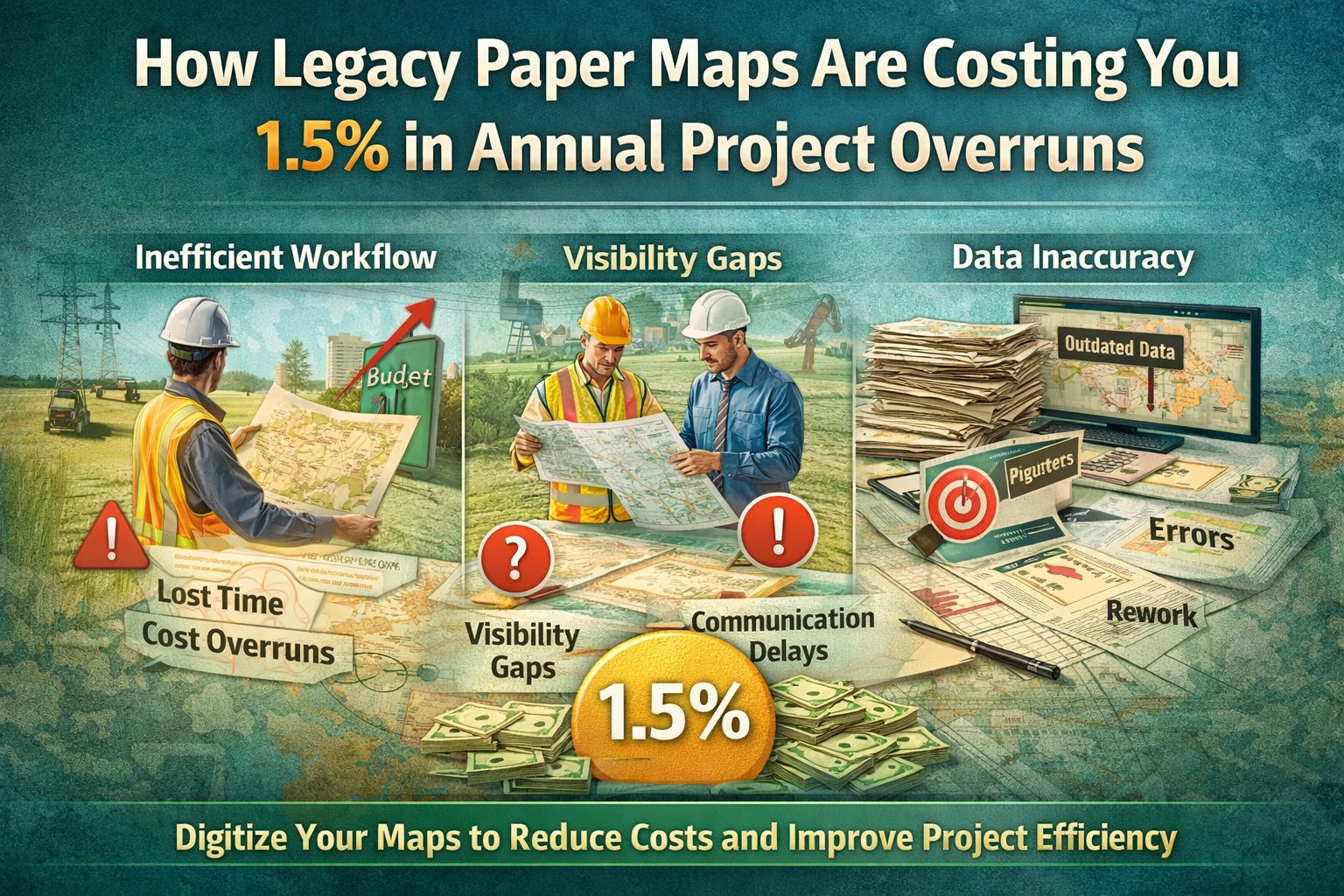
Did you know that reliance on legacy paper maps could be costing your projects an average of 1.5% in annual overruns? In today’s fast-paced digital world, there’s no place for antiquated methods of navigation. The importance of transitioning from paper to digital maps cannot be overstated. Every project, whether it’s in logistics, urban planning, or simply route optimization, hinges on the accuracy and accessibility of geographical data. In this comprehensive guide, we’ll explore how legacy paper maps can hinder progress and how embracing digital map digitization can save you money, time, and headaches.
The Hidden Costs of Legacy Paper Maps
In industries where precise location data is critical, the drawbacks of sticking to paper maps are significant. First, let’s consider the various costs associated with legacy paper maps:
- Inaccuracy: Paper maps often become outdated quickly, unable to keep up with infrastructure changes, road construction, and geographical alterations. Relying on outdated information results in errors and miscommunication. Imagine planning a logistics route only to find a road closure or detour that wasn’t accounted for.
- Limited Accessibility: Paper maps are bulky and hard to share. If a team member who needs critical geographical information isn’t in the same location as the hard copy, they’re at a disadvantage. In contrast, digital maps provide easy access across various devices, allowing for real-time updates.
- Time-Consuming Updates: Updating paper maps requires substantial time and effort. Each new version demands new copies, leading to downtime and potentially impacting project timelines. Digital maps can be updated instantaneously, making relevant information readily available to all stakeholders.
- Reduced Collaboration: Collaboration suffers when teams rely on different versions of physical maps. Digital mapping allows for synchronized data sharing, enabling all members to work from the same real-time data simultaneously.
- Cost Inefficiency: Organizations lose an average of 1.5% of their project budgets due to inefficiencies from outdated mapping data. For instance, for a $1 million project, that translates to a staggering $15,000 wasted.
Transitioning to Digital Maps
With the drawbacks of legacy paper maps clearly laid out, let’s examine how digitizing your maps can generate positive outcomes:
- Improved Accuracy and Relevance: Digitized maps leverage real-time data, ensuring decisions are based on the most current geographical information available.
- Enhanced Mobility: Digital maps allow geographical data to be accessed wherever you are. Gone are the days of carrying heavy map books. Field teams can view and utilize information directly from their mobile devices.
- Cost Savings: Eliminating paper maps reduces printing costs and minimizes discrepancies that lead to budget overruns. Streamlined processes help to decrease error rates, saving both time and money.
- Collaboration in the Cloud: Many digital map platforms offer shared access, enhancing communication among teams in the field and the office. Everyone benefits from the same real-time data, enhancing teamwork.
- Predictive Analytics and Integration: Digital maps can integrate data from various digital tools, enabling predictive analytics that can uncover potential operational efficiencies and areas for improvement.
Selecting the Right Service Provider for Digital Map Solutions
Transitioning from legacy paper maps to digital resources is a crucial step for organizations. Even more vital than the transition itself is the successful selection of a reputable service provider to assist in this change. Here’s how to choose the right partner:
- Identify Your Needs: Start by assessing your organization’s specific mapping needs. Understanding what you want to achieve with digital maps will help narrow down potential service providers.
- Review Track Record and Experience: Check potential providers’ experience and previous case studies. Their successes provide insight into their capabilities and how they may align with your needs.
- Evaluate Technology Solutions: Look for a service provider that uses up-to-date technology and offers flexible solutions tailored for your organization. Ensure that their digital mapping solutions can integrate with your existing tools.
- Customer Support and Training: A reputable service provider will offer excellent support and training. Your team will need guidance on how to use new systems effectively to ensure a smooth transition, so this is non-negotiable.
- Cost vs. Value: While budget is important, don’t make cost the sole deciding factor. Consider the value and quality of service against what you would pay. Sometimes, a slightly higher cost yields significantly greater long-term value.
Long-Term Benefits of Going Digital
Shifting towards digital maps presents numerous long-term advantages that far exceed the initial challenges and transition costs:
- Future-Proofing Operations: Technology evolves quickly; by transitioning to digital maps, your organization stays ahead of the curve.
- Enhanced Decision-Making: Accurate data leads to timely, informed decisions, which improve project timelines and outcomes.
- Sustainability Goals: Going paperless not only saves costs but also supports your organization’s environmental sustainability initiatives.
- Gaining a Competitive Edge: In a competitive marketplace, timely data accessed via digital maps empowers your business to deliver exceptional service and improve operational efficiency.
So Now What?
If your organization relies on legacy paper maps, the risks are too significant to ignore. Transitioning to digital mapping not only minimizes costly overruns but also fosters long-term efficiencies.
The selection of a capable service provider for your map digitization journey is crucial. Be sure to take the time needed to assess your options thoroughly.
Learn more about our Data Solutions
- Geophysical and well log digitization
- Seismic section digitization
- Map digitization
- Core photo splicing
- Scout ticket digitization