

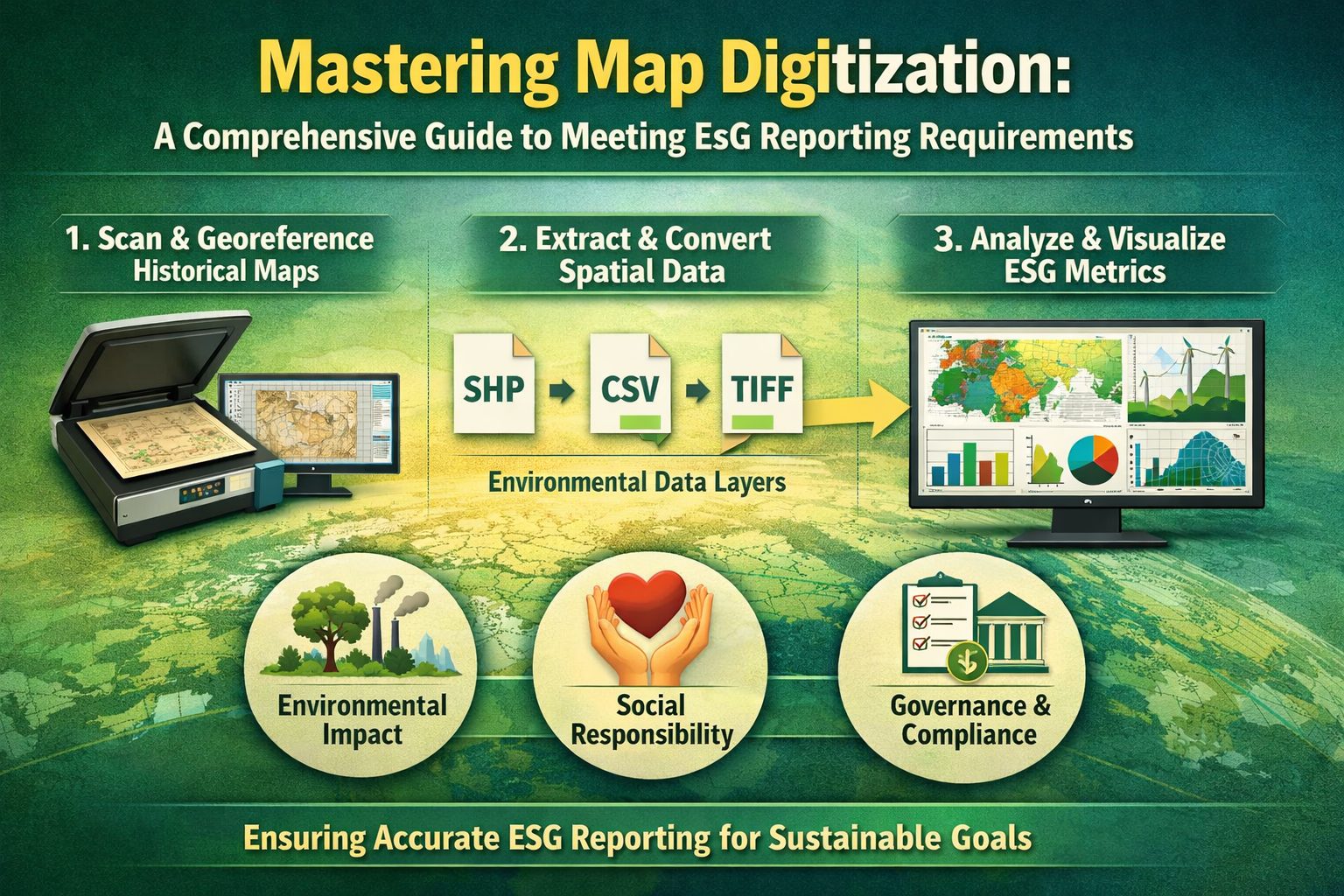
Did you know that by 2026, nearly 70% of organizations will be required to adhere to stringent ESG reporting standards? This requirement places enormous pressure on businesses to effectively track their environmental impacts and manage resource allocations proficiently. Map digitization emerges as a critical tool in this endeavor by transforming static, physical maps into dynamic digital formats. These formats not only facilitate easier analysis but also enhance the visualization of complex data. This comprehensive guide will explain how map digitization can empower organizations to successfully meet 2026 ESG reporting requirements, enabling accurate data collection and effective communication of environmental impacts. Get ready to discover the indispensable role of map digitization in today’s organizations!
Understanding ESG Reporting Requirements
Environmental, Social, and Governance (ESG) reporting is now a primary focus for companies globally. As public scrutiny increases and regulatory pressures mount, businesses must adapt their strategies for sustainability reporting. But what does ESG actually encompass?
What is ESG?
ESG represents three key factors used to evaluate the sustainability and societal influence of a company’s operations.
- Environmental: How a company handles its environmental stewardship. Metrics studied may include waste management, pollution levels, resource consumption, and treatment of wildlife.
- Social: How an organization manages its interactions with employees, suppliers, customers, and local communities. This includes labor practices, diversity initiatives, and community engagement.
- Governance: This revolves around the company’s leadership, executive compensation, audits, internal controls, and shareholder rights. It reflects a company’s ethical management and compliance standards.
In light of rapidly approaching regulations regarding ESG metrics, organizations need comprehensive tools and methodologies to evaluate and report their performance effectively.
The Importance of Accurate Mapping
For organizations intent on complying with ESG reporting standards, the accurate mapping of environmental impacts is non-negotiable. Mapping supplies valuable visual context, allowing stakeholders to understand complex data easily. Here’s how it shapes the reporting landscape:
- Identifying Environmental Impacts: Digital maps provide a visual representation of environmental data, making it simpler to spot areas of concern.
- Resource Allocation: By analyzing spatial data on consumption and waste generation, organizations can improve resource distribution.
- Compliance Tracking: A thorough mapping approach enables consistent compliance tracking, which is crucial for reporting accuracy.
Transforming Data into Insights
Once maps are digitized, the insights drawn from this data become pivotal for ESG reporting. Organizations need to adopt various techniques to transform mapped data into actionable information.
Engaging with Data Visualization Techniques
Data visualization adds depth to the information from digital maps. Techniques such as heat maps and choropleth maps enhance the way data is presented, enabling stakeholders to make informed decisions.
- Heat Maps: These indicate areas with various levels of a particular measurement, like pollution or resource use, helping pinpoint critical issues.
- Choropleth Maps: These utilize different shades to communicate data across regions, effectively demonstrating variances in environmental practices.
Choosing the Right Mapping Service Provider
Selecting an appropriate service provider for map digitization becomes paramount as organizations align themselves with ESG reporting mandates. The complexity and value of the data mean that a partner’s reliability and expertise directly impact success. Here are some key factors to consider when picking a service provider:
- Expertise in ESG Compliance: Ensure the provider has a deep understanding of ESG reporting requirements and how to address them through effective mapping strategies.
- Reputation and Experience: Research past client reviews and case studies to gauge the provider’s reliability and service history.
- Technology and Quality: A good service provider should utilize cutting-edge technology and methods for mapping to ensure high quality and accuracy.
- Customer Support: Look for service providers that offer robust customer support to help navigate any roadblocks during the digitization process and beyond.
- Tailored Solutions: A partner who can customize their approach based on your organization’s unique needs can drive better results.
- Integration Capabilities: Ensure that the provider can integrate well with your existing systems and tools for data management.
- Cost Transparency: Select a provider that offers clear pricing structures with no hidden fees, ensuring you can budget accurately.
Challenges in Map Digitization
Organizations may encounter several challenges when implementing map digitization for ESG reporting:
- Data Quality: Securing reliable and accurate data is essential; poor quality can hinder correct analysis and affect decision-making.
- Integration Issues: Difficulty integrating digitized maps into existing systems can make it cumbersome to conduct analyses.
- Initial Costs: Although the upfront investment in digitization tools may be significant, it should be considered a future-oriented investment in operational efficiency and compliance.
Conclusion: Meeting ESG Challenges with Map Digitization
Navigating the ever-changing landscape of ESG reporting requirements can be daunting. However, with the right map digitization strategies, organizations can enhance compliance and foster transparency. Precise digital maps not only assist in visualizing environmental impacts but enable companies to make informed decisions in support of sustainability. As the 2026 deadline looms closer, organizations must act swiftly to meet these expectations.
Leveraging the power of map digitization allows businesses not only to comply with these mandates but also to take the lead in sustainable practices.
Effective action starts with data-driven decisions—let’s embark on this journey together!
Learn more about our Data Solutions
- Geophysical and well log digitization
- Seismic section digitization
- Map digitization
- Core photo splicing
- Scout ticket digitization
Related Articles
- Data Digitization and Management Solutions for Geoscience and Engineering
- Digitizing Geological Maps for GIS and Subsurface Modeling
- Transforming Legacy Geological Archives into Structured Digital Databases
- 5 Steps To Convert Your Archive Into An AI-Ready Geospatial Pipeline
- Beyond The Archive: Why Map Digitization Is The Foundation Of Your 2026 Digital Twin
- Data Formats For Digitized Maps Explained