POLLUTEv10 and MIGRATEv10

POLLUTE and MIGRATE contaminant transport modeling for layered soil, groundwater and engineered barriers
POLLUTEv10 and MIGRATEv10

Choose the Right Dimension for Contaminant Transport Modeling

Use fast analytical modeling for layered landfill and groundwater questions, or extend the assessment into two dimensions when lateral migration and spatial complexity matter.

POLLUTEv10 and MIGRATEv10 provide complementary formulations for sources, soils, aquifers, liners, collection systems and long-term contaminant-impact assessment.

POLLUTEv10Layered 1.5D formulation
MIGRATEv10Vertical and lateral 2D transport
Analytical ModelingRapid calculations without time marching
Technical EvidenceExamples and 26 research reports
Model Selection

Use the Simplest Formulation That Represents the Engineering Question

Start with the source, transport path and receptor—not with software complexity. Choose the formulation that preserves the behavior capable of changing the decision.

Choose POLLUTEv10 when

Transport Is Predominantly Layered and Vertical

POLLUTEv10 provides a 1.5D analytical formulation for efficient evaluation of layered soil, aquifers, sources and engineered barriers.

  • Layer thickness and properties dominate the transport path
  • Rapid alternative and sensitivity calculations are important
  • Landfill liners and collection systems require detailed representation
  • Limited lateral spreading can be addressed by the formulation

Explore POLLUTEv10 features

Choose MIGRATEv10 when

Location and Lateral Migration Affect the Result

MIGRATEv10 represents vertical and horizontal movement across a two-dimensional domain containing distinct sources, materials and pathways.

  • Several sources or landfill cells interact
  • Lateral plume spreading changes receptor concentrations
  • Geometry and material properties vary across the site
  • Fractures or preferential pathways require spatial representation

Explore MIGRATEv10 features

Not certain which formulation fits? Build a documented conceptual model first, then use the matched POLLUTE and MIGRATE examples to examine how dimensionality changes the setup and interpretation.
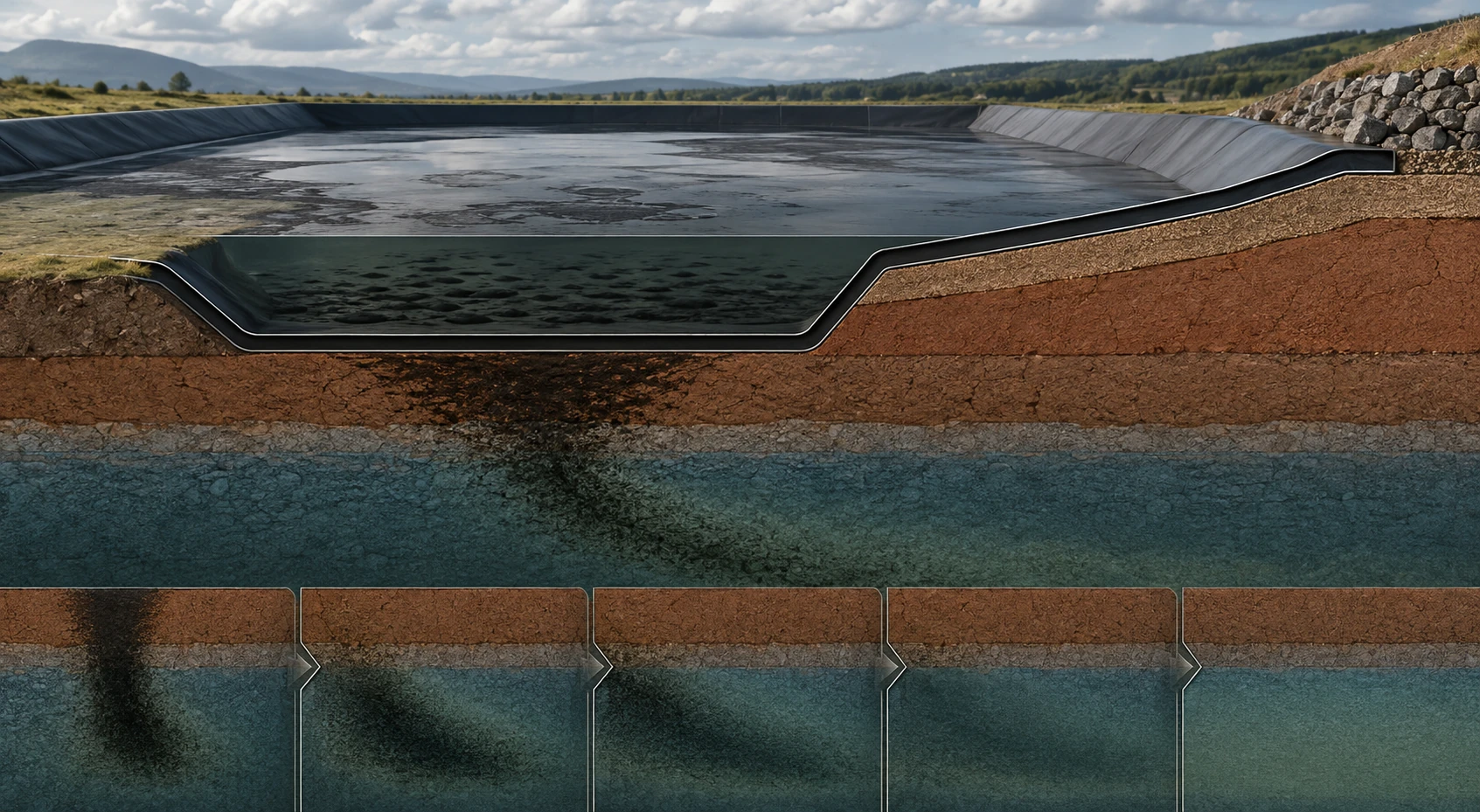
POLLUTEv10 layered contaminant transport through an engineered barrier system
POLLUTEv10 · 1.5D

Evaluate Layered Sources, Barriers and Receptors Efficiently

POLLUTEv10 uses an analytical solution to represent predominantly vertical contaminant transport while supporting layered hydrogeology and extensive engineering features.

  • Finite-mass and time-dependent source loading
  • Advection, diffusion, dispersion, sorption and decay
  • Layered soils, aquifers and aquitards
  • Primary, composite and multi-layer barriers
  • Geomembrane and leachate collection-system behavior
  • Time-varying material and hydraulic properties
  • Concentration, depth, time and mass output
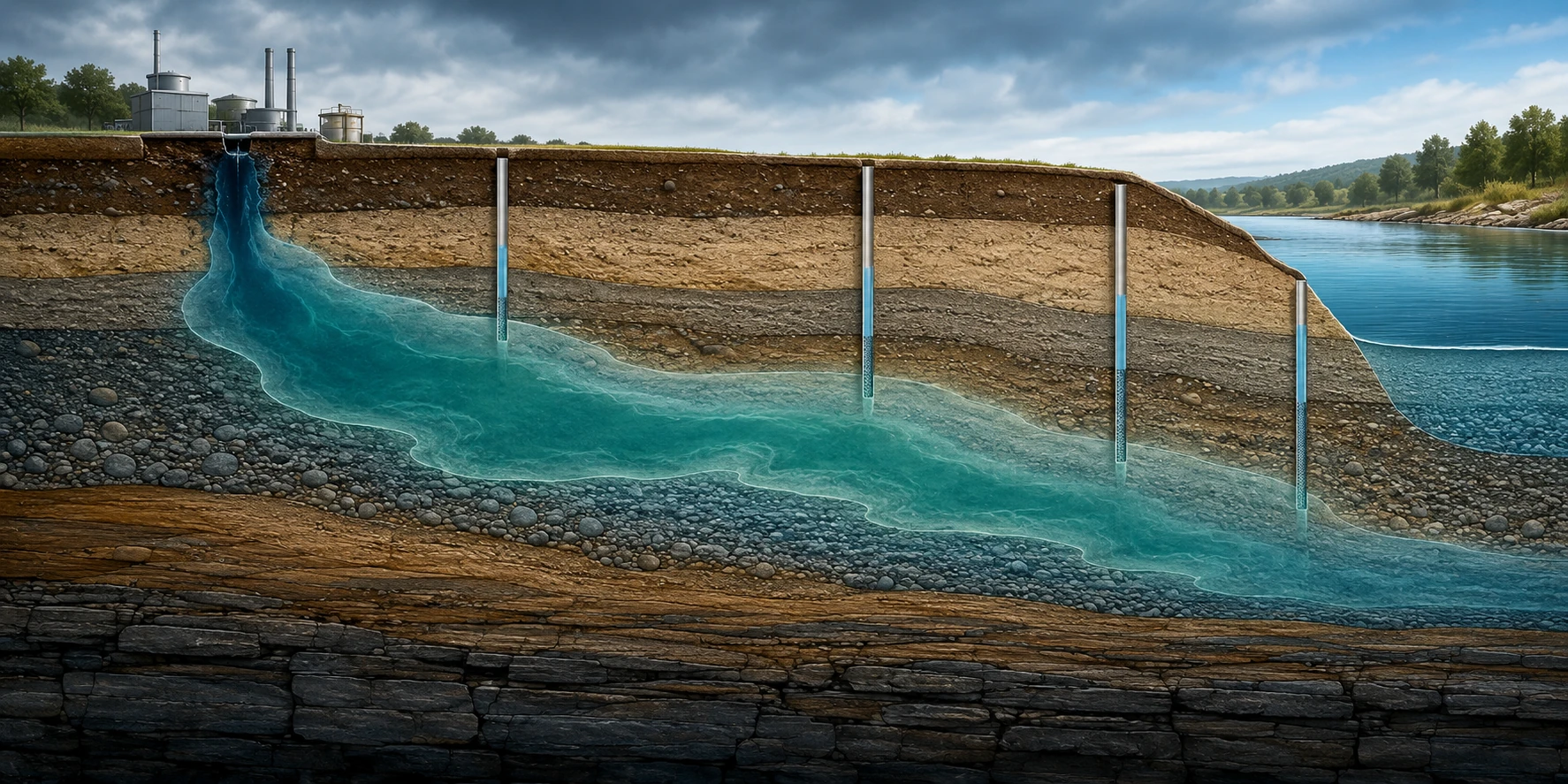
MIGRATEv10 two-dimensional contaminant plume extending vertically and laterally through layered ground
MIGRATEv10 · 2D

Resolve Multiple Sources and Spatial Plume Behavior

MIGRATEv10 extends analytical contaminant modeling into two dimensions so source location, lateral movement, heterogeneity and plume interaction remain visible.

  • Vertical and horizontal contaminant migration
  • Surface, buried and multiple sources
  • Adjacent landfill cells with different histories
  • Layered, heterogeneous and fractured media
  • Time-varying sources and system properties
  • Concentration versus time, depth and distance
  • Spatial distributions, mass results and Excel export
Side-by-Side Comparison

Match Dimensionality and Features to the Decision

The products are complementary. The appropriate choice depends on the conceptual model, source geometry, transport direction and outputs needed for review.

Practical comparison of POLLUTEv10 and MIGRATEv10 capabilities and best-fit applications
Decision FactorPOLLUTEv10MIGRATEv10
FormulationAnalytical 1.5D transportAnalytical 2D transport
Primary strengthDetailed layered and engineered-barrier assessmentSpatial plume behavior and interacting sources
Transport directionPredominantly vertical with limited lateral representationExplicit vertical and horizontal migration
SourcesDetailed finite, time-varying and engineering source optionsMultiple spatially distributed surface or buried sources
SubsurfaceLayered soils, aquifers, aquitards and barriersLayered, heterogeneous and fractured spatial domains
Landfill systemsExtensive liner, geomembrane, leakage and collection-system featuresMultiple cells, liner systems and spatial interaction
OutputsConcentration and mass versus time or depthTime, depth, distance, mass and 2D spatial distributions
Best starting pointLayered design, screening and rapid scenario comparisonComplex sites where lateral position changes the prediction
More dimensions do not automatically produce a better model. Use additional spatial detail only when it is supported by data and capable of materially changing the engineering conclusion.
Representative Applications

Apply the Products to Design and Impact Questions

Project suitability depends on the conceptual model, evidence, assumptions and applicable regulatory expectations.

Landfill Design

Evaluate liner configurations, leachate collection, source histories and long-term performance.

Barrier Assessment

Compare geomembranes, compacted clay, geosynthetics and multi-layer containment systems.

Groundwater Impacts

Estimate concentrations through time at aquifers, wells and other evaluation locations.

Complex Sites

Assess multiple sources, lateral variability, fractures and interacting plumes in two dimensions.

Reviewable Modeling Workflow

Keep Every Calculation Connected to Its Engineering Basis

A repeatable workflow makes the model easier to reproduce, challenge and update.

1

Define

State the decision, source, pathway, receptors and time horizon.

2

Conceptualize

Document geometry, materials, groundwater and release mechanisms.

3

Select

Choose the simplest defensible 1.5D or 2D formulation.

4

Parameterize

Enter supported values with consistent units and sources.

5

Calculate

Run the baseline and check setup, mass behavior and results.

6

Test

Evaluate influential parameters and conceptual alternatives.

7

Report

Preserve the model, evidence, version, assumptions and review.

Technical Confidence

Support the Model with Evidence, Verification and Sensitivity Testing

Fast calculations make it practical to test alternatives, but defensibility still depends on the conceptual model and the evidence supporting each influential assumption.

Matched Comparisons

Compare equivalent POLLUTE and MIGRATE cases to understand dimensional differences.

View comparison examples

Research Library

Trace theory, parameter studies, liner performance and applied assessment through 26 reports.

Browse research reports
Software output is not automatic approval. Qualified professionals remain responsible for conceptual-model adequacy, parameter support, sensitivity analysis, current regulatory requirements and interpretation.
Before You Decide

Evaluate the Products with a Representative Project

Test the workflow using a problem that reflects the geometry, sources, materials and deliverables your organization actually handles.

  • Can the conceptual model be represented at the required dimensionality?
  • Are the necessary source, hydraulic and transport processes available?
  • Can liners, collection systems, aquifers or fractures be represented appropriately?
  • Are required concentration, mass and spatial outputs available?
  • Can influential parameters and alternative assumptions be tested efficiently?
  • Do exported results and reports support technical review?
  • Can older project models be verified in the current version?
  • What licensing, training and technical support are required?
Product Resources

Move from Overview to Technical Detail

Use focused pages for capabilities, examples, upgrades, frequently asked questions and research.

Example Libraries

Inspect complete models and matched comparisons.

POLLUTE · MIGRATE

Upgrades

Review version 10 changes and migration considerations.

Review upgrades

Product FAQ

Find answers about selection, inputs, results and licensing.

Read the FAQ

Research Reports

Browse theory, laboratory studies and barrier research.

Browse 26 reports

Knowledge Center

Review the wider contaminant-modeling and landfill guide.

Read the guide

Ready to Test the Right Contaminant Transport Model?

Start with a representative project, compare the formulations and confirm the assumptions and outputs required for your engineering decision.