

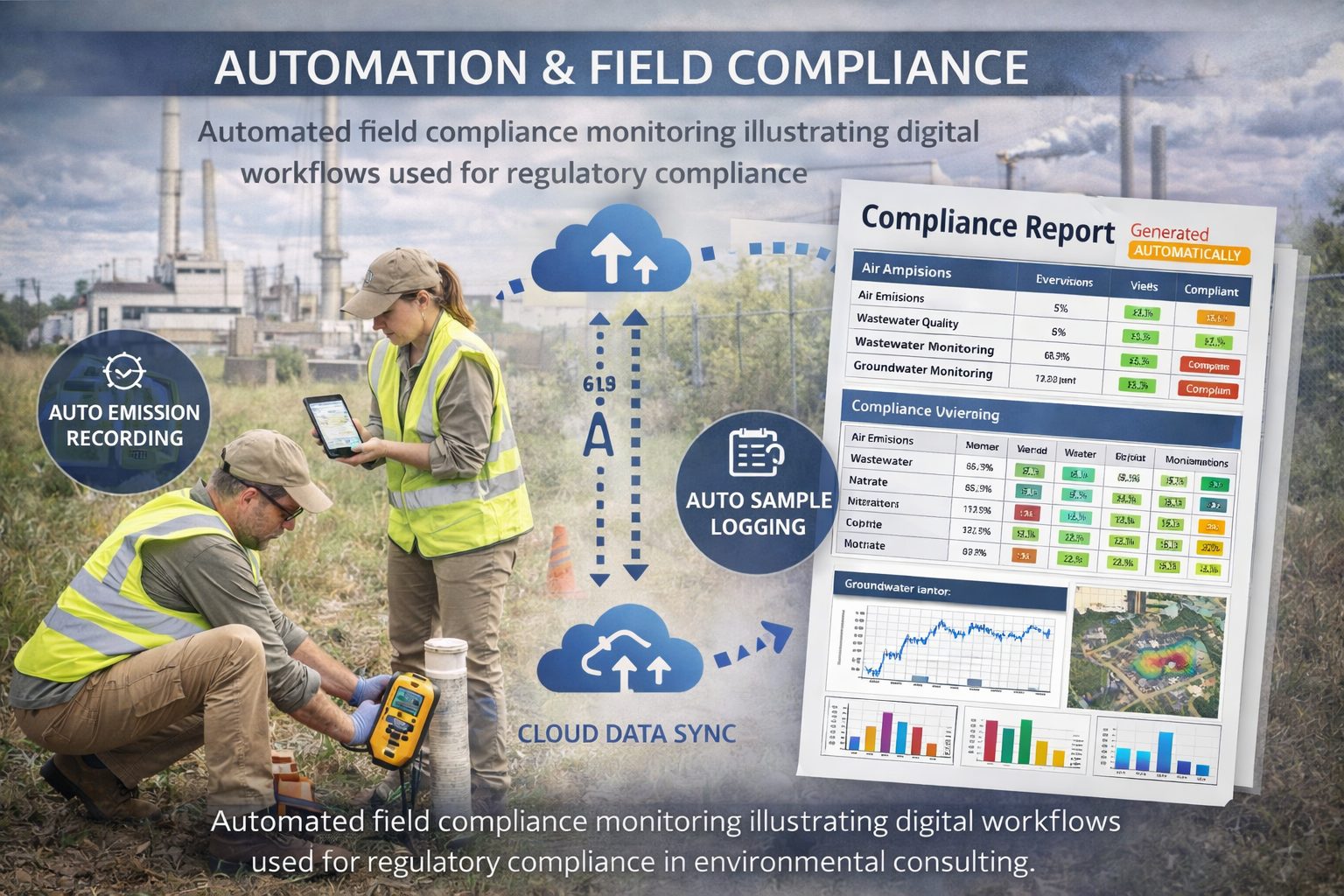
Environmental regulations require organizations to monitor, document, and report a wide range of environmental activities. Industries such as manufacturing, energy, waste management, mining, and infrastructure development must regularly submit reports to regulatory agencies to demonstrate compliance with environmental laws. These reports may include air emissions data, wastewater discharge monitoring results, groundwater monitoring reports, hazardous waste tracking documentation, and contaminated site investigation results.
Historically, environmental compliance reporting has been a complex and time-consuming process. Environmental professionals often spend significant time gathering data from multiple sources, verifying records, formatting regulatory documents, and ensuring that reports meet agency requirements. As environmental regulations become more comprehensive and data volumes increase, manual reporting workflows are becoming increasingly inefficient.
To address these challenges, many organizations are adopting automated environmental compliance reporting systems. Automation technologies allow environmental professionals to collect, manage, analyze, and submit environmental data using integrated digital platforms. These systems streamline regulatory reporting processes, improve data accuracy, and reduce administrative burdens.
This article explores the growing role of automation in environmental compliance reporting, the technologies enabling automated reporting workflows, and best practices for implementing automated regulatory submission systems.
Understanding Environmental Compliance Reporting
Environmental compliance reporting involves documenting environmental performance and submitting reports to regulatory agencies to demonstrate compliance with environmental laws and permits.
Regulatory reporting requirements vary depending on industry, jurisdiction, and environmental conditions. Organizations may be required to submit periodic reports on activities such as emissions monitoring, wastewater discharges, waste management practices, and environmental remediation programs.
Common Types of Environmental Compliance Reports
Environmental compliance reports may include several different types of regulatory submissions.
Air Emissions Reporting
Facilities that emit air pollutants are often required to monitor emissions and submit periodic reports detailing pollutant concentrations and emission rates. These reports help regulatory agencies evaluate compliance with air quality standards.
Air emissions reporting may include:
- Continuous emissions monitoring system (CEMS) data
- stack test results
- greenhouse gas emissions inventories
- facility emission summaries
Water Discharge Monitoring Reports
Industrial facilities that discharge wastewater must often submit discharge monitoring reports (DMRs) documenting the quality and quantity of effluent released into surface water systems.
These reports may include measurements of:
- chemical oxygen demand (COD)
- biochemical oxygen demand (BOD)
- suspended solids
- heavy metals
- nutrients
Groundwater Monitoring Reports
Facilities that operate waste disposal sites, landfills, or industrial operations may be required to monitor groundwater quality. Groundwater monitoring reports summarize sampling results and evaluate whether contaminant concentrations exceed regulatory limits.
Hazardous Waste Reporting
Organizations that generate or manage hazardous waste must track waste generation, storage, transportation, and disposal activities.
Regulatory reports may include:
- hazardous waste manifests
- waste inventory summaries
- disposal facility documentation
Contaminated Site Reporting
Sites undergoing environmental investigation or remediation may require periodic reporting to regulatory agencies documenting investigation results, remediation activities, and environmental monitoring data.
Challenges of Traditional Environmental Compliance Reporting
Environmental compliance reporting traditionally relies on manual workflows that involve multiple steps and data sources.
Common challenges include:
Fragmented Data Sources
Environmental data may originate from several sources, including:
- laboratory analytical results
- environmental monitoring systems
- field sampling records
- environmental databases
- spreadsheets and internal documentation
Managing these datasets manually can be complicated and time-consuming.
Manual Data Compilation
Environmental professionals often spend significant time consolidating data from different systems into regulatory report formats.
Manual compilation increases the risk of transcription errors.
Complex Regulatory Requirements
Environmental regulations often require specific report formats and data structures. Ensuring that reports comply with regulatory requirements can be challenging.
Tight Reporting Deadlines
Regulatory agencies typically require reports to be submitted within strict timelines. Manual reporting workflows may struggle to meet these deadlines efficiently.
Automation technologies are increasingly being used to address these challenges.
What Is Automated Environmental Compliance Reporting?
Automated environmental compliance reporting refers to the use of digital technologies to streamline the process of collecting, organizing, analyzing, and submitting environmental data for regulatory reporting.
Automation systems typically integrate several components:
- environmental data management systems
- automated monitoring systems
- laboratory data integration tools
- GIS visualization platforms
- automated reporting software
These systems allow environmental professionals to manage environmental data more efficiently while ensuring compliance with regulatory reporting requirements.
Key Technologies Enabling Automated Compliance Reporting
Several technologies are driving the automation of environmental regulatory reporting.
Environmental Data Management Systems
Environmental data management systems (EDMS) serve as centralized platforms for storing and managing environmental monitoring data.
These systems can manage datasets such as:
- air emissions measurements
- wastewater monitoring data
- groundwater sampling results
- environmental inspection records
By organizing environmental data within structured databases, EDMS platforms allow automated generation of compliance reports.
Automated Data Integration
Environmental compliance reporting often requires integrating data from multiple sources.
Automated data integration tools allow environmental datasets to be imported directly into data management systems.
Examples include:
- laboratory electronic data deliverables
- continuous environmental monitoring systems
- environmental sensor networks
- facility operational databases
Automated integration reduces manual data entry and improves data accuracy.
Continuous Environmental Monitoring Systems
Many facilities use automated monitoring systems to track environmental conditions.
Examples include:
- continuous emissions monitoring systems (CEMS)
- groundwater level monitoring sensors
- wastewater monitoring instruments
- air quality monitoring stations
These systems automatically collect environmental data and transmit it to central databases for analysis and reporting.
Automated Data Validation
Environmental compliance reports must meet strict data quality requirements.
Automated validation tools can review environmental datasets to identify:
- missing values
- outliers
- data inconsistencies
- exceedances of regulatory thresholds
These validation processes help ensure that compliance reports contain accurate and reliable data.
Automated Report Generation
Automated reporting software can generate regulatory reports directly from environmental databases.
These systems use predefined templates that incorporate regulatory reporting requirements.
Automated reports may include:
- data tables
- graphs and charts
- summary statistics
- environmental monitoring trends
Because reports are linked directly to underlying datasets, updates to environmental data automatically update report content.
Electronic Regulatory Submission Systems
Many regulatory agencies now accept electronic submissions of environmental compliance reports.
Automated reporting platforms can generate files that comply with agency submission formats.
Electronic submission systems improve reporting efficiency and reduce administrative paperwork.
Benefits of Automating Environmental Compliance Reporting
Automation provides numerous benefits for organizations responsible for environmental regulatory reporting.
Improved Reporting Efficiency
Automated workflows significantly reduce the time required to compile environmental data and prepare compliance reports.
Environmental professionals can focus more on analyzing environmental conditions rather than formatting reports.
Enhanced Data Accuracy
Automated systems reduce transcription errors by integrating environmental data directly from monitoring systems and laboratory results.
Data validation tools further improve data quality.
Better Regulatory Compliance
Automation ensures that reports follow regulatory formatting requirements and include all necessary information.
Automated reminders and scheduling tools can also help organizations meet reporting deadlines.
Improved Data Transparency
Centralized environmental databases allow organizations to maintain complete records of environmental monitoring data and regulatory submissions.
This transparency supports regulatory audits and compliance reviews.
Enhanced Environmental Performance Monitoring
Automated systems allow organizations to track environmental performance trends over time.
Environmental managers can identify potential compliance issues early and implement corrective actions.
Best Practices for Implementing Automated Compliance Reporting
Organizations seeking to implement automated reporting systems should follow several best practices.
Develop a Centralized Environmental Data Strategy
Environmental data should be managed within centralized systems that integrate multiple environmental datasets.
Centralized systems improve data accessibility and simplify reporting workflows.
Standardize Data Formats
Environmental data should be stored in standardized formats to ensure compatibility with automated reporting tools.
Standardization also improves data integration across systems.
Integrate Monitoring Systems
Automated reporting systems should integrate with environmental monitoring equipment, laboratory databases, and internal operational systems.
Integration ensures that environmental data flows seamlessly into reporting platforms.
Establish Data Quality Controls
Organizations should implement quality assurance procedures to verify the accuracy of environmental data before submission to regulators.
Data validation processes should be built into automated workflows.
Train Environmental Staff
Environmental professionals must be trained to use automated reporting systems effectively.
Training programs should cover:
- environmental data management systems
- automated reporting tools
- regulatory submission requirements
Proper training ensures that automated systems are used correctly and consistently.
Emerging Technologies in Environmental Compliance Automation
Several emerging technologies may further enhance automated compliance reporting systems.
Artificial Intelligence for Compliance Monitoring
AI technologies can analyze environmental datasets to identify trends and potential compliance issues.
AI tools may assist environmental professionals in predicting regulatory risks and identifying anomalies in environmental data.
Internet of Things Environmental Sensors
IoT sensors allow continuous monitoring of environmental conditions such as air quality, water quality, and soil conditions.
These sensors transmit real-time data to environmental databases, enabling dynamic reporting systems.
Cloud-Based Compliance Platforms
Cloud-based environmental compliance platforms allow organizations to manage environmental data and regulatory submissions from centralized online systems.
Cloud technologies support remote collaboration and secure data storage.
Digital Environmental Dashboards
Interactive environmental dashboards allow environmental managers to visualize environmental performance metrics and compliance status in real time.
Dashboards provide quick insights into environmental monitoring results and regulatory reporting requirements.
The Future of Automated Environmental Compliance Reporting
Environmental regulations are becoming increasingly data-driven. Regulatory agencies expect organizations to provide detailed documentation of environmental monitoring activities and compliance performance.
Automated compliance reporting systems will continue to evolve as technologies such as AI, IoT monitoring networks, and advanced environmental data platforms become more widespread.
Future systems may enable:
- real-time environmental compliance monitoring
- automated regulatory submissions
- predictive compliance risk analysis
- integrated environmental performance management
These technologies will help organizations maintain compliance more efficiently while improving environmental stewardship.
Conclusion
Environmental compliance reporting is a critical responsibility for organizations operating in regulated industries. Traditional reporting workflows often rely on manual data compilation and report preparation, which can be time-consuming and prone to errors.
Automation technologies are transforming environmental compliance reporting by integrating environmental data management systems, automated monitoring networks, laboratory data integration tools, and automated reporting platforms.
These technologies improve efficiency, enhance data accuracy, and ensure that regulatory submissions meet reporting requirements.
By implementing automated environmental compliance reporting systems, organizations can streamline regulatory reporting processes, reduce administrative workloads, and improve environmental performance management.
As environmental regulations continue to evolve and environmental datasets become increasingly complex, automation will play a central role in modern environmental compliance management.
Learn more about our Environmental Site Assessment Solutions
Related Articles
- Environmental Site Assessment Automation: Transforming Phase I and Phase II Environmental Reporting
- Automating Phase I Environmental Site Assessments: Tools and Best Practices
- Automating Phase II Environmental Site Assessment Reporting
- How Automated Environmental Reporting Reduces Consulting Costs
- Digital Workflows for Environmental Due Diligence Investigations
- The Role of Data Automation in Modern Environmental Consulting
- Meeting ASTM Standards with Automated Phase I ESA Reporting
- Automated Environmental Reporting for Brownfield Redevelopment Projects
- Cloud-Based Platforms for Environmental Investigation Data
- The Future of Automated Environmental Site Assessments
- An Overview of Phase I Environmental Site Assessments and How to Automate the Process
- Efficiency at Your Fingertips: Merging Questionnaire Data into Professional Reports with E-ASR
- Automating Environmental Excellence: Reporting with GAEA Technologies E-ASR
- Efficiency Redefined: Automating Environmental Reporting with E-ASR
- Streamlining Site Assessments: How Well Log Software Accelerates Contamination Reporting
- Reducing MTTR By 40%: The Power Of Automated Report Generation
- Why Automated Environmental Reporting Is the Game Changer Your Business Needs
External References
- ASTM Standard Practice for Environmental Site Assessments: Phase I Environmental Site Assessment Process
- US EPA Standards and Practices for All Appropriate Inquiries
- CSA Z768 — Phase I Environmental Site Assessment
- CSA Z769 — Phase II Environmental Site Assessment
- BS 10175 — Investigation of Potentially Contaminated Sites
- Australian National Environment Protection Measure (NEPM)