

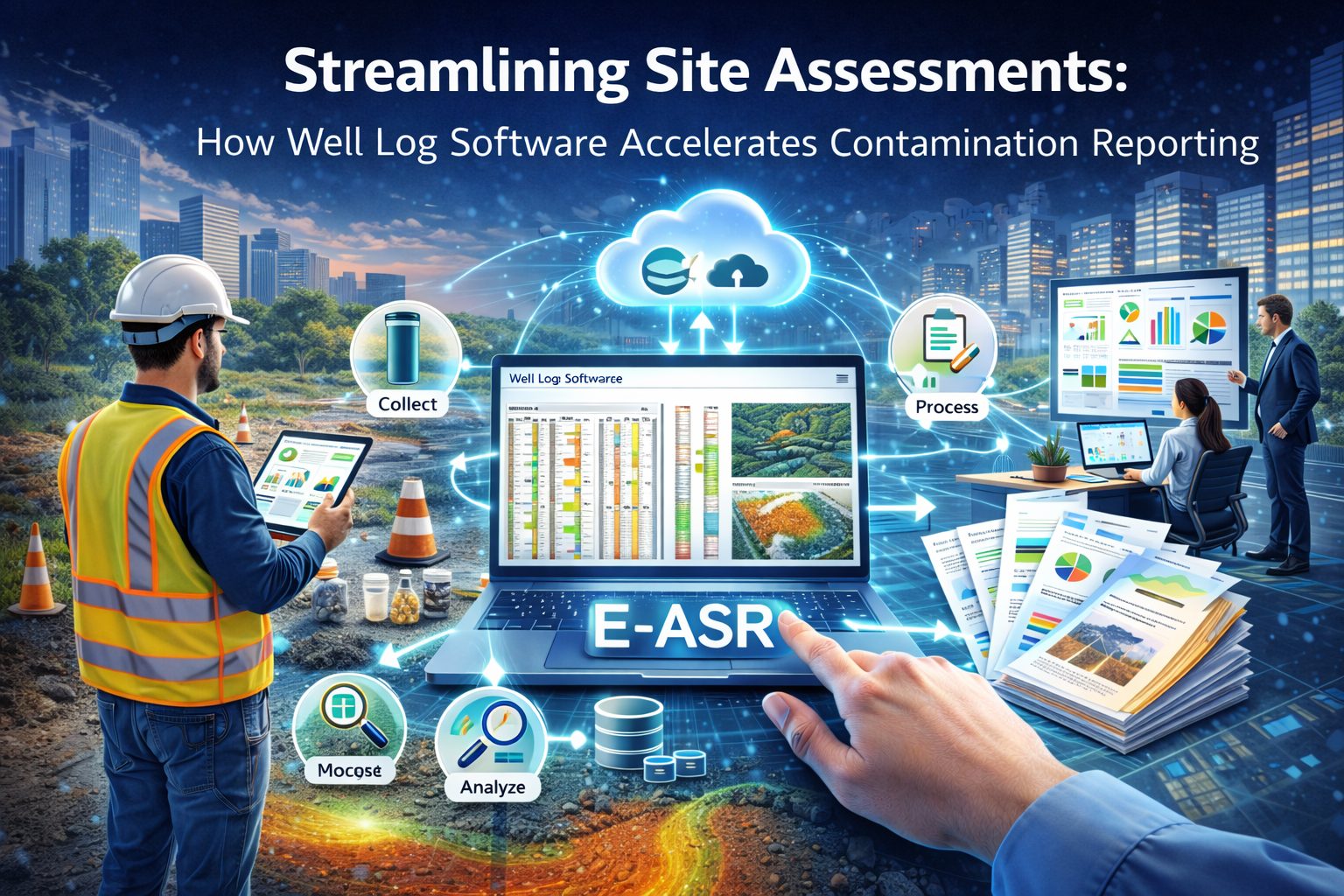
Did you know that over 40% of groundwater contamination incidents are reported too late, leading to severe environmental consequences? This alarming statistic underscores the importance of efficient site assessments in identifying and addressing contamination quickly. In this blog post, we will delve into how using dedicated well log software can streamline the process of contamination reporting, providing insights and practical strategies for professionals in the field. You’ll learn about the key features to look for in well log software, best practices for conducting site assessments, and how these tools can enhance your efficiency and accuracy, ultimately improving the safety and quality of groundwater resources.
Understanding Site Assessments and Their Importance
A site assessment is the process of collecting and analyzing data regarding a potentially contaminated site. This crucial practice supports the identification of contamination sources, establishes risks to human health and the environment, and guides remediation efforts.
The rising concern over groundwater contamination makes effective site assessments vital. With increasing industrial development and urbanization, contaminants can seep into groundwater supplies, posing significant health risks. Furthermore, regulatory bodies are demanding more stringent assessments, necessitating timely and accurate reporting mechanisms.
This is where well log software comes into play, simplifying the execution of site assessments and enhancing the overall reporting process.
What is Well Log Software?
Well log software, like WinLoG, is specifically designed to manage and interpret data collected during borehole drilling and groundwater assessment activities. This specialized tool offers functionalities that streamline data collection, organization, and analysis, making it easier for professionals to report findings promptly.
Key Features of Well Log Software
- Data Visualization: Graphical representations of well data enable users to quickly identify anomalies and contamination levels. This can include graphs, maps, and customizable reports.
- Easy Data Entry: User-friendly interfaces allow for quick input of measurement data, ensuring that even those with minimal technical expertise can efficiently manage site assessment results.
- Integration with GIS: Many well log software systems provide Geographic Information System (GIS) capabilities, allowing for accurate geospatial analysis and enhancing contextual understanding of contamination sources.
- Automated Reporting: By automating report generation, well log software reduces human error and provides timely reports to stakeholders, which is crucial for compliance and decision-making.
- Data Management: Comprehensive storage solutions for historical data ensure that professionals can track changes and trends, which is vital for ongoing assessment and remediation purposes.
Best Practices for Conducting Site Assessments
Conducting effective site assessments involves a series of meticulous steps that can be significantly enhanced with well log software. Below are best practices that you can incorporate:
- Define Objectives: Before starting, clarify the goals of the site assessment. Identify specific contaminants of concern and the scope of the investigation.
- Plan Your Sampling Strategy: Decide on the locations, depths, and frequency of sampling based on the site’s historical data, geology, and prior contamination incidents. This strategy should be documented and can be managed through well log software.
- Utilize Real-Time Data: Incorporate tools that allow for real-time data collection and monitoring. This enables a rapid response if contamination is detected during the assessment process.
- Maintain Documentation: Consistent and thorough documentation throughout your assessment ensures accountability and provides data for future reference. Well log software facilitates organized record-keeping.
- Engage Stakeholders Early: Involve stakeholders from the beginning to ensure that the assessment aligns with regulatory requirements and community concerns.
- Data Analysis: After analysis, utilize well log software to visualize trends and generate reports that stakeholders can easily interpret.
- Document Findings and Action Steps: Create a clear action plan for remediation based on your findings. This document should be easily accessible, allowing for transparent communication.
The Impact of Efficient Contamination Reporting
By utilizing well log software for site assessments, professionals not only enhance the accuracy of contamination reporting but also save precious time. Efficient reporting can lead to:
- Quicker remediation efforts, protecting public health.
- Reduced costs for clients by preventing delays in projects.
- Better compliance with regulatory standards, avoiding penalties.
Addressing Common Challenges in Site Assessments
Site assessments can be plagued with challenges, including:
- Inaccurate data collection due to manual processes.
- Difficulty in managing large data sets from multiple sites.
- Regulatory compliance requirements that are frequently changing.
These challenges can be significantly mitigated by adopting advanced well log software that automates processes and standardizes data entry and reporting workflows.
Conclusion: Making the Shift Towards Efficient Reporting
In conclusion, the integration of well log software into site assessment processes is no longer just an option; it is a necessity for professionals committed to improving safety and environmental standards. The efficiency gained from streamlined data management, real-time monitoring, and automated reporting can not only accelerate contamination reporting but also enhance compliance and public trust.
By embracing these tools and practices, you are one step closer to achieving excellence in site assessments.
So what changes can you make at home or in your organization today? Start by exploring the features of well log software and see how it can help you redefine your assessment processes.
Remember, the path to effective contamination reporting begins with the right tools and strategies, enabling you to safeguard our most precious resource—water.
Learn more about our Environmental Site Assessment Solutions
Related Articles
- Environmental Site Assessment Automation: Transforming Phase I and Phase II Environmental Reporting
- Automating Phase I Environmental Site Assessments: Tools and Best Practices
- Automating Phase II Environmental Site Assessment Reporting
- How Automated Environmental Reporting Reduces Consulting Costs
- Digital Workflows for Environmental Due Diligence Investigations
- The Role of Data Automation in Modern Environmental Consulting
- Automating Environmental Compliance Reporting for Regulatory Submissions
- Meeting ASTM Standards with Automated Phase I ESA Reporting
- Automated Environmental Reporting for Brownfield Redevelopment Projects
- Cloud-Based Platforms for Environmental Investigation Data
- The Future of Automated Environmental Site Assessments
- An Overview of Phase I Environmental Site Assessments and How to Automate the Process
- Efficiency at Your Fingertips: Merging Questionnaire Data into Professional Reports with E-ASR
- Automating Environmental Excellence: Reporting with GAEA Technologies E-ASR
- Efficiency Redefined: Automating Environmental Reporting with E-ASR
- Reducing MTTR By 40%: The Power Of Automated Report Generation
- Why Automated Environmental Reporting Is the Game Changer Your Business Needs
External References
- ASTM Standard Practice for Environmental Site Assessments: Phase I Environmental Site Assessment Process
- US EPA Standards and Practices for All Appropriate Inquiries
- CSA Z768 — Phase I Environmental Site Assessment
- CSA Z769 — Phase II Environmental Site Assessment
- BS 10175 — Investigation of Potentially Contaminated Sites
- Australian National Environment Protection Measure (NEPM)