

Introduction
Environmental data plays a critical role in modern engineering, infrastructure development, and regulatory compliance. From groundwater monitoring and soil contamination studies to air quality assessments and ecological surveys, organizations rely on environmental data to make informed, responsible decisions.
However, as data becomes more digital, centralized, and widely shared, the risks associated with data breaches, loss, and non-compliance are increasing.
Environmental data is often:
- sensitive
- regulated
- long-lived
- shared across multiple stakeholders
This creates a unique challenge:
How do you secure environmental data while ensuring compliance with evolving regulations?
Failing to do so can result in:
- regulatory penalties
- legal liability
- reputational damage
- environmental harm
In this guide, we explore the best practices for environmental data security and compliance, helping engineering firms protect their data while meeting legal and ethical obligations.
What Is Environmental Data Security?
Environmental data security refers to the protection of environmental datasets from unauthorized access, loss, corruption, or misuse.
This includes:
- groundwater monitoring data
- soil and contamination data
- environmental reports
- geospatial datasets
- regulatory submissions
What Is Compliance in Environmental Data?
Compliance involves adhering to:
- environmental regulations
- data protection laws
- industry standards
- contractual obligations
Examples include:
- accurate reporting
- proper data retention
- secure data handling
Why Environmental Data Security and Compliance Matter
🔹 Regulatory Requirements
Organizations must comply with regulations such as:
- environmental protection laws
- data privacy regulations
🔹 Public and Environmental Safety
Data informs decisions that impact:
- ecosystems
- water resources
- human health
🔹 Legal and Financial Risk
Non-compliance can lead to:
- fines
- lawsuits
- project delays
🔹 Organizational Reputation
Trust is essential in environmental work.
Key Risks in Environmental Data Management
⚠️ Unauthorized Access
Sensitive data may be accessed by:
- unauthorized users
- external attackers
⚠️ Data Loss
Due to:
- system failures
- poor backups
⚠️ Data Integrity Issues
Incorrect or manipulated data can:
- mislead decisions
- cause compliance failures
⚠️ Fragmented Systems
Data spread across multiple systems increases risk.
⚠️ Non-Compliance
Failure to follow regulations.
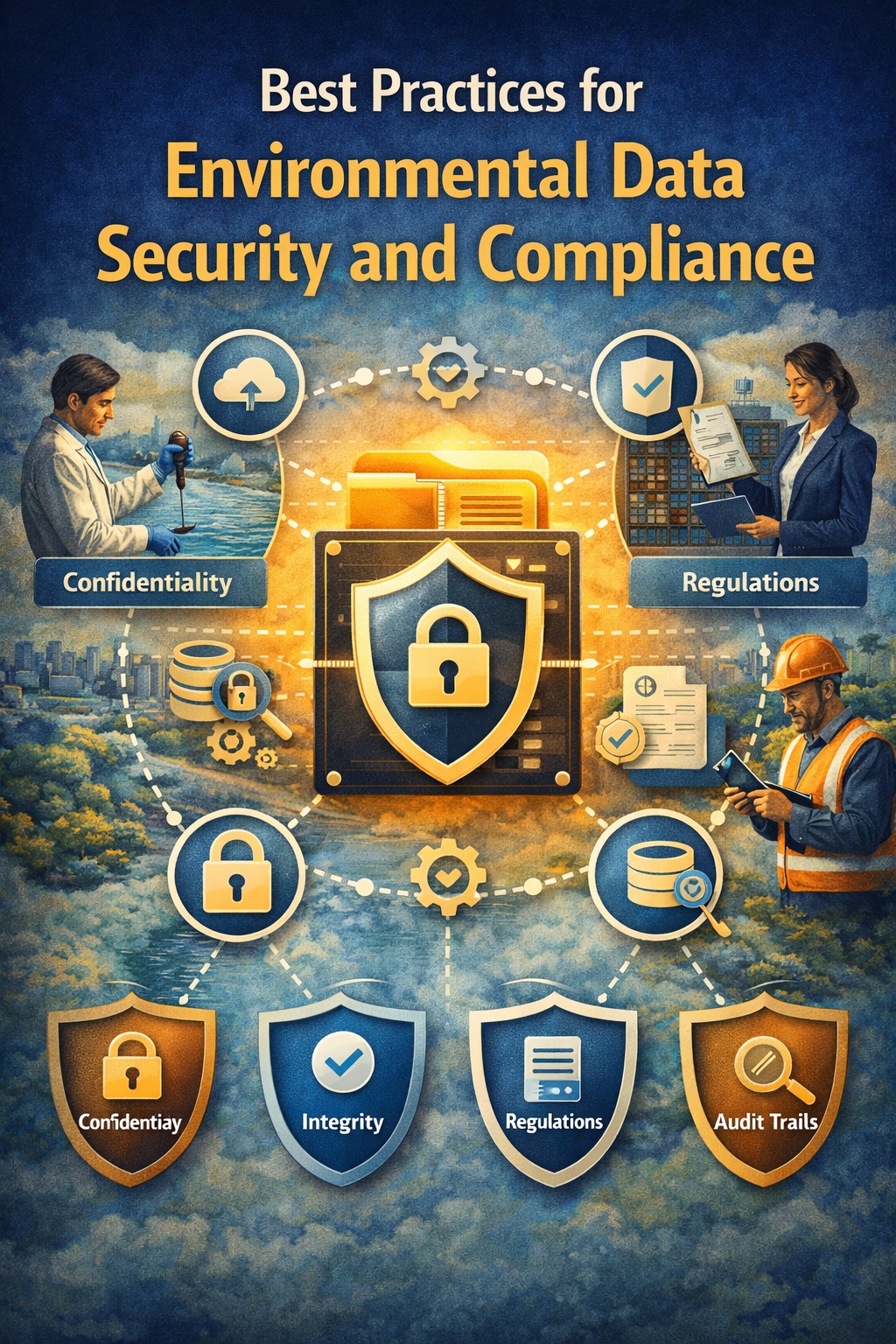
Core Principles of Environmental Data Security
1. Confidentiality
Protect data from unauthorized access.
2. Integrity
Ensure data is accurate and unaltered.
3. Availability
Data must be accessible when needed.
4. Accountability
Track who accesses and modifies data.
5. Compliance
Align with legal and regulatory requirements.
Best Practices for Environmental Data Security
1. Implement Role-Based Access Control (RBAC)
Ensure users only access:
- necessary data
- relevant projects
2. Use Strong Authentication
Implement:
- multi-factor authentication (MFA)
- secure password policies
3. Encrypt Data
Protect:
- data in transit
- data at rest
4. Centralize Data Management
Use:
- centralized databases
- integrated platforms
5. Maintain Audit Trails
Track:
- user activity
- data changes
6. Regular Backups
Use:
- automated backups
- offsite storage
7. Secure Data Sharing
Avoid:
- unsecured file transfers
- email attachments
8. Monitor Systems
Use tools to:
- detect anomalies
- prevent breaches
Best Practices for Compliance
1. Understand Regulatory Requirements
Identify applicable:
- environmental laws
- data protection regulations
2. Establish Data Governance Policies
Define:
- roles
- responsibilities
- procedures
3. Standardize Data Formats
Ensure consistency across:
- systems
- projects
4. Maintain Documentation
Document:
- data sources
- methodologies
- changes
5. Conduct Regular Audits
Review:
- data practices
- compliance status
6. Train Employees
Ensure awareness of:
- regulations
- security practices
Data Lifecycle Security
🔹 Data Collection
Ensure:
- accurate measurements
- secure capture methods
🔹 Data Storage
Use:
- secure systems
- redundancy
🔹 Data Processing
Maintain:
- traceability
- validation
🔹 Data Sharing
Control:
- access
- distribution
🔹 Data Archiving
Ensure:
- long-term accessibility
- compliance
Technology Solutions
🔹 Cloud Platforms
Provide:
- scalability
- security features
🔹 On-Premise Systems
Offer:
- control
- customization
🔹 Hybrid Systems
Balance:
- flexibility
- security
🔹 Data Management Software
Enable:
- centralized control
- audit tracking
Common Mistakes to Avoid
- ignoring access controls
- not encrypting data
- failing to back up data
- lack of training
- unclear governance
Future Trends
🔹 Increased Regulation
Stronger requirements globally.
🔹 AI and Automation
Improving:
- monitoring
- compliance
🔹 Zero Trust Security
Continuous verification of access.
🔹 ESG Reporting
Greater emphasis on transparency.
Building a Security and Compliance Framework
Step 1: Assess Risks
Identify:
- vulnerabilities
- threats
Step 2: Define Policies
Establish:
- rules
- procedures
Step 3: Implement Technology
Use:
- secure platforms
- monitoring tools
Step 4: Train Staff
Ensure:
- awareness
- accountability
Step 5: Monitor and Improve
Continuously:
- audit
- update
Conclusion
Environmental data security and compliance are essential for modern engineering and environmental projects.
Organizations that implement best practices benefit from:
- reduced risk
- improved compliance
- stronger data integrity
- enhanced trust
Because in environmental engineering: Protecting your data means protecting the environment, your projects, and your reputation.
Related Articles
- Security & Governance in Geoscience Data
- How to Secure Geotechnical Databases from Unauthorized Access
- AI Governance for Geoscience Data
- Data Loss in Subsurface Engineering Projects
- Secure Data Sharing Across Organizations
- Preventing Data Loss in Subsurface Engineering Projects
- Data Ethics in Environmental and Geotechnical Engineering
- Managing Multi-User Collaboration in Subsurface Databases
- Data Ownership and Responsibility in Engineering Firms
- Cloud vs On-Premise Security for Geoscience Data
- The Ultimate Guide to Engineering Data Security
- Configuring User Privilege Levels & Password-Protected Projects in GaeaSynergy
- Securing Your Subsurface Data: A Master Guide to User Management in GaeaSynergy
- Smart Licensing for Modern Geosciences: Managing GaeaSynergy with Ease