

Introduction
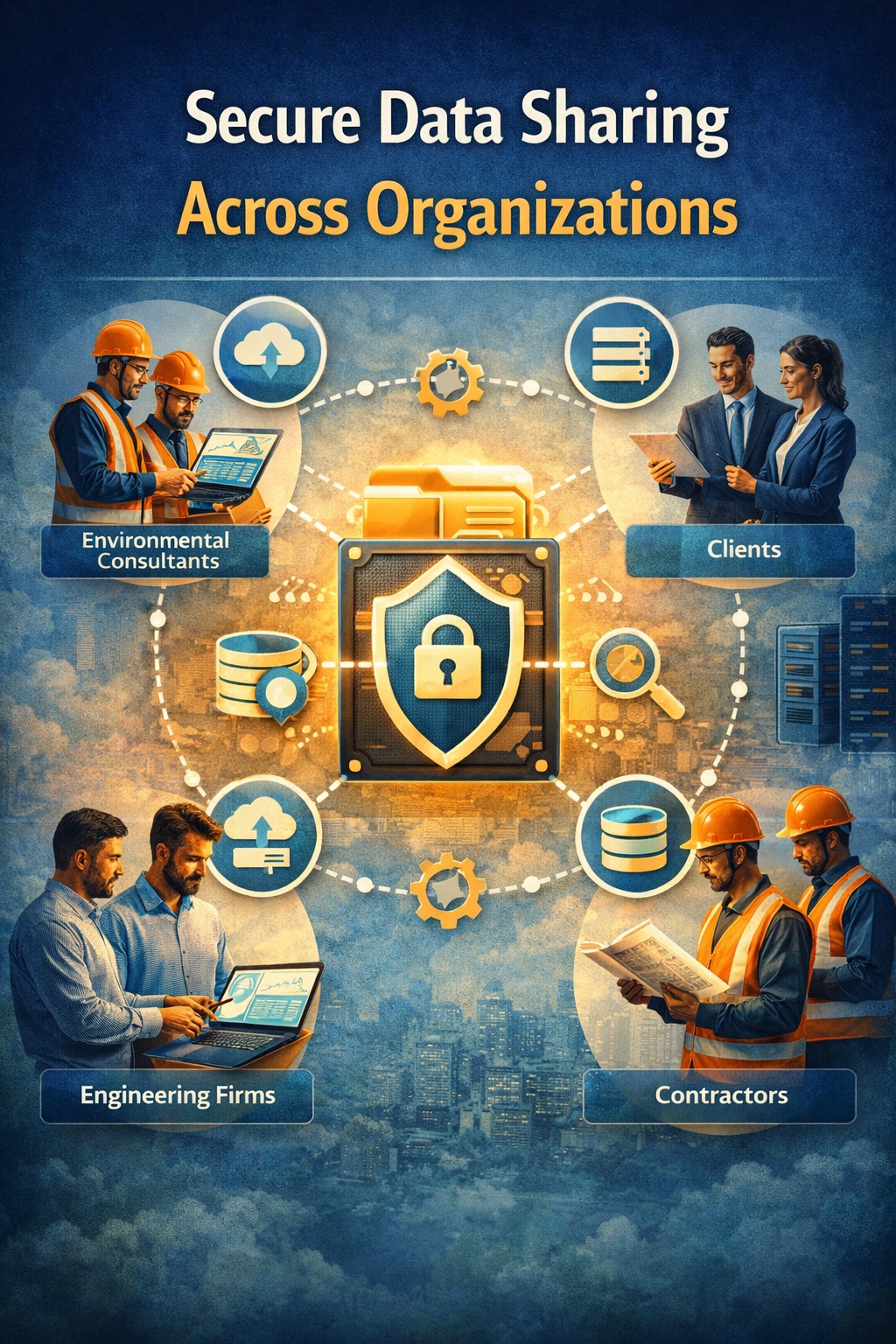
In modern engineering and geoscience projects, collaboration rarely happens within a single organization. Projects often involve multiple stakeholders, including:
- engineering firms
- environmental consultants
- contractors
- clients
- regulators
All of these parties rely on access to shared data—from borehole logs and lab results to environmental monitoring data and geospatial models.
However, sharing data across organizations introduces significant challenges:
- How do you ensure data remains secure?
- Who controls access?
- How do you prevent unauthorized use or modification?
- How do you maintain compliance with regulations?
Without proper controls, data sharing can lead to:
- data breaches
- loss of intellectual property
- compliance violations
- miscommunication and errors
This is where secure data sharing frameworks become essential.
In this guide, we’ll explore how organizations can share subsurface and engineering data securely while maintaining control, integrity, and trust.
What Is Secure Data Sharing?
Secure data sharing refers to the controlled exchange of data between organizations while ensuring:
- confidentiality
- integrity
- availability
- compliance
It involves:
- access controls
- encryption
- governance policies
- monitoring and auditing
Why Secure Data Sharing Matters
🔹 Collaboration Is Essential
Projects require input from multiple stakeholders, making data sharing unavoidable.
🔹 Sensitive Data Is at Risk
Shared data may include:
- proprietary information
- environmental assessments
- regulatory submissions
🔹 Regulatory Compliance
Organizations must comply with:
- data protection laws
- environmental regulations
- contractual obligations
🔹 Protecting Intellectual Property
Engineering data often represents:
- competitive advantage
- significant investment
Key Risks in Cross-Organization Data Sharing
⚠️ Unauthorized Access
Without proper controls, unauthorized users may:
- view sensitive data
- download or misuse it
⚠️ Data Leakage
Data may be:
- copied
- shared externally
- exposed unintentionally
⚠️ Version Conflicts
Multiple organizations working on the same data can lead to:
- inconsistencies
- outdated information
⚠️ Lack of Accountability
Without tracking, it’s unclear:
- who accessed data
- what changes were made
⚠️ Compliance Violations
Improper handling can result in:
- legal penalties
- regulatory issues
Core Principles of Secure Data Sharing
1. Least Privilege Access
Users should only access:
- the data they need
- when they need it
2. Data Minimization
Share only:
- necessary data
- relevant subsets
3. Encryption
Protect data:
- in transit
- at rest
4. Accountability
Track:
- user activity
- data usage
5. Transparency
Ensure all parties understand:
- access rights
- responsibilities
Key Technologies for Secure Data Sharing
🔹 Centralized Data Platforms
Provide:
- single source of truth
- controlled access
🔹 Cloud-Based Collaboration Tools
Enable:
- remote access
- real-time updates
🔹 Secure APIs
Allow systems to:
- exchange data programmatically
- enforce security policies
🔹 Data Encryption
Use:
- SSL/TLS for transmission
- encryption for storage
🔹 Identity and Access Management (IAM)
Control:
- user authentication
- permissions
Access Control Strategies
🔹 Role-Based Access Control (RBAC)
Assign roles such as:
- Admin
- Project Manager
- External Partner
- Viewer
🔹 Attribute-Based Access Control (ABAC)
Access based on:
- user attributes
- project context
🔹 Time-Based Access
Grant access:
- temporarily
- for specific tasks
Data Sharing Models
1. Direct Sharing
Data is shared directly between organizations.
2. Centralized Platform
All parties access a shared system.
3. Federated Systems
Organizations maintain separate systems but share data securely.
4. Hybrid Model
Combines multiple approaches.
Best Practices for Secure Data Sharing
1. Define Data Ownership Clearly
Establish:
- who owns the data
- who controls access
2. Use Secure Platforms
Avoid:
- email attachments
- unsecured file transfers
3. Implement Strong Authentication
Use:
- multi-factor authentication (MFA)
- secure login systems
4. Monitor and Audit Activity
Track:
- access
- downloads
- changes
5. Use Data Classification
Label data as:
- confidential
- internal
- public
6. Establish Data Sharing Agreements
Define:
- usage rights
- responsibilities
- restrictions
7. Limit Data Duplication
Avoid multiple copies across organizations.
8. Regularly Review Access
Update:
- permissions
- user roles
Legal and Compliance Considerations
🔹 Contracts
Include:
- data ownership
- usage rights
- liability
🔹 Data Privacy Laws
Ensure compliance with:
- GDPR
- PIPEDA
🔹 Industry Standards
Follow:
- engineering standards
- data management guidelines
Real-World Use Cases
🔹 Environmental Consulting Project
Multiple firms share:
- contamination data
- reports
Secure platform ensures:
- controlled access
- audit trails
🔹 Infrastructure Development
Stakeholders collaborate on:
- geotechnical data
- design models
Centralized system prevents:
- duplication
- inconsistencies
🔹 Energy Sector Project
Organizations share:
- seismic data
- subsurface models
Hybrid approach balances:
- security
- accessibility
Common Mistakes to Avoid
- sharing data via unsecured channels
- granting excessive access
- not tracking usage
- ignoring compliance requirements
- failing to define ownership
Future Trends
🔹 Zero Trust Security
Verify every access request.
🔹 Blockchain for Data Integrity
Ensuring:
- traceability
- tamper-proof records
🔹 AI for Threat Detection
Identifying:
- unusual activity
- potential breaches
🔹 Increased Regulation
Stronger requirements for data sharing practices.
Building a Secure Data Sharing Framework
Step 1: Assess Risks
Identify:
- data sensitivity
- potential threats
Step 2: Define Policies
Establish:
- access rules
- sharing protocols
Step 3: Implement Technology
Use:
- secure platforms
- encryption
- IAM systems
Step 4: Train Users
Ensure awareness of:
- security practices
- responsibilities
Step 5: Monitor and Improve
Continuously:
- audit systems
- update policies
Conclusion
Secure data sharing across organizations is essential for modern engineering and geoscience projects.
Done right, it enables:
- collaboration
- efficiency
- better decision-making
Done poorly, it creates:
- security risks
- compliance issues
- data loss
👉 The key is balancing:
- accessibility
- security
- control
By implementing strong governance, secure technologies, and clear policies, organizations can share data confidently while protecting their most valuable asset.
Related Articles
- Security & Governance in Geoscience Data
- How to Secure Geotechnical Databases from Unauthorized Access
- AI Governance for Geoscience Data
- Data Loss in Subsurface Engineering Projects
- Best Practices for Environmental Data Security and Compliance
- Preventing Data Loss in Subsurface Engineering Projects
- Data Ethics in Environmental and Geotechnical Engineering
- Managing Multi-User Collaboration in Subsurface Databases
- Data Ownership and Responsibility in Engineering Firms
- Cloud vs On-Premise Security for Geoscience Data
- The Ultimate Guide to Engineering Data Security
- Configuring User Privilege Levels & Password-Protected Projects in GaeaSynergy
- Securing Your Subsurface Data: A Master Guide to User Management in GaeaSynergy
- Smart Licensing for Modern Geosciences: Managing GaeaSynergy with Ease