

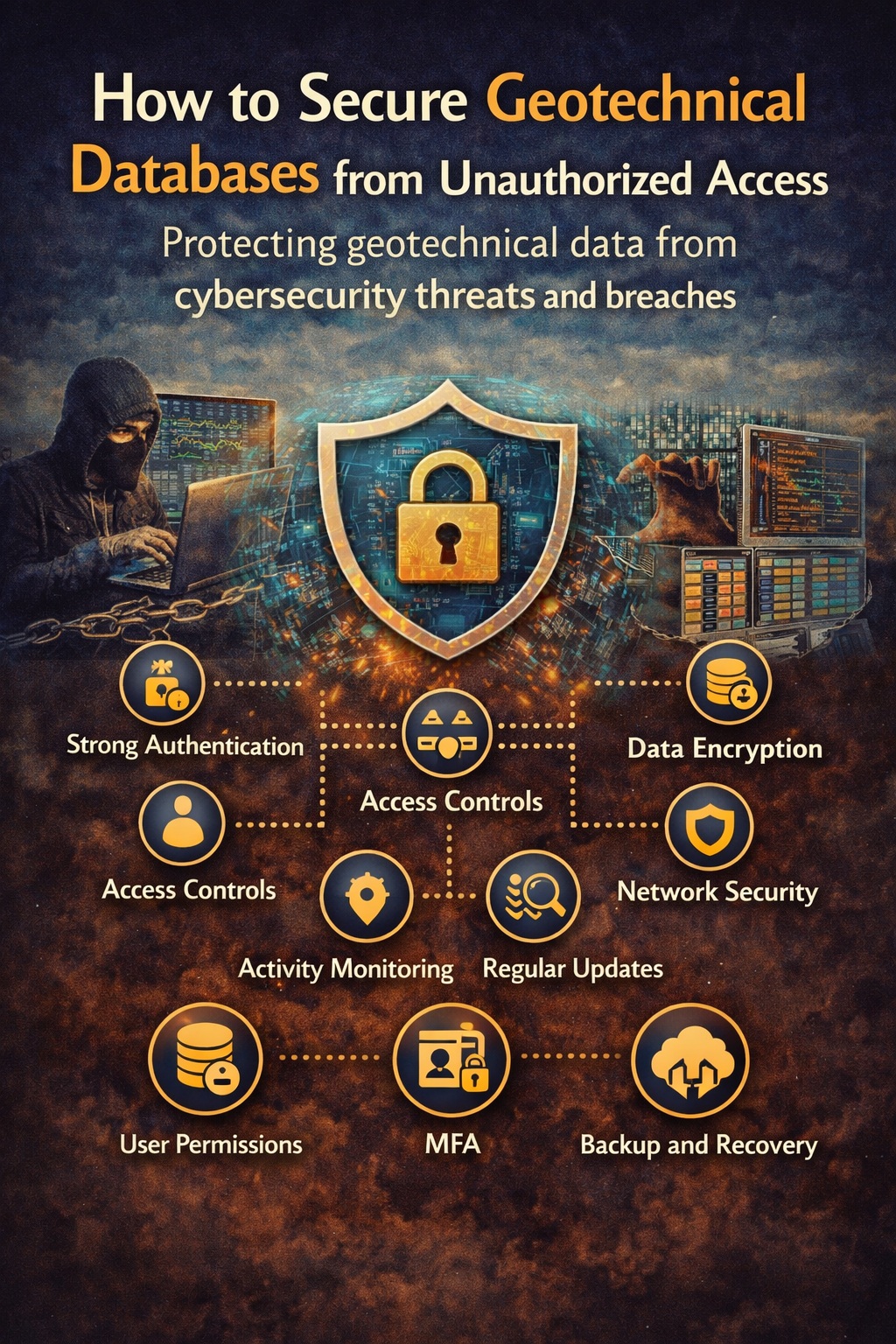
Protecting subsurface data with strong security, governance, and access control strategies
Introduction
Geotechnical databases are the backbone of modern subsurface engineering projects. They store critical information such as:
- borehole logs
- laboratory test results
- soil and rock properties
- groundwater data
- geophysical surveys
This data is used to inform engineering decisions, support regulatory compliance, and guide infrastructure development.
However, as geotechnical data becomes more centralized and accessible, it also becomes more vulnerable.
Unauthorized access to geotechnical databases can lead to data breaches, corruption, loss of intellectual property, and serious project risks.
In an era of increasing cybersecurity threats and stricter regulatory requirements, securing geotechnical databases is no longer optional—it is essential.
In this guide, we’ll explore:
- the risks of unauthorized access
- key security principles
- technologies and best practices
- how to build a secure database environment
What Is Unauthorized Access?
Unauthorized access occurs when individuals or systems gain access to data without proper permission.
This can include:
- external attackers (hackers)
- internal users exceeding their permissions
- accidental access due to misconfigured systems
Why Geotechnical Databases Are High-Risk Targets
🔹 Valuable Data
Geotechnical data represents:
- significant financial investment
- intellectual property
- competitive advantage
🔹 Regulatory Sensitivity
Data may be subject to:
- environmental regulations
- compliance audits
🔹 Multi-User Environments
Databases are accessed by:
- engineers
- consultants
- contractors
- clients
This increases exposure.
🔹 Increasing Digitalization
Cloud systems and remote access expand attack surfaces.
Common Threats to Geotechnical Databases
⚠️ External Cyberattacks
- hacking
- ransomware
- phishing
⚠️ Insider Threats
- unauthorized internal access
- misuse of privileges
⚠️ Weak Authentication
- simple passwords
- lack of MFA
⚠️ Misconfigured Systems
- open ports
- incorrect permissions
⚠️ Data Leakage
- unsecured file sharing
- accidental exposure
Core Principles of Database Security
1. Least Privilege Access
Users should only access:
- what they need
- when they need it
2. Defense in Depth
Use multiple layers of security:
- network
- application
- database
3. Zero Trust
Never assume trust—verify every access request.
4. Accountability
Track:
- who accessed data
- what actions were taken
5. Data Protection
Ensure:
- confidentiality
- integrity
- availability
Key Strategies to Secure Geotechnical Databases
1. Implement Strong Access Controls
Use:
- Role-Based Access Control (RBAC)
- Attribute-Based Access Control (ABAC)
Define roles such as:
- Admin
- Data Manager
- Engineer
- Viewer
2. Use Multi-Factor Authentication (MFA)
Require:
- password + secondary verification
This significantly reduces risk.
3. Encrypt Data
Protect:
- data at rest
- data in transit
4. Secure Network Access
Use:
- firewalls
- VPNs
- IP restrictions
5. Monitor and Log Activity
Maintain:
- audit trails
- access logs
6. Regularly Update and Patch Systems
Fix vulnerabilities promptly.
7. Use Secure APIs
Ensure:
- authenticated access
- encrypted communication
8. Implement Data Segmentation
Separate:
- projects
- clients
- sensitive data
Protecting Against Insider Threats
🔹 Strategies:
- enforce least privilege
- monitor user behavior
- conduct regular audits
- revoke access promptly
Securing Cloud vs On-Premise Databases
🔹 Cloud Security
Advantages:
- advanced security tools
- automatic updates
Risks:
- misconfiguration
🔹 On-Premise Security
Advantages:
- full control
Risks:
- limited resources
🔹 Hybrid Approach
Balance:
- flexibility
- security
Data Governance and Policies
🔹 Define Ownership
Clarify:
- who owns data
- who manages it
🔹 Establish Policies
Include:
- access rules
- security procedures
🔹 Conduct Training
Educate users on:
- security practices
- responsibilities
Incident Response Planning
Prepare for breaches with:
🔹 Response Plan
- identify threats
- contain damage
- recover systems
🔹 Communication Plan
Notify:
- stakeholders
- regulators
🔹 Recovery Strategy
Restore:
- data
- operations
Common Mistakes to Avoid
- using shared accounts
- ignoring updates
- lack of monitoring
- excessive permissions
- weak security policies
Future Trends
🔹 Zero Trust Security
Becoming standard.
🔹 AI-Based Threat Detection
Improving security monitoring.
🔹 Increased Regulation
Stricter compliance requirements.
🔹 Automation
Reducing human error.
Building a Secure Database Environment
Step 1: Assess Risks
Identify vulnerabilities.
Step 2: Implement Controls
Apply:
- access control
- encryption
Step 3: Monitor Systems
Track activity continuously.
Step 4: Train Teams
Ensure awareness.
Step 5: Improve Continuously
Update practices regularly.
Conclusion
Securing geotechnical databases from unauthorized access is essential for protecting data, ensuring compliance, and maintaining trust.
Organizations that implement strong security practices benefit from:
- reduced risk
- improved data integrity
- better collaboration
- regulatory compliance
Related Articles
- Security & Governance in Geoscience Data
- How to Secure Geotechnical Databases from Unauthorized Access
- AI Governance for Geoscience Data
- Data Loss in Subsurface Engineering Projects
- Best Practices for Environmental Data Security and Compliance
- Secure Data Sharing Across Organizations
- Preventing Data Loss in Subsurface Engineering Projects
- Data Ethics in Environmental and Geotechnical Engineering
- Managing Multi-User Collaboration in Subsurface Databases
- Data Ownership and Responsibility in Engineering Firms
- Cloud vs On-Premise Security for Geoscience Data
- The Ultimate Guide to Engineering Data Security
- Configuring User Privilege Levels & Password-Protected Projects in GaeaSynergy
- Securing Your Subsurface Data: A Master Guide to User Management in GaeaSynergy
- Smart Licensing for Modern Geosciences: Managing GaeaSynergy with Ease