

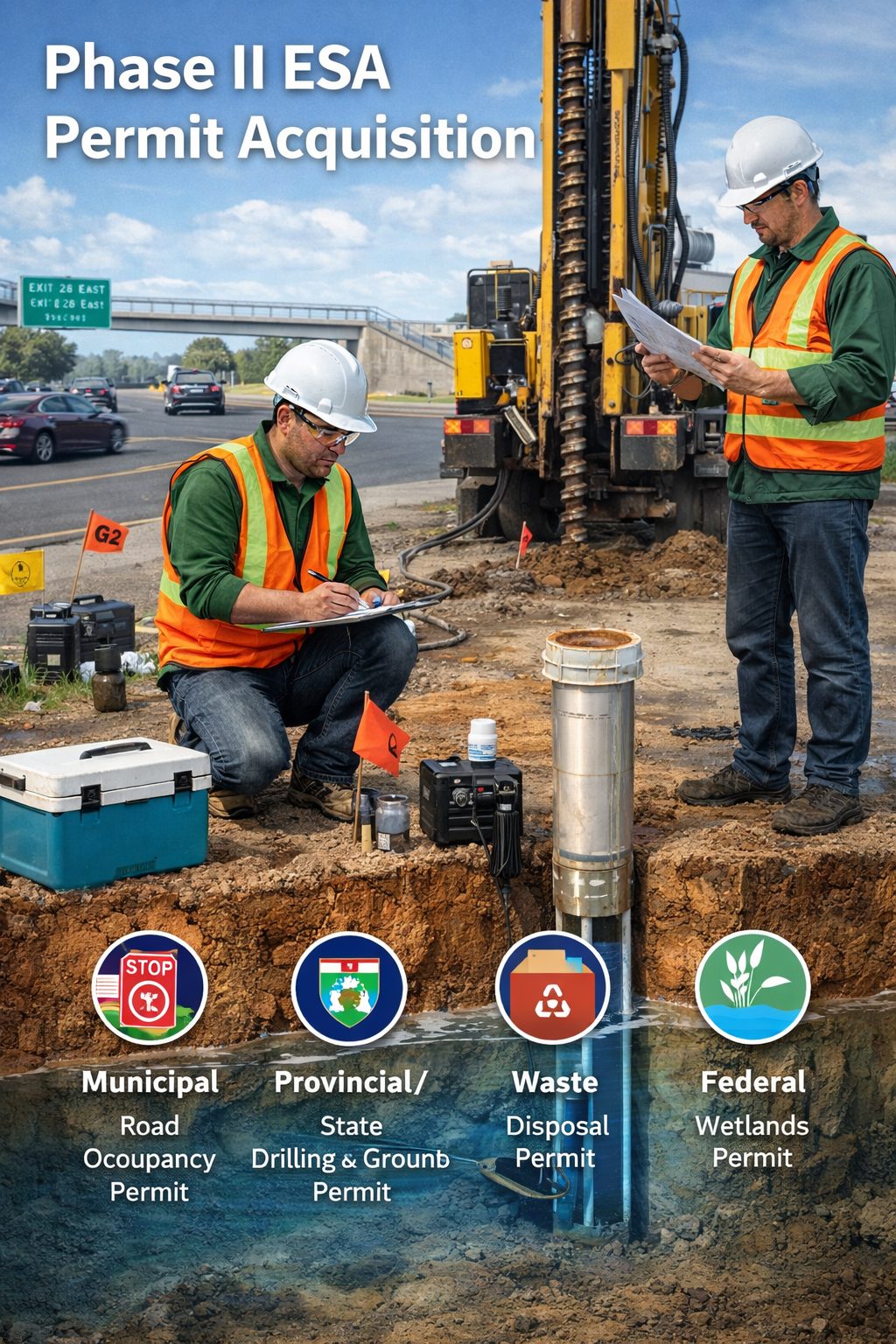
Permit acquisition is a critical—yet often underestimated—component of a Phase II Environmental Site Assessment (ESA). While much attention is placed on sampling strategies and analytical methods, regulatory approvals ultimately determine whether fieldwork can proceed legally, safely, and on schedule.
A Phase II ESA involves intrusive activities such as drilling boreholes, installing monitoring wells, and collecting soil and groundwater samples. These activities intersect with multiple regulatory frameworks across municipal, provincial/state, and federal jurisdictions. As a result, obtaining the necessary permits requires careful planning, coordination, and a strong understanding of applicable laws.
In Canada, particularly in Ontario, this process is guided by agencies such as the Ministry of the Environment, Conservation and Parks and governed by regulations like Ontario Regulation 153/04. Similar frameworks exist in the United States under agencies like the Environmental Protection Agency.
This comprehensive guide outlines the key considerations for permit acquisition in a Phase II ESA, including regulatory requirements, common permits, application processes, and best practices.
Why Permit Acquisition Matters in Phase II ESA
Permit acquisition is not just a regulatory checkbox—it directly impacts:
- Project timelines (delays can halt fieldwork)
- Legal compliance (unauthorized work can lead to fines or shutdowns)
- Environmental protection (ensuring sensitive areas are not harmed)
- Stakeholder confidence (demonstrating due diligence)
Failure to secure proper permits can invalidate data, delay redevelopment projects, and expose stakeholders to liability.
Activities That Trigger Permit Requirements
The need for permits depends largely on the scope and location of intrusive work. Common Phase II ESA activities that require approvals include:
1. Subsurface Investigations
- Borehole drilling
- Test pit excavation
- Soil sampling
These activities may disturb underground utilities, soil structures, or contaminated zones.
2. Groundwater Monitoring
- Monitoring well installation
- Groundwater purging and sampling
- Well decommissioning
Groundwater work is often tightly regulated due to its connection to drinking water and ecological systems.
3. Handling of Investigation-Derived Waste (IDW)
- Contaminated soil cuttings
- Purge water from wells
- Disposable sampling materials
Proper storage, transport, and disposal are regulated under environmental protection laws.
Jurisdictional Framework: Who Regulates What?
Permit requirements are layered across multiple jurisdictions:
Municipal / Local Authorities
- Road occupancy permits
- Encroachment permits
- Noise bylaws
- Traffic control requirements
For example, municipalities like Mississauga have strict requirements for work conducted within road allowances.
Provincial / State Authorities
- Environmental drilling permits
- Groundwater taking permits
- Waste management approvals
- Highway corridor permits
In Ontario, these are typically overseen by the Ministry of the Environment, Conservation and Parks and the Ministry of Transportation.
Federal Authorities
- Species protection permits
- Wetland and navigable water approvals
- Fisheries and habitat protection
These may involve legislation such as the Endangered Species Act or federal water protection laws.
Common Permits and Approvals Required
1. Municipal Permits
Road Occupancy / Encroachment Permits
Required when:
- Drilling occurs on roads, sidewalks, or public property
- Equipment occupies municipal right-of-way
These permits often require:
- Traffic management plans
- Insurance documentation
- Restoration commitments
2. Environmental Drilling Permits
Some jurisdictions regulate the act of drilling itself. These permits ensure:
- Qualified drillers are used
- Proper methods are followed
- Environmental risks are minimized
3. Groundwater Taking Permits
If groundwater extraction exceeds certain thresholds, a permit may be required.
Key Considerations:
- Volume of water extracted
- Duration of pumping
- Potential impact on nearby wells or ecosystems
In Ontario, requirements are often tied to Ontario Regulation 153/04.
4. Waste Disposal Approvals
Investigation-derived waste must be handled in compliance with environmental regulations.
Includes:
- Temporary storage on-site
- Transportation by licensed carriers
- Disposal at approved facilities
Improper disposal can result in significant penalties.
5. Highway and Utility Corridor Permits
Required when working near:
- Provincial highways
- Rail corridors
- Major utility infrastructure
These permits are typically issued by agencies like the Ministry of Transportation.
6. Ecological and Environmental Permits
Endangered Species Approvals
If work may impact protected species or habitats, permits under the Endangered Species Act may be required.
Wetland / Navigable Water Permits
Required when:
- Work occurs near wetlands, rivers, or lakes
- There is potential disturbance to aquatic ecosystems
These permits may involve federal agencies or conservation authorities.
The Permit Acquisition Process
Permit acquisition is typically managed by a Qualified Person (QP) or environmental consultant.
Step 1: Scope Definition
- Review Phase I ESA findings
- Identify APECs and investigation needs
- Develop a Sampling and Analysis Plan (SAP)
Step 2: Regulatory Review
- Identify applicable regulations across jurisdictions
- Determine required permits
- Consult with regulatory agencies if needed
Step 3: Application Preparation
Applications typically include:
- Site plans and maps
- Drilling and sampling methodologies
- Health and Safety Plan (HASP)
- Waste management procedures
Accuracy and completeness are critical to avoid delays.
Step 4: Submission and Review
- Submit applications to relevant authorities
- Respond to requests for additional information
- Address public or agency comments (if applicable)
Step 5: Permit Issuance
Permits are issued with specific conditions, such as:
- Work hour restrictions
- Environmental protection measures
- Reporting requirements
Step 6: Documentation and Compliance
- Maintain copies of all permits on-site
- Reference approvals in the final ESA report
- Ensure compliance with all conditions
Key Considerations for Successful Permit Acquisition
1. Early Planning
Permit timelines can range from a few days to several weeks. Early identification of requirements is essential to avoid delays.
2. Site-Specific Factors
Each site presents unique challenges:
- Urban vs. rural settings
- Proximity to sensitive receptors
- Existing infrastructure
A one-size-fits-all approach does not work.
3. Stakeholder Coordination
Effective communication with:
- Property owners
- Municipal authorities
- Regulatory agencies
can significantly streamline the process.
4. Regulatory Complexity
Navigating overlapping regulations requires expertise. Misinterpretation can lead to:
- Missing permits
- Non-compliance
- Project delays
5. Environmental Sensitivity
Sites near:
- Wetlands
- Water bodies
- Protected habitats
require additional scrutiny and approvals.
6. Documentation Quality
Incomplete or inaccurate applications are a leading cause of delays.
Ensure:
- Clear site maps
- Detailed methodologies
- Consistent information across documents
Timing and Scheduling Considerations
Permit acquisition must be integrated into the project schedule.
Typical Timelines:
- Municipal permits: 2–10 days
- Provincial permits: 1–4 weeks
- Federal approvals: several weeks to months
Delays can occur due to:
- Incomplete applications
- Agency workload
- Seasonal restrictions (e.g., wildlife protection windows)
Common Challenges and How to Overcome Them
Challenge 1: Multiple Jurisdictions
Solution: Develop a regulatory matrix early in the project.
Challenge 2: Changing Site Conditions
Solution: Build flexibility into the sampling plan and permit scope.
Challenge 3: Unexpected Environmental Constraints
Solution: Conduct preliminary site reconnaissance and consult experts.
Challenge 4: Permit Delays
Solution: Submit applications early and maintain proactive communication with agencies.
Best Practices for Permit Acquisition
- Start the process early
- Engage experienced environmental professionals
- Maintain clear and consistent documentation
- Communicate proactively with regulators
- Monitor compliance throughout the project
Integration with Phase II ESA Workflow
Permit acquisition is not a standalone task—it is integrated with:
- Sampling plan development
- Health and Safety Plan (HASP) preparation
- Fieldwork scheduling
- Reporting and documentation
A coordinated approach ensures efficiency and compliance.
Role of the Qualified Person (QP)
The Qualified Person is responsible for:
- Identifying permit requirements
- Preparing and submitting applications
- Ensuring compliance with conditions
- Documenting approvals in the final report
Their expertise is critical to navigating regulatory complexity.
Future Trends in Permit Acquisition
- Digital permitting systems (faster submissions and tracking)
- Stricter environmental regulations
- Greater emphasis on sustainability and ecological protection
Staying informed about regulatory changes is essential for ongoing compliance.
Conclusion
Permit acquisition is a cornerstone of successful Phase II ESA execution. It ensures that intrusive investigations are conducted legally, safely, and with respect for environmental and public interests.
By understanding jurisdictional requirements, planning ahead, and working with experienced professionals, project teams can navigate the permitting process efficiently and avoid costly delays.
Whether dealing with municipal road permits, provincial environmental approvals, or federal ecological regulations, the key is proactive planning and meticulous execution.
Ultimately, a well-managed permitting process supports not only compliance but also the broader goal of responsible environmental stewardship.
👉 Learn more about our Automated Environmental Site Assessment Solution
Related Articles
- Methodology for Conducting a Phase II Environmental Site Assessment (ESA)
- Key Uses of a Phase II Environmental Site Assessment (ESA) Report
- Market Drivers and Trends for Phase II Environmental Site Assessments
- Role of Reviewing Existing Data for a Phase II Environmental Site Assessment
- Methodology for Identifying Contaminants of Concern (COCs) for a Phase II Environmental Site Assessment
- Key Components of a Phase II ESA Sampling Plan
- Key Components of a Phase II ESA Health and Safety Plan (HASP)
- The Utility Clearance Process for a Phase II ESA
- Drilling and Sampling for a Phase II ESA: Methods, Equipment, and Best Practices
- Installation of Monitoring Wells for a Phase II Environmental Site Assessment (ESA)
- Phase II ESA Quality Control Procedures: Ensuring Accurate, Defensible Environmental Data
- Sample Handling Procedures for a Phase II ESA: Ensuring Data Integrity from Field to Laboratory
- Laboratory Analysis and Data Interpretation for a Phase II ESA
- Reporting and Recommendations for a Phase II Environmental Site Assessment (ESA)
- Differences Between a Phase II ESA in Canada and the United States