

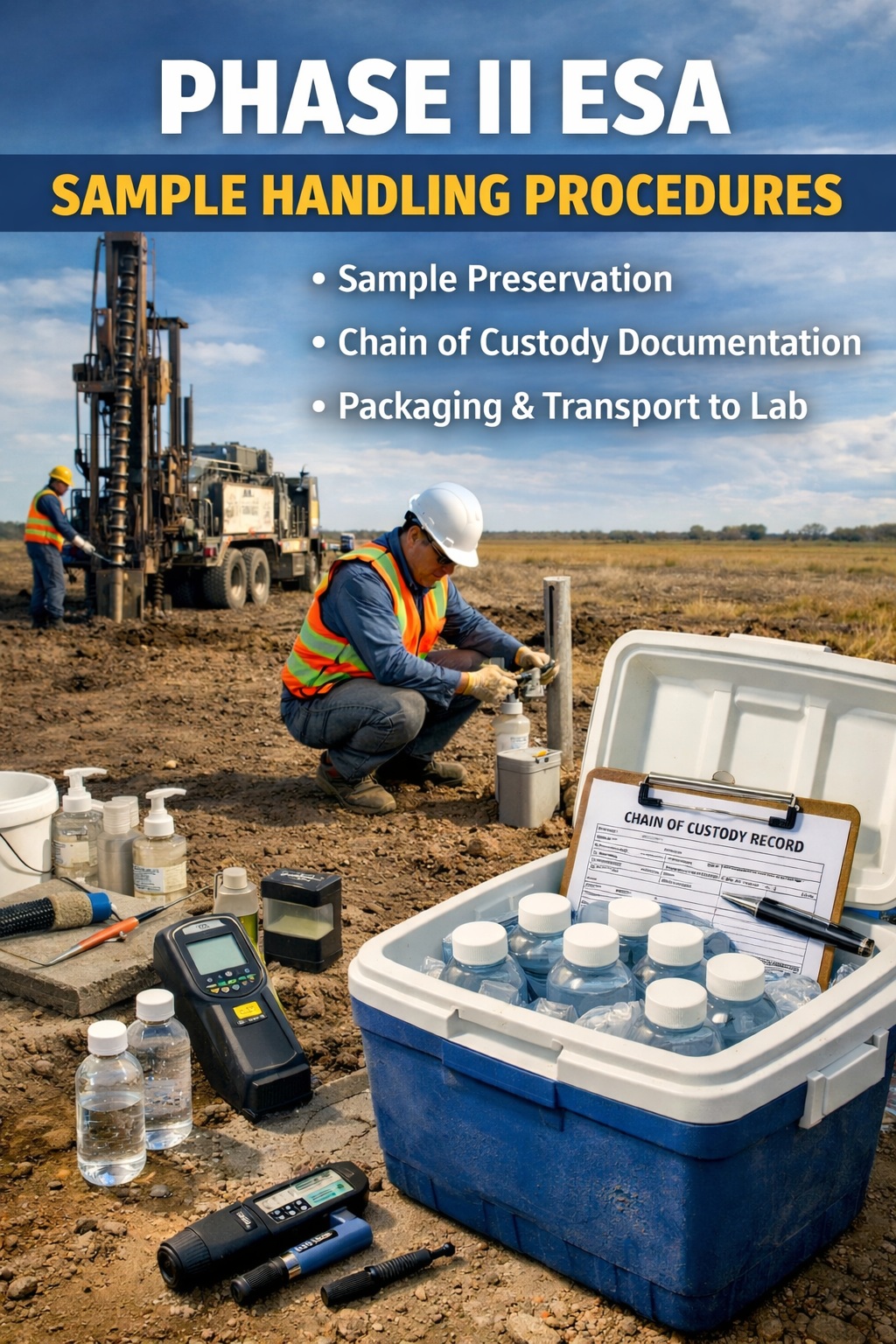
Sample handling procedures are one of the most critical components of a Phase II Environmental Site Assessment (ESA). While drilling and sampling often receive the most attention, it is the handling, preservation, and transport of those samples that ultimately determine whether the analytical data is valid, defensible, and usable.
Improper sample handling can lead to contamination, degradation, or loss of target analytes, resulting in misleading conclusions, regulatory non-compliance, and costly re-sampling efforts. For this reason, strict protocols—guided by standards from organizations such as CSA Group and ASTM International—must be followed at every stage of the process.
This comprehensive guide outlines best practices for sample handling in a Phase II ESA, covering collection, preservation, packaging, transportation, laboratory reception, and quality control (QC).
The Importance of Proper Sample Handling
Sample handling is not just a procedural requirement—it is fundamental to data quality and legal defensibility.
Accurate environmental decisions—such as whether a site requires remediation or poses a risk to human health—depend entirely on the reliability of laboratory results. If samples are compromised at any stage:
- Contaminant concentrations may be under- or over-reported
- Regulatory criteria comparisons may be invalid
- Risk assessments may be flawed
- Legal challenges may arise
Proper handling ensures that laboratory data reflects true subsurface conditions, not artifacts introduced during sampling or transport.
Regulatory Framework and Standards
Sample handling procedures are governed by a combination of:
- National and international standards
- Provincial/state regulatory requirements
- Laboratory-specific protocols
Key organizations include:
- CSA Group
- ASTM International
These bodies establish guidelines for:
- Sample container selection
- Preservation methods
- Holding times
- Chain-of-custody procedures
- Quality assurance/quality control (QA/QC)
Adherence to these standards ensures consistency, reliability, and acceptance by regulatory authorities.
Sample Collection and Preservation
The primary objective during sample collection is to maintain the original chemical composition of the sample while preventing contamination or degradation.
Key Principles
- Minimize exposure to air (especially for volatile compounds)
- Prevent cross-contamination between sampling locations
- Preserve samples immediately after collection
- Maintain proper temperature control
Sample Containers, Preservation, and Holding Times
The selection of appropriate containers and preservation methods depends on the target analytes.
Volatile Organic Compounds (VOCs)
- Container: 40 mL glass vials (VOA vials) with septa tops
- Preservation: Cool to ~4°C; methanol preservation often required for soil
- Holding Time: Typically 7–14 days
VOCs are highly sensitive to volatilization. Even minor exposure to air can result in significant loss of contaminants such as benzene or toluene.
Petroleum Hydrocarbons (PHCs)
- Container: Glass jars or vials
- Preservation: Cool to ~4°C
- Holding Time: Typically 14–40 days
PHCs are less volatile than VOCs but still subject to degradation if not properly preserved.
Metals and Inorganics
- Container: Plastic or glass bottles
- Preservation: Cool to ~4°C; nitric acid may be added
- Holding Time: Up to 6 months
Acid preservation stabilizes dissolved metals and prevents adsorption to container walls.
Minimizing Volatilization
For volatile contaminants:
- Samples are collected first before other parameters
- Soil samples are placed directly into methanol or specialized containers
- Headspace (air above the sample) is minimized
This is particularly important for petroleum-impacted sites where gasoline-range compounds may rapidly evaporate.
Preventing Cross-Contamination
Field personnel must follow strict contamination prevention protocols:
- Use dedicated or disposable sampling equipment
- Decontaminate reusable equipment between locations
- Wear new disposable gloves for each sample
- Avoid contact with non-clean surfaces
Even small amounts of cross-contamination can significantly affect analytical results.
Temperature Control
Temperature is one of the most important preservation factors.
- Samples are placed in coolers immediately after collection
- Ice or ice packs are used to maintain approximately 4°C
- Cooling slows:
- Biological activity
- Chemical reactions
- Volatilization
Failure to maintain temperature can lead to degradation and data rejection.
Packaging and Transportation
Once samples are collected and preserved, they must be securely packaged and transported to the laboratory without compromising integrity.
Packaging Procedures
Proper packaging prevents:
- Breakage of containers
- Leakage of contents
- Cross-contamination
Best practices include:
- Wrapping each container individually
- Using bubble wrap or foam padding
- Placing containers in sealed plastic bags
- Separating glass containers to avoid impact damage
Cooler Preparation
Coolers serve as the primary transport vessel and must be properly prepared:
- Clean and structurally sound
- Lined with absorbent material
- Filled with sufficient ice to maintain temperature
- Clearly labelled with:
- Project name
- Contact information
- “Fragile” warnings
Proper cooler preparation ensures that samples arrive intact and within acceptable temperature ranges.
Chain-of-Custody (COC) Procedures
The chain-of-custody (COC) is one of the most critical aspects of sample handling.
It provides a documented record of sample possession from collection to analysis, ensuring traceability and legal defensibility.
COC Form Includes:
- Project name and number
- Sampler’s name and signature
- Unique sample identification codes
- Date and time of collection
- Requested analyses
- Signatures of all individuals handling the samples
The completed COC form is:
- Placed in a waterproof bag
- Sealed inside the cooler
- Accompanied by custody seals on the cooler
Any break in custody can compromise the validity of the data.
Shipping and Delivery
Timely delivery to the laboratory is essential.
- Samples are typically delivered within 24 hours
- Courier or direct delivery methods are used
- Holding times must be strictly observed
Delays in shipping can result in expired holding times and unusable data.
Laboratory Reception and Quality Control
Upon arrival at the laboratory, a series of QC checks are performed to verify that samples meet acceptance criteria.
Many laboratories are accredited by organizations such as:
- Canadian Association for Laboratory Accreditation
Accreditation ensures that laboratories follow standardized procedures and maintain high-quality analytical practices.
Temperature Verification
The first step is to measure the temperature inside the cooler.
- Acceptable range is typically near 4°C
- Temperature is recorded upon receipt
If samples arrive outside acceptable limits:
- Data may be qualified
- Samples may be rejected in severe cases
Chain-of-Custody Verification
Laboratory personnel compare the COC form with the received samples:
- Confirm all samples are present
- Verify labeling and identification
- Check requested analyses
Any discrepancies are documented and reported to the project manager.
Sample Inspection
Each sample is inspected for:
- Container integrity (no cracks or leaks)
- Proper preservation (e.g., presence of preservatives)
- Adequate volume for analysis
Damaged or compromised samples may be rejected or flagged.
Sample Login and Tracking
Once accepted:
- Samples are assigned unique laboratory IDs
- Logged into the laboratory information system
- Scheduled for analysis within holding times
This step ensures traceability throughout the analytical process.
Common Sample Handling Errors and How to Avoid Them
Even experienced field teams can encounter issues if procedures are not strictly followed.
Common Errors
- Improper container selection
- Insufficient cooling
- Missing or incomplete COC forms
- Exceeded holding times
- Cross-contamination from equipment
Prevention Strategies
- Use checklists during fieldwork
- Conduct regular training sessions
- Perform field audits and reviews
- Maintain clear communication with laboratories
Proactive management reduces the risk of costly mistakes.
Best Practices for Phase II ESA Sample Handling
To ensure high-quality, defensible data:
- Follow a detailed Sampling and Analysis Plan (SAP)
- Use laboratory-supplied containers and preservatives
- Maintain strict temperature control at all times
- Complete and verify chain-of-custody documentation
- Deliver samples promptly to the laboratory
- Work with accredited analytical laboratories
- Document all procedures thoroughly
The Role of Sample Handling in Data Quality
Sample handling directly influences:
- Data accuracy
- Analytical precision
- Regulatory compliance
- Risk assessment outcomes
Even minor deviations from standard procedures can have significant consequences, making strict adherence essential.
Conclusion
Sample handling procedures are a critical link between fieldwork and laboratory analysis in a Phase II ESA. By carefully controlling every step—from collection and preservation to transportation and laboratory reception—environmental professionals ensure that analytical data is accurate, reliable, and defensible.
Standards established by organizations such as CSA Group and ASTM International provide the framework for these procedures, helping to maintain consistency and quality across projects.
Ultimately, proper sample handling supports informed decision-making, protects human health and the environment, and ensures successful project outcomes.
👉 Learn more about our Automated Environmental Site Assessment Solution
Related Articles
- Methodology for Conducting a Phase II Environmental Site Assessment (ESA)
- Key Uses of a Phase II Environmental Site Assessment (ESA) Report
- Market Drivers and Trends for Phase II Environmental Site Assessments
- Role of Reviewing Existing Data for a Phase II Environmental Site Assessment
- Methodology for Identifying Contaminants of Concern (COCs) for a Phase II Environmental Site Assessment
- Key Components of a Phase II ESA Sampling Plan
- Key Components of a Phase II ESA Health and Safety Plan (HASP)
- Key Considerations for Permit Acquisition for a Phase II ESA
- The Utility Clearance Process for a Phase II ESA
- Drilling and Sampling for a Phase II ESA: Methods, Equipment, and Best Practices
- Installation of Monitoring Wells for a Phase II Environmental Site Assessment (ESA)
- Phase II ESA Quality Control Procedures: Ensuring Accurate, Defensible Environmental Data
- Laboratory Analysis and Data Interpretation for a Phase II ESA
- Reporting and Recommendations for a Phase II Environmental Site Assessment (ESA)
- Differences Between a Phase II ESA in Canada and the United States