

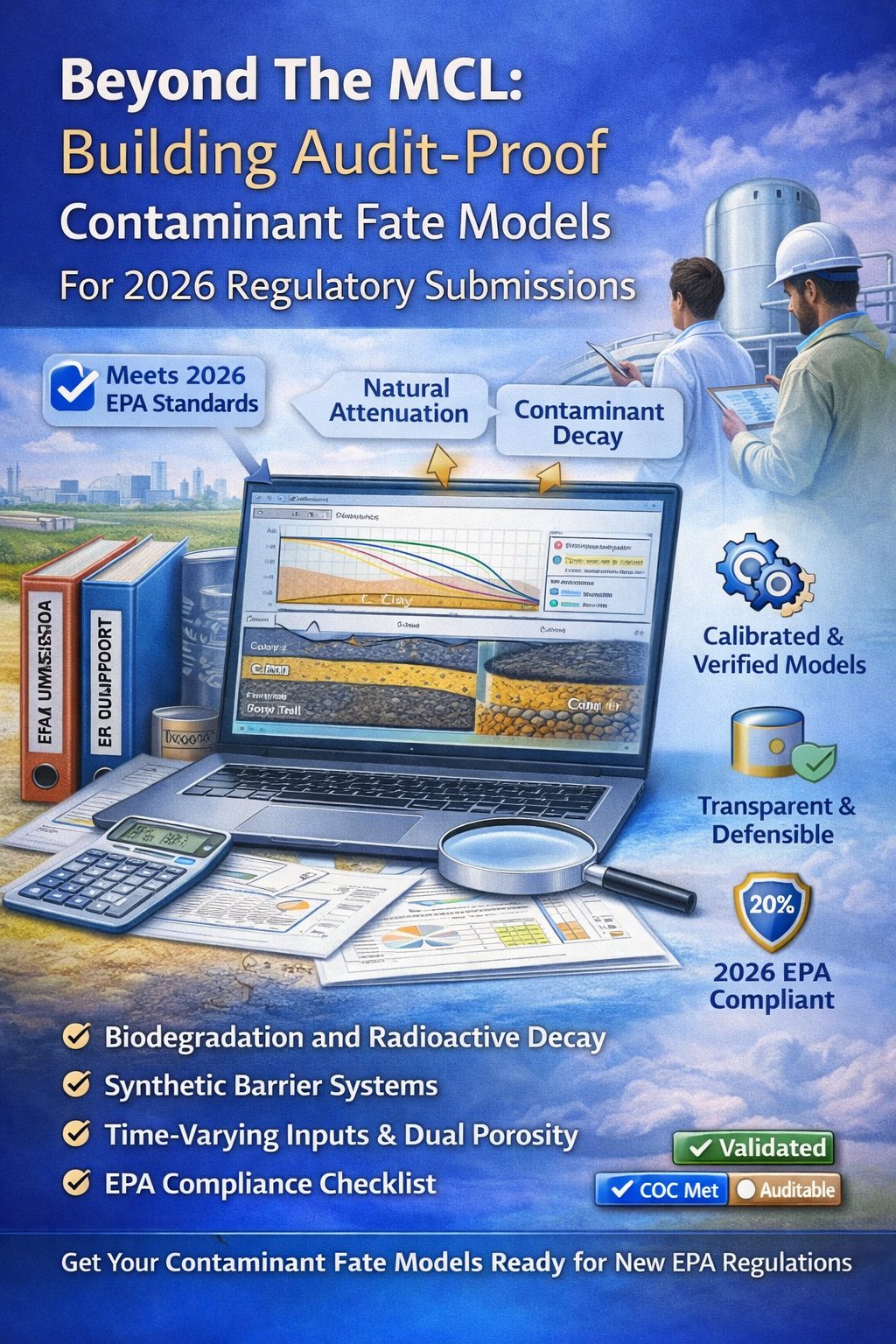
Did you know that the landscape of environmental regulation is rapidly evolving, creating a pressing need for businesses to stay ahead of the curve? As we move towards 2026, the complexity and scrutiny of contaminant fate modeling are set to heighten, particularly amidst tightening regulations around landfill design and contaminant transport modeling. This blog post will dive deep into the world of audit-proof contaminant fate models, exploring new methodologies, emerging technologies, and best practices to prepare for compliance within the upcoming regulatory changes. You’ll gain valuable insights that can not only safeguard your business against potential noncompliance but also enhance stakeholder trust and environmental accountability.
Understanding Contaminant Fate Modeling
Contaminant fate modeling plays a vital role in environmental management and public health safety. It involves predicting the behavior of contaminants in the environment, including their transport, transformation, and eventual fate. This understanding is crucial, especially when designing landfills and assessing their potential impact on surrounding ecosystems. As we approach 2026, more stringent guidelines and measurable outcomes will be expected, thus elevating the importance of audit-proof models in the regulatory landscape.
The Emerging Regulatory Landscape
In recent years, environmental regulations have become more robust, aimed at improving the sustainability of waste management practices. The U.S. Environmental Protection Agency (EPA) has announced several initiatives targeting waste reduction and monitoring methods that will take effect in the coming years. Consequently, businesses must adapt their contaminant transport models to comply with these regulations.
Audit-Proof Models: What Are They?
Audit-proof models are designed to withstand rigorous scrutiny from regulatory authorities; they incorporate rigorous data validation and transparency measures, ensuring that their outputs can be defended and audited. This means that the models not only provide accurate predictions but also document the methodologies underlying these predictions, giving regulators confidence in the assessments provided. Here’s how to ensure your models are audit-proof:
- Data Quality Assurance: Ensure all data inputs are reliable and validated. Use data from recognized sources and apply rigorous QA/QC standards.
- Documentation of Methodology: Keep detailed records of your modeling processes, including data sources, assumptions made, and equations utilized in your models.
- Transparency: Be open about your models’ limitations. Acknowledge uncertainties and provide a range of possible outcomes whenever possible.
- Regular Updates: Update your models regularly to reflect new data, methodologies, and regulatory requirements. Compliance is an ongoing process, and your models need to evolve with it.
When it comes to building effective and compliant contaminant fate models, leveraging advanced software solutions is critical. POLLUTE software stands out as a leading choice for creating accurate contaminant transport models quickly and efficiently. Designed to assist environmental professionals in navigating increasingly complex regulations, this software harnesses cutting-edge algorithms and user-friendly interfaces to streamline the modeling process.
- Speed and Efficiency: With POLLUTE, users can enjoy a rapid modeling experience that minimizes manual input and accelerates the creation of model scenarios. This allows businesses to stay ahead of impending deadlines and case study requirements imposed by regulatory bodies.
- User-Friendly Interface: Even for those who may not be experts in contaminant modeling, POLLUTE features an intuitive interface that simplifies complex modeling tasks, enabling users to focus on outcome rather than operation.
- Regulatory Compliance: Built with comprehensive regulatory guidelines in mind, POLLUTE ensures that output from your models aligns with the latest EPA standards, giving users peace of mind.
- Model Reliability: Invested in quality assurance, the software continuously updates its modeling libraries, which reflects the latest scientific research and regulatory advancements. This reliability is essential for audit-proofing your contaminant fate models and ensuring compliance in an evolving landscape.
Best Practices for Developing Contaminant Fate Models
Adopting best practices in developing your models can markedly improve their reliability and compliance readiness. These practices include:
- Incorporating Multi-Dimensional Analysis: Consider various environmental factors affecting contaminant behavior, such as soil type, groundwater flow, and climatic conditions. Multi-dimensional models can offer a more comprehensive understanding of contaminant transport pathways.
- Feedback Mechanisms: Establish feedback loops that can incorporate findings from field assessments back into the model. This iterative process will refine your modeling accuracy and robustness against scrutiny.
- Expert Involvement: Collaborate with environmental scientists, statisticians, and regulatory experts to enrich your modeling efforts and provide insights that improve reliability.
The Role of Community Engagement
Engaging with stakeholders, including local communities affected by landfill operations, is not only ethical but increasingly expected. Community engagement can enhance model credibility as it incorporates local knowledge and fosters trust. Share your modeling results with stakeholders, invite feedback, and consider their insights in your models.
Preparing for Future Regulations
Staying ahead of regulations requires foresight and adaptability. Here’s how to prepare:
- Stay Informed: Regularly monitor regulatory updates from bodies like the EPA. Engage with industry forums to share knowledge and strategies.
- Training and Development: Invest in training for your team on new technologies and methodologies related to fate modeling and compliance.
- Collaboration Networks: Build relationships with other companies and organizations to share best practices and knowledge in dealing with regulatory changes.
- Leverage Technological Advances: Following tech trends will give you an edge in modeling practices. Automation and machine learning can facilitate more efficient modeling processes.
Moving Forward with Confidence
As we approach 2026, organizations must not only comply with existing regulations but also embrace a proactive stance toward environmental accountability. By building audit-proof contaminant fate models, especially through POLLUTE software, companies can safeguard their operations and enhance their reputations.
What’s Next? Focus on developing robust, transparent, and accountable modeling processes that withstand scrutiny. Remember, the credibility of your models hinges on how well they are constructed, documented, and updated to align with regulatory expectations. The future of environmental regulation demands a collective effort toward sustainability and comprehensive compliance. Embrace this responsibility and lead with integrity.
Final Thoughts
This journey to effective contaminant fate modeling is more than just compliance; it’s about fostering a sustainable future for our environment. By leveraging effective practices, strong community ties, and innovative software solutions, your organization can lead in environmental responsibility. Together, let’s commit to being stewards of our planet while meeting the needs of tomorrow.
Learn more about our Contaminant Transport Modeling Solutions
Related Articles
- Contaminant Transport Modelling and Landfill Design: A Complete Guide for Environmental Engineers
- How Contaminant Transport Models Predict Groundwater Pollution
- Designing Landfill Liner Systems to Prevent Groundwater Contamination
- Understanding Leachate Generation and Transport in Landfills
- Advection–Dispersion Modelling in Groundwater Systems
- Hydrogeological Data Required for Contaminant Transport Models
- Regulatory Requirements for Landfill Design and Groundwater Protection
- Unlock Global Expertise: Free Research Viewer for POLLUTE and MIGRATE
- Mastering the Plume: POLLUTEv8 vs. MODFLOW vs. FEFLOW vs. PATH3D
- Core Features of POLLUTEv8
- Mastering Contaminant Transport: Special Features of POLLUTEv8
- Navigating Contaminant Migration with POLLUTE: A Modern Approach to Landfill Design
- Using Predictive Models to Meet 2026 Primary Drinking Water Regulations
- Driving Environmental Research: How GAEA Technologies POLLUTE Software is Used in Academic and Industry Reports
- Modeling Your Way to ‘No Further Action’: How Predictive Simulation Shaves Years Off Remediation Timelines
- Meeting The New 2026 EPA Reporting Standards For PFAS: Why Traditional Spreadsheet Modeling No Longer Suffices
- Using Predictive Models to Meet 2026 Primary Drinking Water Regulations
- Unlocking Sustainable Solutions: The Role of POLLUTE Software in Landfill Design and Contaminant Transport Modelling
- Contaminant Transport Modelling and Landfill Design Insights
- Geomembrane Degradation in Landfill Liners: Causes, Modeling, and Long-Term Performance
- Clogging of Landfill Leachate Collection Systems: Causes, Impacts, and Prevention
- Determining Diffusion Coefficients for Contaminant Transport Modeling
- Use and Determination of Distribution Coefficients for Contaminant Transport Modeling
- Non-Linear Sorption in Contaminant Transport Modeling
- Phase Change in Collection Systems in Contaminant Transport Modeling for Landfills
- Biological and Radioactive Decay in Contaminant Transport Modeling