

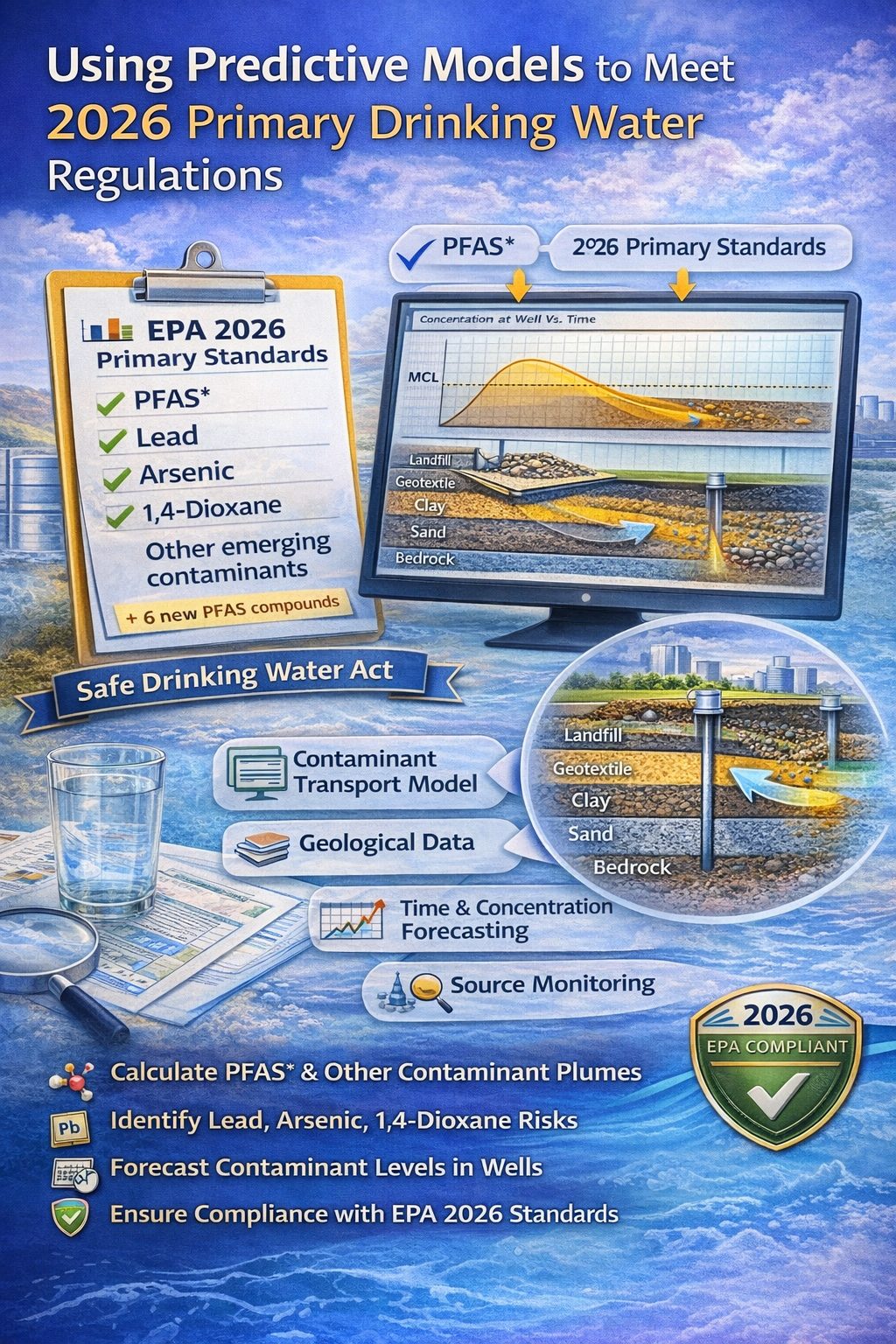
Did you know that nearly 15 million Americans rely on drinking water sources that may contain dangerous contaminants? Among these, perchlorate and other emerging toxins are posing new challenges for water quality compliance. In the wake of stricter regulations set to take effect in 2026, utilities and environmental professionals must leverage cutting-edge predictive models to meet these standards and ensure public health. This blog post will explore how employing predictive modeling can effectively address the complexities of contaminant transport and landfill design, while providing crucial insights into compliance with emerging drinking water regulations.
Understanding the Landscape of Drinking Water Regulations
The landscape of drinking water regulations is evolving as environmental health concerns grow. The U.S. Environmental Protection Agency (EPA) is ramping up efforts to manage harmful pollutants like perchlorate, which can disrupt thyroid function. By 2026, new regulations will mandate that utilities meet strict limits on allowable levels of perchlorate in drinking water. This regulatory shift pushes utilities toward innovative approaches that can anticipate and mitigate risks associated with contaminants.
What Are Predictive Models?
Predictive models employ historical data, statistical analysis, and simulations to forecast future events. In environmental science, these models help determine how pollutants travel through water systems, conditions that exacerbate contamination, and how to efficiently design landfills. Predictive modeling incorporates various methodologies such as statistical modeling, machine learning, and simulation models. Combining these techniques offers a clearer picture of contaminant behavior in real-world scenarios.
The Importance of Contaminant Transport Modeling
Contaminant transport modeling is crucial for predicting how pollutants move through air, water, and soil. This modeling takes various factors into account, including hydrology (the study of water movements), chemistry (understanding the reactions between substances), and geology (assessing how different soil and rock types affect contaminant dispersal). By utilizing this modeling, water utilities can:
- Identify contaminant sources and their potential reach.
- Allocate resources efficiently for prevention and remediation efforts.
- Justify funding and budget decisions with scientifically backed data.
Meeting the 2026 Regulations
1. Identifying Contaminant Sources
To comply with regulations, utilities must first identify where contaminants like perchlorate are entering the drinking water supply. Rapidly advancing predictive models allow utility managers to analyze sources and patterns of contamination, enabling prioritization of strategic interventions.
2. Assessing Risk Factors
After identifying sources, assessing risk factors associated with emerging toxins is crucial. Understanding environmental variables, including climate change, aging infrastructure, and urban sprawl, aids regulators in predicting alterations that could affect contaminant levels.
Using Predictive Models to Influence Design Decisions
Landfill design is fundamental to managing long-term environmental health. Stakeholders can use predictive modeling to develop future-proof landfill designs that adhere to new regulations by anticipating how contaminants will behave.
1. Site Selection
By employing predictive models in selecting landfill sites, utilities can choose locations that minimize risk. Virtual simulations of various environmental conditions can unveil optimal land considerations that safeguard drinking water supplies.
2. Designing Effective Containment Systems
Predictive modeling guides landfill design, particularly concerning liner systems and leachate management strategies. Analyzing historical data enables planners to estimate how long contaminants might take to leak through various barrier systems, allowing them to devise effective designs that mitigate risks.
The Role of POLLUTE in Predictive Modeling
POLLUTE provides fast and accurate contaminant modeling solutions specifically designed for the pressing needs of utilities facing 2026 regulations. With our advanced software, users can seamlessly integrate predictive models into their systems. By accurately simulating the behavior of contaminants, POLLUTE helps utilities quickly identify and address potential contamination sources, allowing for timely compliance with regulations. This not only enhances public health initiatives but also instills confidence in drinking water safety.
Collaboration Among Stakeholders
To amplify the effectiveness of predictive models, collaboration among various stakeholders is vital. This includes:
- Municipalities: Engaging with water utilities and environmental engineers is essential for local governments.
- Environmental Agencies: These organizations must provide data and insights regarding contaminant behavior and potential regulatory impacts.
- Public Health Officials: Collaboration with health departments promotes a community-centric approach to identifying risks associated with water sources.
Challenges and Limitations of Predictive Models
While predictive models yield invaluable insights, they present challenges. Some limitations include:
- Data Availability: Reliable, high-quality data are essential for precise modeling. Gaps can lead to misleading conclusions.
- Model Complexity: Complex models might require specialized expertise for effective interpretation and application.
- Dynamic Environmental Conditions: Changes, such as climate variations, may disrupt established predictions, necessitating continual model adjustments.
Key Takeaways and Next Steps
As we approach the 2026 compliance deadline, embracing predictive modeling offers a viable path for water utilities and landfill designers, ensuring adherence to stringent regulations while protecting public health. Here are actionable steps to consider:
- Initiate discussions with environmental engineers regarding predictive modeling adoption.
- Evaluate current contaminant monitoring and data collection frameworks.
- Engage local communities to share insights and gather feedback on emerging contaminants.
Where Do We Go From Here?
Navigating the complexities of environmental regulations can feel daunting, yet the integration of predictive modeling serves as a reliable strategy to achieve compliance and safeguard our water supply. By proactively utilizing POLLUTE’s advanced software, stakeholders can transform challenges into opportunities for innovation and collaboration. The importance of leveraging data for informed decision-making cannot be overstated. Act now to ensure that your utility complies with upcoming regulations and protects public health. As we strive for safer drinking water, remember that preparing for tomorrow starts today.
Learn more about our Contaminant Transport Modeling Solutions
Related Articles
- Contaminant Transport Modelling and Landfill Design: A Complete Guide for Environmental Engineers
- How Contaminant Transport Models Predict Groundwater Pollution
- Designing Landfill Liner Systems to Prevent Groundwater Contamination
- Understanding Leachate Generation and Transport in Landfills
- Advection–Dispersion Modelling in Groundwater Systems
- Hydrogeological Data Required for Contaminant Transport Models
- Regulatory Requirements for Landfill Design and Groundwater Protection
- Unlock Global Expertise: Free Research Viewer for POLLUTE and MIGRATE
- Mastering the Plume: POLLUTEv8 vs. MODFLOW vs. FEFLOW vs. PATH3D
- Core Features of POLLUTEv8
- Mastering Contaminant Transport: Special Features of POLLUTEv8
- Navigating Contaminant Migration with POLLUTE: A Modern Approach to Landfill Design
- Beyond The MCL: Building Audit-Proof Contaminant Fate Models For 2026 Regulatory Submissions
- Driving Environmental Research: How GAEA Technologies POLLUTE Software is Used in Academic and Industry Reports
- Modeling Your Way to ‘No Further Action’: How Predictive Simulation Shaves Years Off Remediation Timelines
- Meeting The New 2026 EPA Reporting Standards For PFAS: Why Traditional Spreadsheet Modeling No Longer Suffices
- Using Predictive Models to Meet 2026 Primary Drinking Water Regulations
- Unlocking Sustainable Solutions: The Role of POLLUTE Software in Landfill Design and Contaminant Transport Modelling
- Contaminant Transport Modelling and Landfill Design Insights
- Geomembrane Degradation in Landfill Liners: Causes, Modeling, and Long-Term Performance
- Clogging of Landfill Leachate Collection Systems: Causes, Impacts, and Prevention
- Determining Diffusion Coefficients for Contaminant Transport Modeling
- Use and Determination of Distribution Coefficients for Contaminant Transport Modeling
- Non-Linear Sorption in Contaminant Transport Modeling
- Phase Change in Collection Systems in Contaminant Transport Modeling for Landfills
- Biological and Radioactive Decay in Contaminant Transport Modeling