

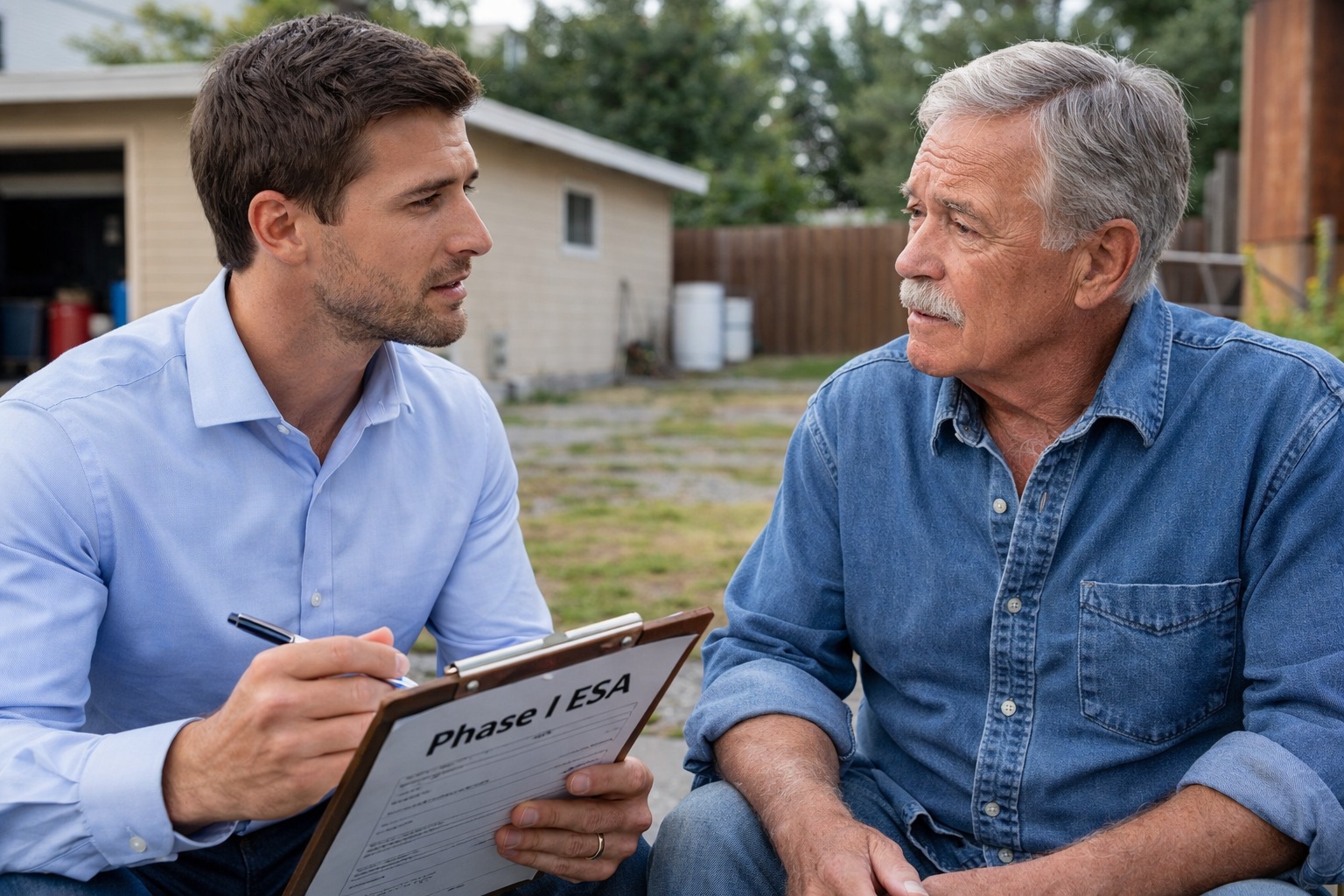
Conducting interviews with neighbors—often described as speaking with “a reasonable number of occupants of neighboring properties”—is an important component of a Phase I Environmental Site Assessment (ESA). While not always emphasized as strongly as records review or site reconnaissance, neighbor interviews can provide valuable local insight that fills critical information gaps.
Industry standards such as ASTM E1527-21 recognize the importance of these interviews as part of good commercial and customary practice. Neighbors can offer first-hand observations and historical context that may not be captured in official records, databases, or even previous environmental reports.
This guide provides a comprehensive, practical framework for conducting neighbor interviews effectively, ethically, and in compliance with Phase I ESA requirements.
Purpose and Objectives
The primary objective of interviewing neighbors is to obtain independent, third-party perspectives on the subject property and surrounding area.
Unlike property owners or government officials, neighbors often provide:
- Unfiltered observations
- Long-term community knowledge
- Insights into undocumented activities
Why Neighbor Interviews Matter
Environmental risks are not always formally recorded. Neighbor interviews can reveal:
- Past uses that were never documented
- Informal or illegal dumping activities
- Small spills that were not reported
- Historical operations predating regulations
- Changes in site activity over time
These insights can be critical in identifying:
- Recognized Environmental Conditions (RECs)
- Historical RECs (HRECs)
- De minimis conditions
Key Objectives
The environmental professional (EP) conducts neighbor interviews to:
- Understand historical uses of the subject property
- Identify potential contaminating activities (PCAs)
- Detect unusual events or incidents
- Gather observations about adjacent properties
- Supplement findings from records review and site reconnaissance
Identifying Appropriate Neighbor Contacts
The effectiveness of neighbor interviews depends heavily on selecting the right individuals.
1. Proximity to the Subject Property
Priority should be given to:
- Immediately adjacent properties
- Properties directly across the street
- Nearby properties with clear views of the site
2. Length of Occupancy
Long-term occupants are especially valuable because they:
- Have witnessed changes over time
- Recall historical uses
- May remember incidents that others do not
Ideal Interview Candidates
- Long-term residential occupants
- Business owners in the vicinity
- Property managers
- Maintenance personnel
- Local workers familiar with the area
3. Diversity of Perspectives
Interviewing multiple neighbors helps:
- Cross-verify information
- Reduce bias
- Improve reliability of findings
Timing and Approach
Neighbor interviews are typically conducted during the site reconnaissance phase of the Phase I ESA.
1. Timing
Best practice:
- Conduct interviews while on-site
- Use observations from reconnaissance to guide questions
- Follow up if additional information is needed
2. Approach
Neighbor interviews are usually:
- Informal
- Brief
- Opportunistic
However, they must still be conducted professionally.
3. First Contact
When approaching a neighbor:
- Introduce yourself and your company
- Explain the purpose: environmental due diligence
- Emphasize that:
- Participation is voluntary
- Information will be kept confidential
- They will not be identified in the report
4. Gaining Cooperation
Neighbors are under no obligation to participate.
To improve response rates:
- Be polite and respectful
- Keep the conversation brief
- Avoid technical jargon
- Reassure confidentiality
Ethical Considerations and Confidentiality
Maintaining trust and professionalism is essential.
1. Voluntary Participation
- Never pressure individuals to participate
- Respect refusals
2. Anonymity
To encourage openness:
- Do not include names in the report
- Use anonymized identifiers such as:
- “Neighboring occupant #1”
- “Adjacent property business owner”
3. Avoid Leading Questions
Questions should:
- Encourage honest responses
- Avoid suggesting answers
- Focus on observed facts
Documentation Requirements
Even though neighbor interviews are informal, documentation must be thorough and defensible.
Required Documentation
The EP should record:
- Date of interview
- Approximate location of the neighbor relative to the subject property
- Type of occupant (residential, commercial, etc.)
- Summary of information provided
Important Note
Do not record:
- Personal identifiers (unless required internally)
- Sensitive or unrelated personal information
Key Interview Questions
Questions should be open-ended and focused on observable facts rather than speculation.
1. Duration of Occupancy
- How long have you lived or worked in this area?
This helps establish the reliability of the information.
2. Property History
- What do you recall this property being used for in the past?
- Have you seen changes in how the property is used?
3. Unusual Observations
- Have you noticed any unusual odors, smoke, or staining?
- Have you seen drums, containers, or waste materials?
- Have there been unusual activities or traffic patterns?
4. Spills or Incidents
- Are you aware of any spills, leaks, or accidents?
- Do you recall emergency response events (e.g., fire trucks, cleanup crews)?
5. Adjacent Property Activities
- Are there nearby activities that concern you environmentally?
- Have neighboring properties conducted industrial or commercial operations?
6. Site Changes
- Have there been major changes to buildings or land use?
- Was the property ever vacant or used differently?
7. Additional Contacts
- Do you know anyone else who may have more information?
This can lead to additional valuable sources.
Integrating Neighbor Interviews with ESA Findings
Neighbor interviews should be used alongside:
- Records review
- Government interviews
- Property owner interviews
- Site reconnaissance
Triangulating Information
For example:
If a neighbor reports:
- A strong chemical odor in the 1990s
The EP should:
- Check historical records for industrial use
- Look for regulatory violations
- Inspect the site for indicators
Confirming or Challenging Data
Neighbor input can:
- Confirm known risks
- Highlight discrepancies
- Identify previously unknown concerns
Reporting Requirements
Neighbor interview findings must be incorporated into the final Phase I ESA report.
1. Summarize Interactions
The report should describe:
- Number of neighbors contacted
- General locations
- Level of participation
2. Maintain Anonymity
Use identifiers such as:
- “Neighboring occupant #1”
- “Adjacent commercial tenant”
3. Present Relevant Information
Include:
- Observations of past uses
- Reports of spills or unusual activities
- Concerns about adjacent properties
4. Identify Data Gaps
If:
- No neighbors were available
- Individuals declined to participate
This must be documented as a data gap.
The EP must also assess:
- The significance of the missing information
- Its impact on the ability to identify RECs
5. Integrate into Conclusions
Neighbor interview findings must contribute to:
- Identification of RECs
- Assessment of environmental risk
- Overall ESA conclusions
Common Challenges and Solutions
1. Limited Participation
Many neighbors may decline to participate.
Solution:
- Approach multiple individuals
- Keep interactions brief and respectful
2. Inaccurate or Biased Information
Memories may be imperfect or subjective.
Solution:
- Cross-check with other sources
- Avoid relying on a single account
3. Lack of Knowledge
Some neighbors may have limited awareness.
Solution:
- Focus on long-term occupants
- Seek multiple perspectives
4. Time Constraints
Neighbor interviews can be time-consuming.
Solution:
- Prioritize key properties
- Conduct interviews efficiently during reconnaissance
Best Practices for Effective Neighbor Interviews
1. Keep It Conversational
A relaxed, informal tone encourages openness.
2. Focus on Observations
Ask about:
- What they saw
- What they smelled
- What they experienced
Avoid speculation.
3. Cross-Reference Everything
Validate information using:
- Records
- Site observations
- Other interviews
4. Document Immediately
Record details as soon as possible to ensure accuracy.
5. Be Respectful of Privacy
Always prioritize confidentiality and professionalism.
Practical Example
Consider a property where:
- Records show no environmental concerns
- Site reconnaissance reveals no obvious issues
However, during neighbor interviews:
- A long-term resident recalls:
- A dry cleaning operation in the 1980s
- Frequent chemical odors
- A cleanup event that was never documented
This information could:
- Indicate potential soil or groundwater contamination
- Lead to identification of a REC
- Trigger a Phase II ESA
Without neighbor interviews, this risk might remain undiscovered.
Importance in Environmental Due Diligence
Neighbor interviews enhance the Phase I ESA by:
- Providing local, real-world insights
- Identifying unrecorded environmental risks
- Supporting a more comprehensive assessment
They are particularly valuable for:
- Older properties
- Mixed-use areas
- Sites with limited historical records
Conclusion
Conducting interviews with neighbors is an important and valuable part of the Phase I ESA process.
By following best practices and aligning with standards such as ASTM E1527-21, environmental professionals can:
- Enhance the completeness of their assessments
- Identify risks that might otherwise be missed
- Strengthen the defensibility of their conclusions
Key Takeaways
- Neighbor interviews provide unique local knowledge
- They help identify undocumented environmental risks
- Participation is voluntary and must be handled professionally
- Findings must be documented and integrated into the ESA report
- Data gaps must be clearly identified
Final Thought
In many cases, the most valuable environmental insights come not from formal records, but from the people who have lived and worked near a property for years.
By taking the time to engage with neighbors, environmental professionals can uncover critical information that leads to better, more informed decisions—and ultimately, more reliable Phase I ESAs.
👉 Learn more about our Automated Environmental Site Assessment Solution
Related Articles
- Overview of a Phase I Environmental Site Assessment (ESA): A Complete Guide for Due Diligence
- Key Uses of a Phase I Environmental Site Assessment
- Market for Phase I Environmental Site Assessments
- The Role of Historical Source Review in Phase I Environmental Site Assessments
- The Role of Environmental Database Reviews in Phase I Environmental Site Assessments
- The Review of Property Records in a Phase I Environmental Site Assessment
- The Role of Visual Inspections in a Phase I Environmental Site Assessment
- Identifying Hazardous Substances and Petroleum Products in a Phase I Environmental Site Assessment
- Documenting Drainage Patterns and Surface Water in a Phase I Environmental Site Assessment
- The Role of Photographs in Phase I Environmental Site Assessments
- The Use of Drones in a Phase I Environmental Site Assessment
- Conducting Interviews with Property Owners and Occupants for a Phase I ESA
- Conducting Interviews with Government Officials for a Phase I ESA
- Key Components of a Phase I ESA Conclusion
- Key Distinctions Between ASTM E1527-21 and CSA Z768-01