

A Phase I Environmental Site Assessment (ESA) is one of the most important due diligence tools in commercial real estate, environmental consulting, and property development. Conducted in accordance with standards such as ASTM E1527-21, a Phase I ESA evaluates the environmental condition of a property to identify potential or existing contamination risks—without intrusive sampling.
While often viewed as a “checkbox” requirement for transactions, the reality is that a Phase I ESA plays a much broader and more strategic role. It protects investors, supports financing, ensures regulatory compliance, and informs development decisions. In many cases, it can be the difference between a successful investment and a costly environmental liability.
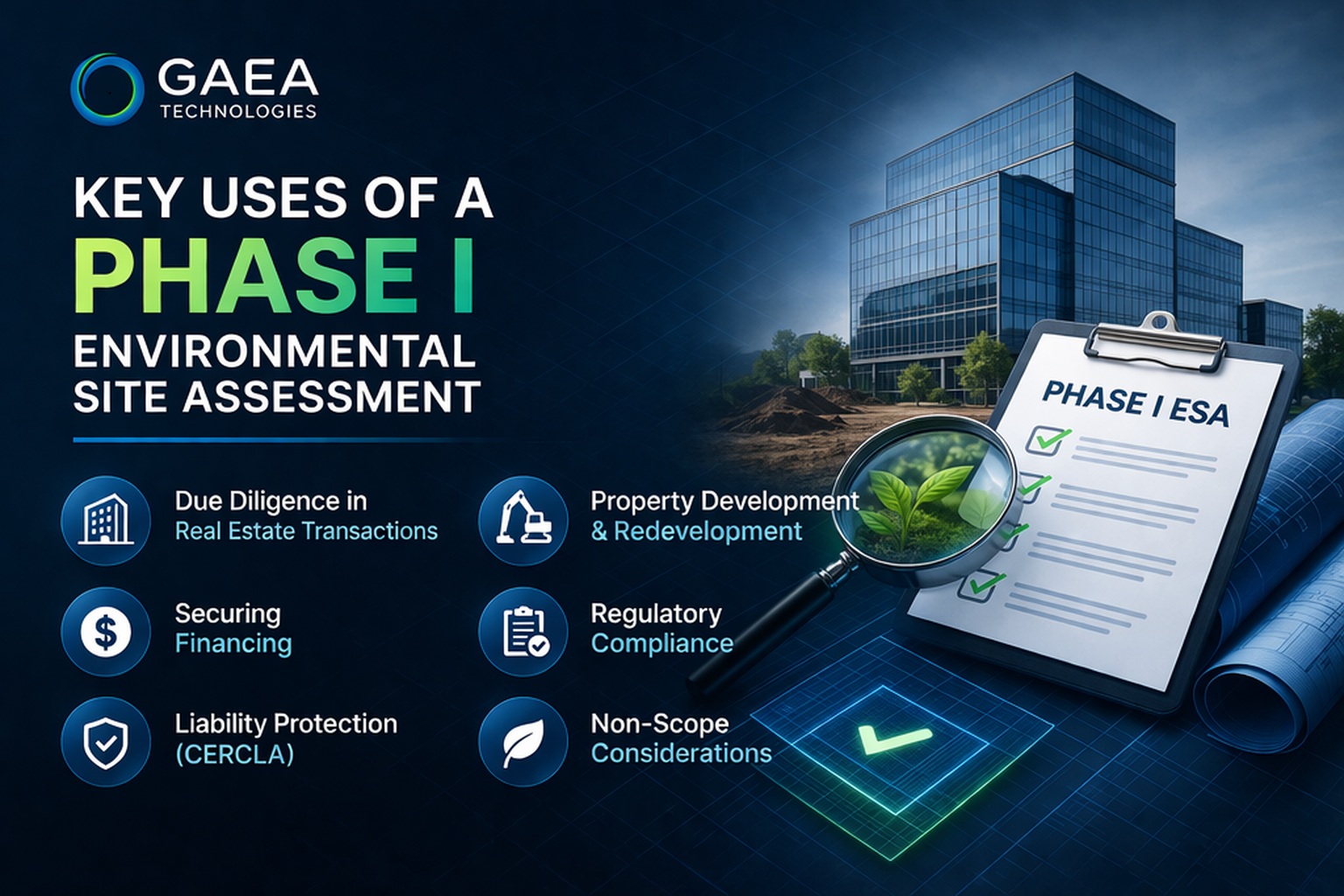
This article explores the key uses of a Phase I ESA, breaking down its importance across six major applications.
1. Due Diligence in Real Estate Transactions
The most common use of a Phase I ESA is during commercial real estate transactions, where it serves as a critical due diligence tool for buyers, lenders, and investors.
Why It Matters
When acquiring a property—especially commercial or industrial land—there is always a risk of historical contamination. Previous uses such as gas stations, dry cleaners, manufacturing facilities, or agricultural operations may have left behind hazardous substances in soil or groundwater.
A Phase I ESA helps identify:
- Recognized Environmental Conditions (RECs)
- Historical uses that may pose contamination risks
- Evidence of spills, leaks, or improper waste disposal
- Potential liabilities tied to the property
Risk Mitigation
Without a Phase I ESA, a buyer may unknowingly inherit environmental issues that:
- Reduce property value
- Delay redevelopment
- Require expensive remediation
By identifying these risks early, buyers can:
- Renegotiate purchase terms
- Request remediation before closing
- Walk away from high-risk deals
Transaction Confidence
For investors and developers, a clean Phase I ESA provides confidence that:
- The property is environmentally sound
- There are no major red flags
- The investment aligns with risk tolerance
In competitive markets, having a completed ESA can also accelerate deal timelines and reduce uncertainty.
2. Securing Financing
Lenders and financial institutions rely heavily on Phase I ESAs when underwriting loans for commercial properties.
Why Lenders Require It
Banks and lenders are exposed to risk if a borrower defaults and the property becomes collateral. If that property is contaminated, the lender may face:
- Cleanup liability
- Reduced asset value
- Difficulty reselling the property
To mitigate this, lenders often require a Phase I ESA before approving financing.
Key Benefits for Financing
A Phase I ESA supports:
- Loan approval by demonstrating environmental due diligence
- Risk assessment for the lender
- Valuation accuracy by identifying environmental constraints
If contamination is suspected, lenders may:
- Require a Phase II ESA
- Adjust loan terms
- Delay or deny financing
Impact on Borrowers
For borrowers, a Phase I ESA can:
- Speed up the approval process
- Improve credibility with lenders
- Prevent last-minute deal disruptions
In many cases, the cost of a Phase I ESA is minor compared to the financial risks it helps avoid.
3. Liability Protection (CERCLA in the U.S.)
One of the most critical legal uses of a Phase I ESA is to establish protection under environmental liability laws such as CERCLA in the United States.
Understanding CERCLA Liability
Under CERCLA:
- Property owners can be held liable for contamination
- Liability is strict, joint, and several
- Even innocent buyers can be responsible for cleanup
This means that purchasing a contaminated property—even unknowingly—can result in significant legal and financial consequences.
All Appropriate Inquiry (AAI)
To qualify for liability protection, buyers must conduct All Appropriate Inquiry (AAI) prior to acquisition. A Phase I ESA performed to ASTM standards satisfies this requirement.
Key Protections
A properly conducted Phase I ESA can help establish:
- Innocent Landowner Defense
- Bona Fide Prospective Purchaser (BFPP) Protection
- Contiguous Property Owner Defense
These protections can shield buyers from liability for pre-existing contamination—provided they:
- Conduct due diligence (Phase I ESA)
- Do not contribute to contamination
- Exercise appropriate care after acquisition
Strategic Importance
For investors and developers, this legal protection is invaluable. It:
- Reduces exposure to environmental lawsuits
- Protects financial investments
- Enables redevelopment of previously used properties
4. Property Development and Redevelopment
Phase I ESAs play a crucial role in planning and executing development projects, particularly on previously developed or industrial sites.
Site Selection
Before purchasing land for development, a Phase I ESA helps determine:
- Whether the site is suitable for intended use
- If environmental risks could impact project feasibility
- Whether additional investigations are needed
Brownfield Redevelopment
Many urban development projects involve brownfield sites—properties with potential contamination. A Phase I ESA is the first step in:
- Identifying environmental concerns
- Planning remediation strategies
- Securing redevelopment incentives
Cost and Timeline Impacts
Environmental issues can significantly affect:
- Construction timelines
- Project budgets
- Regulatory approvals
By identifying risks early, developers can:
- Incorporate remediation into project planning
- Avoid unexpected delays
- Improve cost forecasting
Design Considerations
Environmental findings may influence:
- Building placement
- Excavation plans
- Soil management strategies
In this way, a Phase I ESA is not just a risk tool—it’s a planning tool that supports smarter development decisions.
5. Regulatory Compliance
Environmental regulations vary by jurisdiction, but compliance is a consistent requirement across property ownership and development.
Meeting Legal Requirements
A Phase I ESA helps ensure compliance with:
- Environmental protection laws
- Local and regional regulations
- Industry standards
In some cases, it may be required for:
- Zoning approvals
- Permitting processes
- Property transfers involving certain land uses
Supporting Environmental Management
Organizations use Phase I ESAs to:
- Maintain environmental records
- Identify compliance gaps
- Support environmental management systems
Avoiding Penalties
Failure to identify and address environmental issues can result in:
- Fines and penalties
- Legal action
- Project shutdowns
A Phase I ESA helps organizations stay proactive, reducing the risk of non-compliance.
6. Non-Scope Considerations
While a Phase I ESA focuses on specific environmental risks (primarily contamination), it can also include or reference non-scope considerations that provide additional insights.
What Are Non-Scope Items?
Non-scope considerations are environmental or physical issues that fall outside the standard ASTM scope but may still be relevant to stakeholders.
Common examples include:
- Asbestos-containing materials (ACMs)
- Lead-based paint
- Mold and indoor air quality
- Radon gas
- Wetlands and ecological features
Why They Matter
Although not required, these factors can:
- Impact property value
- Affect occupant health and safety
- Influence renovation or demolition plans
Optional Add-Ons
Many environmental professionals offer additional services alongside a Phase I ESA to address these concerns, such as:
- Hazardous building material surveys
- Indoor air quality assessments
- Designated substance reviews
Enhanced Decision-Making
Including non-scope considerations provides a more comprehensive understanding of the property, enabling stakeholders to:
- Make informed investment decisions
- Plan for future costs
- Reduce overall risk
The Broader Value of a Phase I ESA
While each of the uses above highlights a specific application, the true value of a Phase I ESA lies in its ability to integrate environmental awareness into business decisions.
Financial Protection
Environmental issues can lead to:
- Cleanup costs
- Legal liabilities
- Reduced asset value
A Phase I ESA helps prevent these outcomes by identifying risks early.
Risk Management
For organizations managing multiple properties, Phase I ESAs support:
- Portfolio risk assessment
- Standardized due diligence processes
- Long-term asset protection
Strategic Planning
By understanding environmental conditions, stakeholders can:
- Align projects with regulatory requirements
- Optimize site use
- Improve sustainability outcomes
When Should You Conduct a Phase I ESA?
A Phase I ESA is recommended in several scenarios:
- Purchasing commercial or industrial property
- Refinancing or securing a loan
- Redeveloping or repurposing land
- Leasing property with environmental risk exposure
- Managing a real estate portfolio
Conducting an ESA at the right time ensures that risks are identified before they become costly problems.
Conclusion
A Phase I Environmental Site Assessment is far more than a procedural requirement—it is a strategic tool for risk management, financial protection, and informed decision-making.
From supporting real estate transactions and securing financing to enabling liability protection under laws like CERCLA, its applications are both wide-ranging and critical. It also plays a vital role in property development, regulatory compliance, and identifying broader environmental concerns through non-scope considerations.
In today’s complex regulatory and environmental landscape, skipping or underestimating the importance of a Phase I ESA can expose stakeholders to significant risks. Conversely, leveraging it effectively can unlock opportunities, protect investments, and ensure long-term success.
For developers, investors, lenders, and property managers alike, the Phase I ESA remains an essential foundation for responsible and informed real estate decisions.
👉 Learn more about our Automated Environmental Site Assessment Solution
Related Articles
- Overview of a Phase I Environmental Site Assessment (ESA): A Complete Guide for Due Diligence
- Market for Phase I Environmental Site Assessments
- The Role of Historical Source Review in Phase I Environmental Site Assessments
- The Role of Environmental Database Reviews in Phase I Environmental Site Assessments
- The Review of Property Records in a Phase I Environmental Site Assessment
- The Role of Visual Inspections in a Phase I Environmental Site Assessment
- Identifying Hazardous Substances and Petroleum Products in a Phase I Environmental Site Assessment
- Documenting Drainage Patterns and Surface Water in a Phase I Environmental Site Assessment
- The Role of Photographs in Phase I Environmental Site Assessments
- The Use of Drones in a Phase I Environmental Site Assessment
- Conducting Interviews with Property Owners and Occupants for a Phase I ESA
- Conducting Interviews with Government Officials for a Phase I ESA
- Conducting Interviews with Neighbors for a Phase I ESA
- Key Components of a Phase I ESA Conclusion
- Key Distinctions Between ASTM E1527-21 and CSA Z768-01