

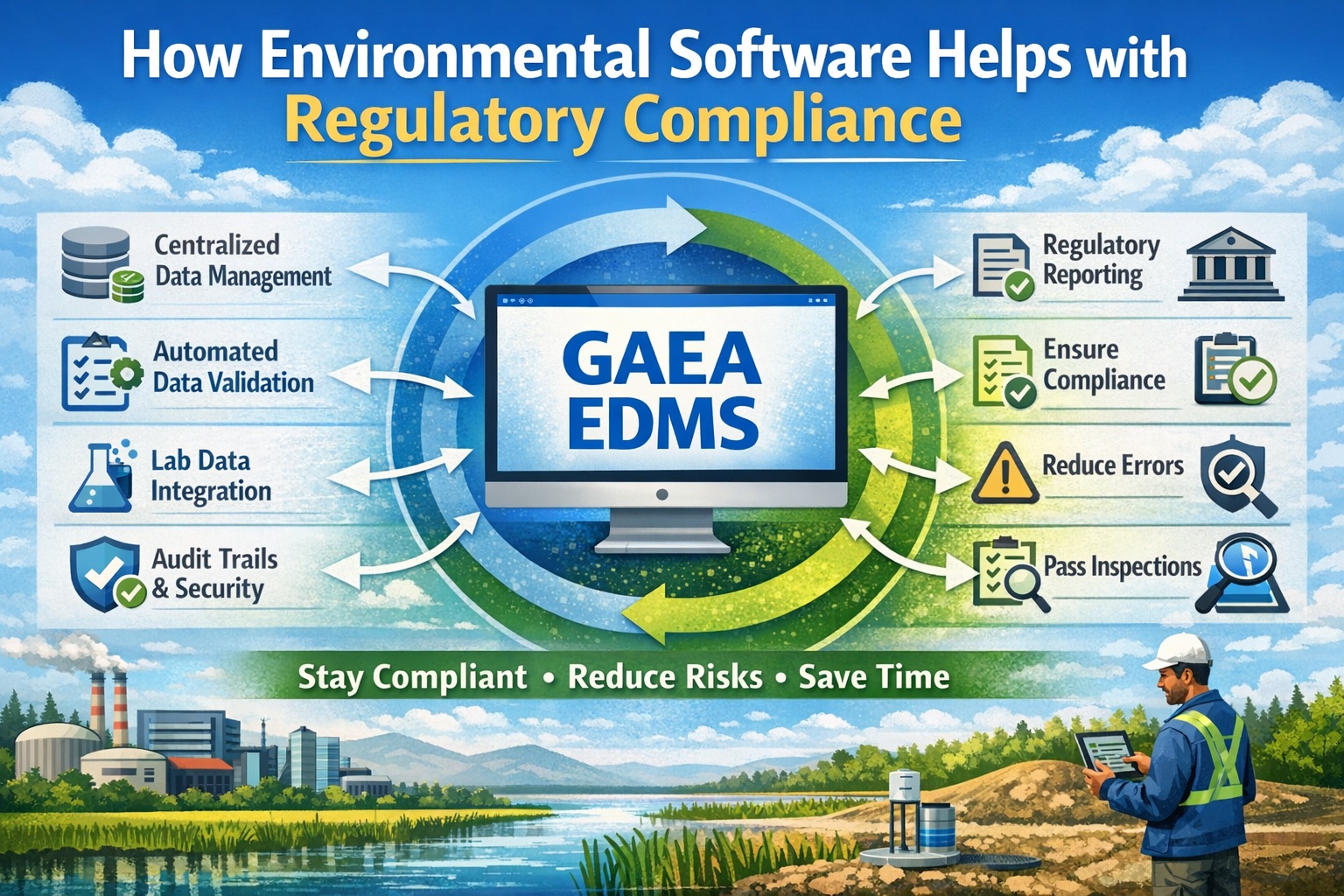
Environmental regulations are becoming increasingly complex, with stricter reporting requirements, tighter deadlines, and greater scrutiny from regulators. For environmental consultants, engineers, and organizations managing contaminated sites, compliance is not optional—it is critical to project success, legal protection, and public safety.
Yet many firms still rely on spreadsheets, disconnected systems, and manual workflows to manage environmental data. This approach increases the risk of errors, delays, and non-compliance.
Environmental software like EDMS (Environmental Data Management System) is designed to address these challenges by centralizing data, automating workflows, and ensuring consistency across projects.
This FAQ guide explains how environmental software improves regulatory compliance and how GAEA EDMS supports modern compliance-driven workflows.
What Is Environmental Regulatory Compliance?
Environmental regulatory compliance refers to the process of ensuring that projects, operations, and reporting meet the requirements set by:
- Government agencies
- Environmental protection authorities
- Industry standards and guidelines
These requirements typically include:
- Accurate data collection
- Proper documentation
- Timely reporting
- Adherence to contaminant thresholds
- Audit readiness
Failure to comply can result in:
- Fines and penalties
- Project delays
- Legal liability
- Reputational damage
What Is EDMS?
EDMS is a centralized environmental data management system designed to:
- Store and manage environmental data
- Integrate field and laboratory information
- Support reporting and compliance workflows
It acts as a single source of truth for environmental data across the entire project lifecycle.
Why Is Compliance Challenging Without Environmental Software?
1. Fragmented Data Sources
Data often exists in:
- Spreadsheets
- PDFs
- Lab reports
- Field notes
This makes it difficult to maintain consistency and traceability.
2. Manual Data Entry
Manual processes increase the risk of:
- Typographical errors
- Incorrect units
- Missing data
3. Inconsistent Reporting
Different team members may produce:
- Different formats
- Different interpretations
- Incomplete reports
4. Limited Audit Trails
Without proper systems:
- Changes are not tracked
- Data history is unclear
5. Time Constraints
Tight deadlines make it harder to:
- Verify data
- Ensure compliance
How Does Environmental Software Improve Compliance?
1. Centralized Data Management
EDMS stores all environmental data in a centralized database.
Benefits:
- Eliminates duplication
- Ensures consistency
- Improves accessibility
2. Automated Data Validation
The system can enforce:
- Required fields
- Valid data ranges
- Unit consistency
This ensures data quality before reporting.
3. Standardized Workflows
EDMS enables consistent workflows for:
- Data entry
- Review processes
- Reporting
4. Integrated Laboratory Data
Lab data can be imported directly into EDMS, reducing:
- Manual entry
- Transcription errors
5. Audit Trails and Version Control
EDMS tracks:
- Data changes
- User activity
- Report revisions
This supports audit readiness.
How Does EDMS Support Regulatory Reporting?
Automated Data Organization
EDMS organizes data into structured formats that align with regulatory requirements.
Consistent Units and Standards
Ensures:
- Correct units
- Standardized parameters
Integration with Reporting Tools
EDMS integrates with tools like:
- E-ASR for automated reporting
- GDMS for geotechnical data
Faster Report Generation
Data is ready for reporting, reducing preparation time.
What Types of Regulations Can EDMS Help With?
Groundwater Monitoring Regulations
- Water quality standards
- Sampling requirements
- Trend analysis
Contaminated Site Regulations
- Soil and groundwater contamination thresholds
- Risk assessments
- Remediation tracking
Regulatory Submissions
- Government reporting formats
- Compliance documentation
What Are the Key Features of EDMS for Compliance?
1. Centralized Database
- Single repository for all data
- Easy access and management
2. Data Validation Rules
- Enforce data quality
- Reduce errors
3. Laboratory Data Integration
- Direct import of lab results
- Standardized formats
4. Reporting Integration
- Seamless connection to reporting tools
- Automated outputs
5. User Access Controls
- Role-based permissions
- Data security
6. Audit Trails
- Track all changes
- Support compliance audits
What Are the Benefits of Using EDMS?
📊 Improved Data Accuracy
- Reduced manual entry
- Automated validation
⏱️ Time Savings
- Faster data processing
- Reduced reporting time
📋 Consistent Reporting
- Standardized outputs
- Reduced variability
🔒 Enhanced Compliance
- Built-in controls
- Audit-ready data
💼 Increased Efficiency
- Streamlined workflows
- Reduced duplication
How Does EDMS Compare to Spreadsheets?
| Feature | Spreadsheets | GAEA EDMS |
|---|---|---|
| Data Integrity | Low | High |
| Validation | Manual | Automated |
| Collaboration | Limited | Centralized |
| Audit Trails | None | Full |
| Scalability | Limited | High |
How Do You Implement EDMS for Compliance?
Step 1: Centralize Data
- Import existing datasets
- Eliminate duplicate sources
Step 2: Configure Validation Rules
- Define required fields
- Set acceptable ranges
Step 3: Integrate Lab Data
- Set up import templates
- Automate data ingestion
Step 4: Train Staff
- Standardize workflows
- Ensure consistent usage
Step 5: Integrate Reporting Tools
- Connect EDMS with E-ASR
- Automate reporting
What Are Best Practices for Compliance Using EDMS?
1. Maintain Data Quality
- Regular validation checks
- Standardized data entry
2. Use Templates
- Standardize reporting formats
3. Conduct Regular Audits
- Review data integrity
- Ensure compliance
4. Keep Systems Updated
- Apply updates
- Maintain security
5. Train Staff Continuously
- Ensure consistent usage
- Reduce errors
Frequently Asked Questions (FAQ)
Can EDMS ensure full regulatory compliance?
EDMS significantly improves compliance, but professional oversight is still required to interpret results and ensure adherence to regulations.
Is EDMS suitable for small firms?
Yes. EDMS scales to fit:
- Small projects
- Large enterprise systems
Can EDMS handle large datasets?
Yes. It is designed for:
- Large monitoring programs
- Multi-site projects
Does EDMS integrate with other software?
Yes. It integrates with:
- GaeaSynergy
- WinLoG
- Laboratory systems
How secure is EDMS?
EDMS includes:
- User access controls
- Data security features
What Is the ROI of Using EDMS for Compliance?
Reduced Errors
- Lower risk of non-compliance
Faster Reporting
- Meet deadlines بسهولة
Lower Costs
- Reduced rework
- Improved efficiency
Increased Capacity
- Handle more projects
Future Trends in Environmental Compliance
The future includes:
- Automated reporting
- Real-time data monitoring
- Cloud-based systems
- AI-driven insights
GAEA EDMS supports these trends by providing a scalable, integrated platform.
Final Thoughts
Regulatory compliance is one of the most critical aspects of environmental consulting—but it doesn’t have to be a burden.
With EDMS, organizations can:
- Centralize data
- Automate workflows
- Improve accuracy
- Ensure consistency
The result is a more efficient, reliable, and compliant operation.
For firms looking to modernize their environmental workflows, EDMS provides a powerful foundation for long-term success.
Learn more about our Software Solutions
- GaeaSynergy Platform for Geoscientific Analysis and Visualization
- WinLoG: Borehole and Well Logs
- WinFence: Cross-sections and Fence Diagrams
- GDMS: Geotechnical Data Management System
- EDMS: Environmental Data Management System
- POLLUTEv8: Contaminant Transport Modeling and Landfill Design
- E-ASR: Automated Environmental Reporting
Related Articles
- How to Evaluate Geotechnical & Environmental Software (Buyer’s Guide)
- GaeaSynergy: Integrated Geological, Geotechnical, and Environmental Data Management Platform
- Integrated vs Standalone Geotechnical Software: Which Is Better?
- Top Features to Look for in Geotechnical & Environmental Software
- Why Centralized Data Management Is Critical for Geotechnical Projects
- How to Streamline Geotechnical Workflows from Field to Report
- How Automation Improves Efficiency in Environmental Data Management
- Cloud vs Desktop Geotechnical Software: Pros and Cons
- How to Automate Environmental Reporting
- How to Run a Successful Software Pilot Project
- Understanding Total Cost of Ownership for Engineering Software
- How to Calculate ROI for Geotechnical and Environmental Software Investments
- Top 10 Mistakes When Buying Engineering Software (And How to Avoid Them)
- Future Trends in Geotechnical and Environmental Software
- Step-by-Step Guide to Selecting Engineering Software