Original Photographs
- Highest-resolution JPEG, PNG or TIFF files
- Complete box and row coverage
- Consistent camera orientation where possible
- Visible core, labels and scale reference
- Minimal glare, shadow and compression


GAEA organizes, extracts and assembles photographed core into continuous visual records for logging, correlation, interpretation and archiving. Each project is registered to supplied depth control and reviewed from source image to final output.

Complete depth control is as important as image quality. Representative files are reviewed before the production scope, output dimensions and schedule are confirmed.
Core rows are isolated from their boxes, ordered using project metadata, registered to depth and assembled into a consistent image suitable for a borehole log or interpretation workflow.
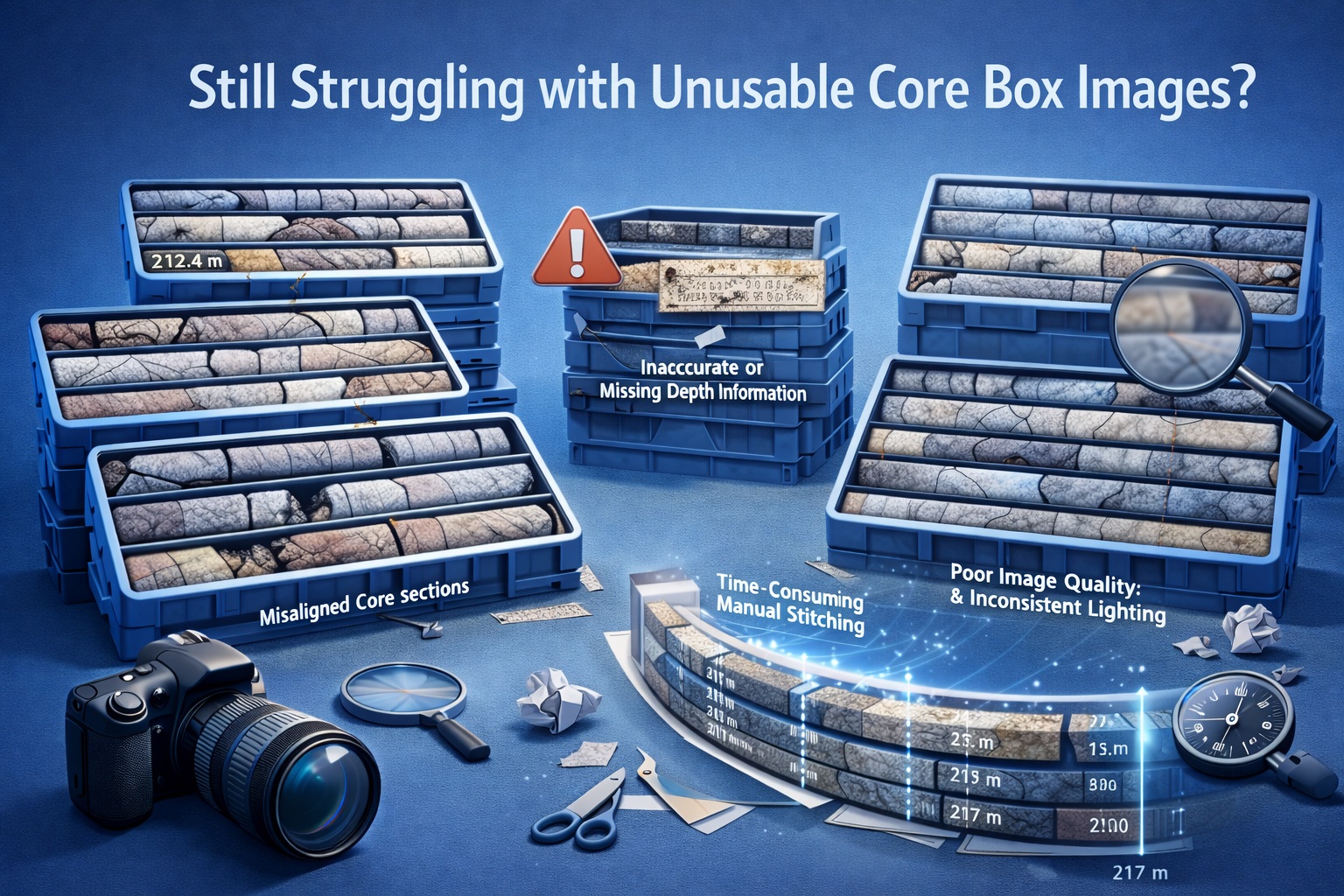
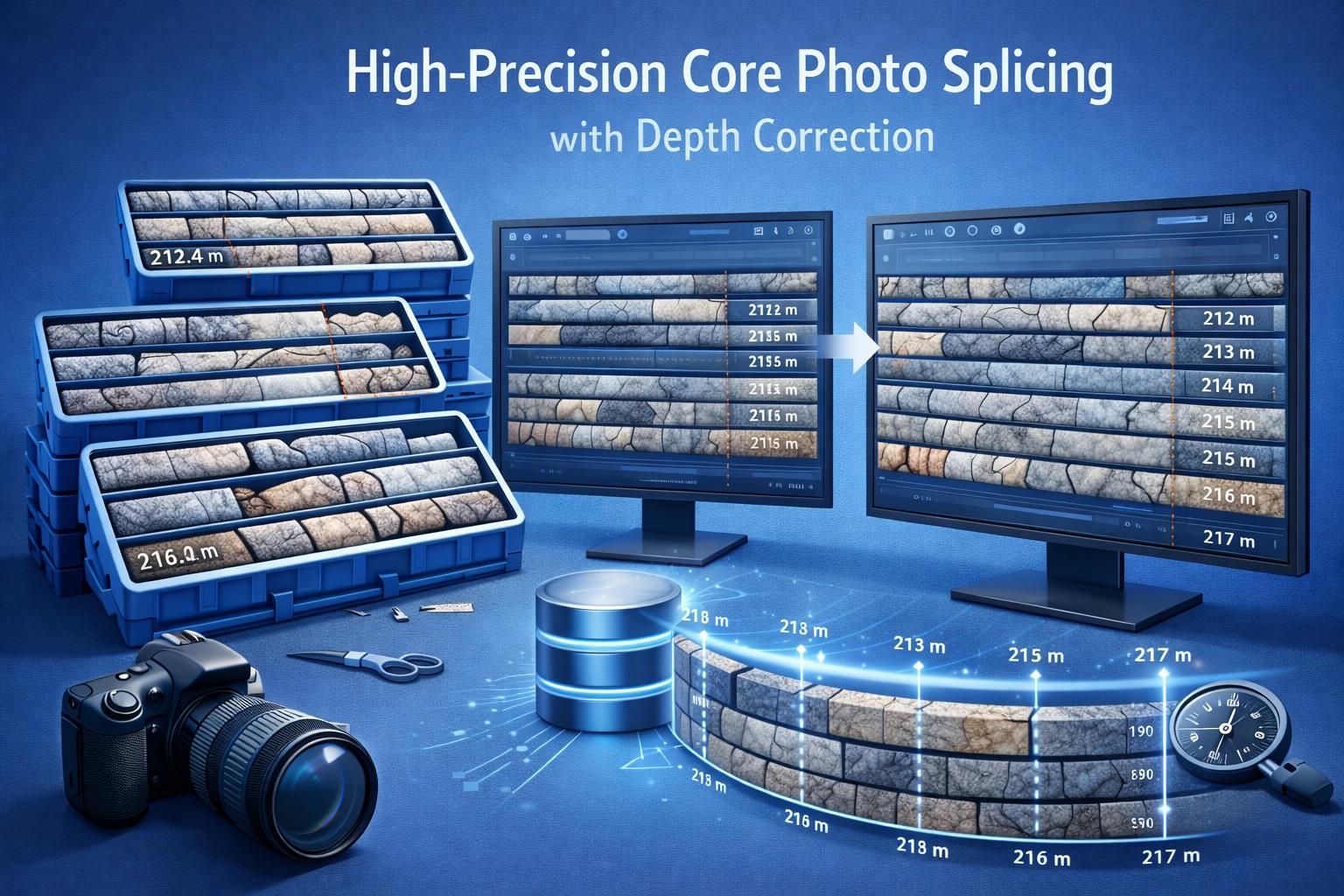
The example is representative. The quotation defines the actual boreholes, intervals, image dimensions, labels, formats and supporting files included in a project.
A simple manifest prevents filename ambiguity and provides the controlling depth sequence for production and QA/QC.
| hole_id | box_id | row_id | depth_from | depth_to | units | orientation | file_name | status |
|---|---|---|---|---|---|---|---|---|
| DH-01 | BX-001 | 1 | 0.00 | 1.50 | m | Top left to right | DH01_BX001.jpg | Complete |
| DH-01 | BX-001 | 2 | 1.50 | 3.00 | m | Top left to right | DH01_BX001.jpg | 0.10 m lost core |
Additional fields may record run number, tray number, photography state, date, photographer or comments.
The workflow preserves traceability between each source image, its depth interval and the final continuous visual record.
Confirm boreholes, boxes, rows, file condition, depth records and required outputs.
Match files to the manifest and confirm the top, bottom and viewing direction of each row.
Apply agreed rotation, perspective correction and cropping while preserving core evidence.
Separate core imagery from trays, labels and surrounding areas needed only for reference.
Assign image segments to supplied from/to depths without inventing missing intervals.
Identify gaps, overlaps, lost core, duplicated photos and sequence conflicts for review.
Create the continuous strip and apply agreed labels, dimensions and controlled normalization.
Compare the composite with source files, confirm organization and package the scoped outputs.
Deliverables are selected during quotation so resolution, dimensions, compression and downstream compatibility are established before processing.
A full-depth visual record assembled from confirmed boxes and rows.
| Formats | TIFF, PNG or JPEG |
| Resolution | Project defined |
| Organization | Per borehole or interval |
A narrow continuous core image prepared for depth-aligned display on a WinLoG log.
| Depth range | Manifest controlled |
| Width | Template defined |
| Orientation | Shallow to deep |
Optional records maintain traceability and document processing decisions.
| Index | Depth-to-image CSV |
| Inventory | Source manifest |
| Review | QA/QC summary |
Quality control checks the identity, order, depth and visual continuity of the deliverable while recording source limitations that processing cannot legitimately remove.
Display lithology, mineralization, alteration, structure and recovery beside logged intervals.
Support visual review of fractures, weathering, recovery and rock-quality observations.
Create narrow continuous images for stratigraphic, environmental and laboratory correlation.
Present visible staining, material changes and sample intervals beside the field log.
Organize legacy core photographs into consistent borehole-level visual records.
Prepare readable composites and previews for reports, appendices and portals.
Compare visual evidence with logs, samples, structures, assays and interpreted units.
Create standardized derivatives while retaining the unmodified source archive.
Image condition and metadata completeness determine how much manual correction and reconciliation are required.
This starting point applies to suitable source images with clear identifiers, consistent photography and complete depth information. It is not a binding price for every project.
Currency, minimum charges, taxes, transfer requirements, optional deliverables and expedited scheduling are confirmed in the written quotation.
Core photographs can contain proprietary geological, resource, location and project information. Identify handling requirements during quotation so an appropriate transfer and production process can be confirmed.
Review how organized core photography supports logging, interpretation, correlation and long-term project value.
Read the articleExplore a broader framework for converting subsurface records into reusable digital information.
Read the guideLearn how depth-linked image columns can be presented beside lithology, samples and other borehole data.
Explore WinLoG featuresOriginal JPEG, PNG and TIFF images can be reviewed. Submit the highest-resolution originals available rather than screenshots or compressed copies. Contact GAEA before sending RAW camera files, PDFs or unusually large archives.
Depth registration uses the supplied borehole, box, row, run and from/to depth information. Box labels, drilling records and a project manifest remain the controlling references; the image alone is not used to invent missing depths.
Known missing, lost, duplicated or overlapping intervals are reconciled against the supplied records and documented. Images are not stretched simply to force visual continuity, and unresolved intervals are flagged for project review.
Rotation, cropping, perspective correction and controlled exposure or colour balancing can improve usable images. Processing cannot recreate core hidden by labels, restore genuinely missing pixels or recover geological detail from severe blur, glare, shadow or overexposure.
The quotation can specify a full-length borehole composite, a narrow WinLoG-ready core-photo column, high-resolution TIFF or PNG masters, JPEG or web previews, a depth-to-image index, a source manifest and a QA/QC summary. Only the deliverables listed in the approved quotation are included.
They can be organized within one project, but wet and dry states should be identified because moisture changes colour, contrast and reflectance. Processing does not make wet and dry photographs scientifically equivalent.
Pricing may start as low as US$80 per core box image for clear, consistently photographed material with complete depth metadata. Final cost depends on image condition, rows per box, metadata quality, required corrections, output specifications, project volume and schedule.
WinLoG-ready continuous image columns can be produced to agreed pixel dimensions and depth range. TIFF, PNG and JPEG output may also suit other applications, but format, size and import requirements should be confirmed for the receiving software before production.
Identify confidentiality, NDA, transfer and retention requirements when requesting a quote. GAEA will confirm the appropriate project-specific transfer and handling process before sensitive source photographs are submitted.
No. The composite is an image-derived visual record prepared for display, correlation and interpretation. Original photographs, drilling records, logs and physical core remain the authoritative project evidence and should be retained according to project requirements.
Send representative originals and a depth inventory for review. The quotation will define the boreholes, intervals, corrections, deliverables, QA/QC, schedule and file-handling requirements.