

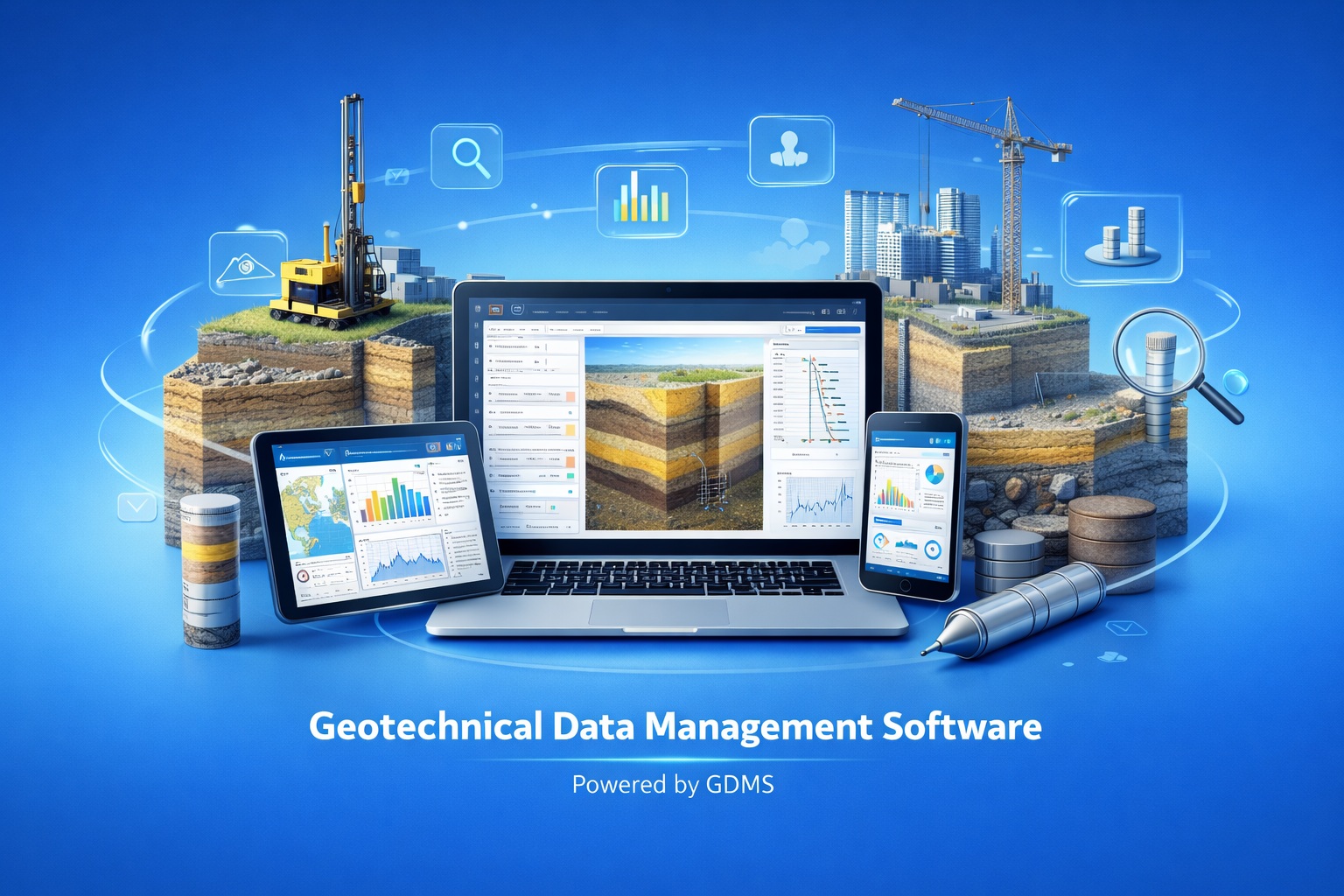
From Raw Measurements to Reviewed Test Reports
GDMS combines calculated geotechnical test workflows, quality control, standardized reporting and managed laboratory records in one project system.
Use consistent test procedures and report formats while keeping results connected to their projects, samples, material types and supporting measurements.
Explore the GDMS Laboratory Workflow
Move directly to the capability group that matches the laboratory or project requirement you are evaluating.
Five Connected Stages
GDMS turns laboratory measurements into reviewable test results without separating calculation, quality control and reporting from the stored project data.
Register
Identify the project, sample, material and requested test.
Measure
Enter the observations and readings required by the test workflow.
Calculate
Process derived values, classifications and chart data consistently.
Review
Confirm inputs, units, calculations, exceptions and test completeness.
Report
Generate a standardized result and retain it with the project record.
Features for Geotechnical Laboratories and Project Teams
GDMS combines the practical functions of geotechnical test software with a managed laboratory-information workflow.
Laboratory and Sample Records
- Store tests and results in a centralized managed database.
- Organize records by project, sample, material and test type.
- Preserve entered measurements with calculated results.
- Reduce disconnected test spreadsheets and duplicate files.
- Retrieve laboratory information for continued project use.
- Maintain consistent terminology and record structure.
Calculated Test Workflows
- Guide data entry through test-specific forms and procedures.
- Perform repeatable calculations from entered measurements.
- Generate derived values used in tables and graphs.
- Reduce repetitive manual calculation and transcription.
- Support common geotechnical and construction-material tests.
- Retain the relationship between input data and reported output.
Quality Control and Standardization
- Use consistent test forms and report layouts.
- Review required inputs before accepting calculated results.
- Check units, specimen information and measurement entries.
- Keep test methods and project requirements visible to reviewers.
- Document exceptions or corrections within the managed record.
- Standardize laboratory practices across projects and personnel.
Reporting and Presentation
- Generate test-specific result sheets and calculation summaries.
- Present applicable results in tables and engineering graphs.
- Use standardized formats for repeatable project reporting.
- Reduce manual recreation of test charts and calculations.
- Combine selected test information in wider project outputs.
- Preserve the reported result with its source laboratory data.
Retrieval and Data Reuse
- Locate historical test records within the managed database.
- Compare relevant results across samples or projects.
- Reuse structured information without rekeying final values.
- Support consistent naming and filtering of laboratory data.
- Keep valuable testing information available after reporting.
- Build a longer-term project and material-results resource.
GaeaSynergy Project Integration
- Maintain GDMS tests with the wider GaeaSynergy project record.
- Connect laboratory information to relevant project samples.
- Use selected test results in project tables and charts.
- Keep geotechnical test data available for downstream interpretation.
- Support coordinated laboratory and subsurface-data workflows.
- Reduce separate databases for testing and project presentation.
Four Principal Material Groups
GDMS supports a wide range of test workflows. The dedicated Test Types page provides the searchable test-by-test reference.
Classification, Strength and Hydraulic Properties
Examples include grain-size analysis, Atterberg limits, moisture content, specific gravity, compaction, CBR, permeability, consolidation, direct shear and unconfined or triaxial compression.
Strength and Specimen Testing
Examples include compressive, flexural and splitting-tensile strength workflows, together with applicable grout and mortar testing.
Density, Binder and Performance Testing
Examples include bitumen content, Marshall stability, absolute and kinematic viscosity, nuclear density and asphalt specific-gravity workflows.
Index and Strength Testing
Examples include point-load strength, water content, unconfined compression and triaxial compression for rock specimens.
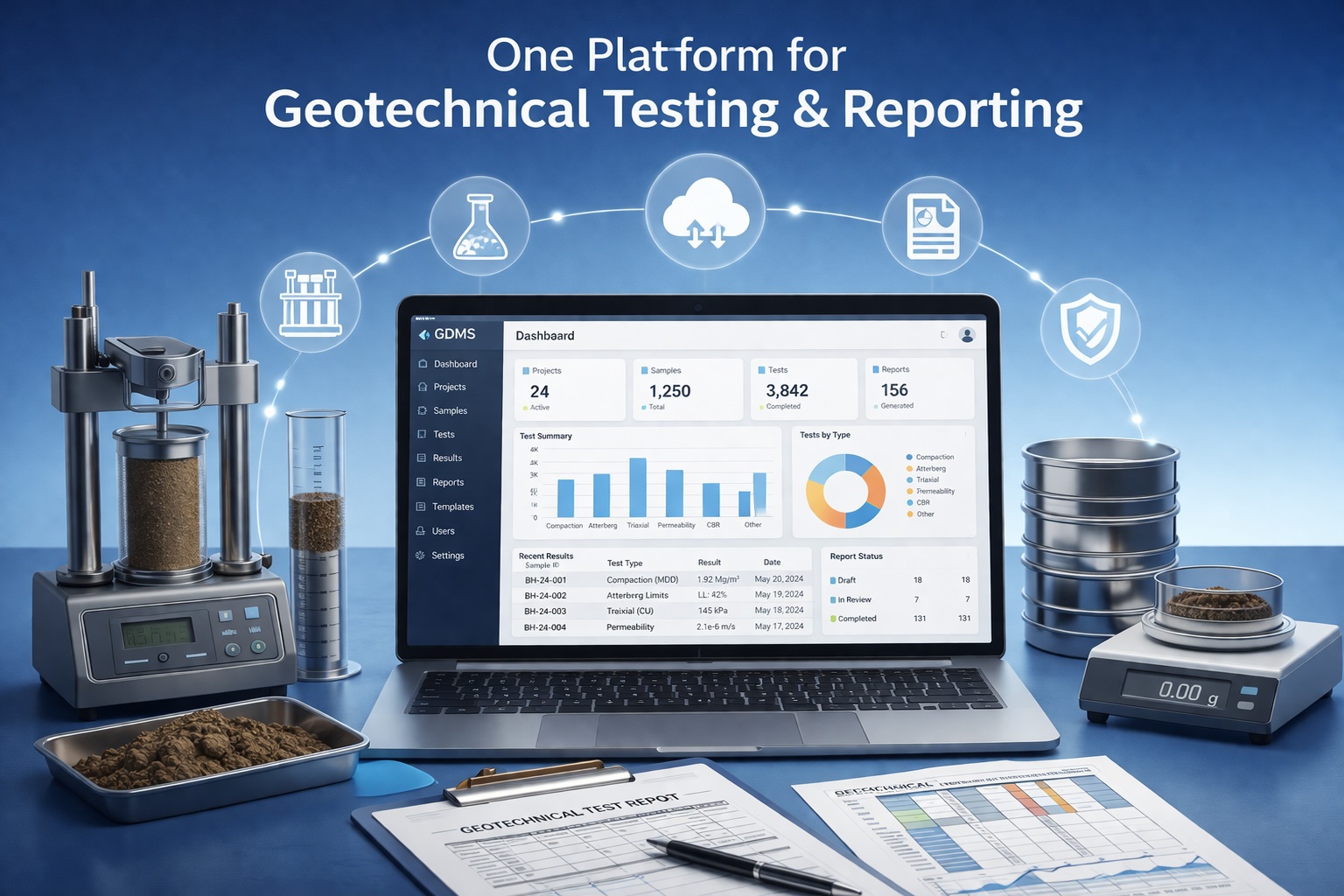
Keep the Report Connected to the Test Data
A finished result is more useful when reviewers can trace it back to the project, sample, entered readings and calculated values that produced it.
- Consistent test result sheets
- Calculated summaries and classifications
- Engineering tables and graphs
- Project and sample identification
- Stored input measurements
- Reusable historical results
Automation Supports Review—It Does Not Replace It
Calculated results and standardized reports reduce repetitive work, but qualified personnel remain responsible for the test method, specimen preparation, equipment, entered values and engineering interpretation.
Confirm the Procedure
Verify the selected test, governing standard, edition, specimen requirements and project-specific acceptance criteria.
Review the Inputs
Check units, measurements, equipment information, specimen details and unusual observations before accepting calculations.
Approve the Result
Review calculated values, graphs, classifications, exceptions and report content before issuing the final laboratory record.
GDMS Resources
Use the detailed references for test coverage, reporting examples, migration and wider geotechnical data-management guidance.
GDMS Overview
Return to the main product page for evaluation, purchase and related resources.
Open the GDMS overviewTest Types
Review the current soil, aggregate, concrete, asphalt and rock test reference.
Browse test typesWinSieve Upgrade
Review the migration path from WinSieve to the current GDMS workflow.
Review the upgradeLaboratory Data Management
Learn how structured systems improve test storage, retrieval and reporting.
Read the laboratory guideGeotechnical Data Management
Explore the wider project-data lifecycle and implementation principles.
Open the complete guideStandardize Geotechnical Testing from Measurement to Report
Evaluate GDMS using your laboratory procedures, material groups, report formats and project-data requirements.
